The most convincing light fittings respond to the architecture around them. Learn how to assess ceilings, walls,...
- There are no more items in your cart
- Shipping
- Total $0.00
What Good Lighting Does After Sunset
Wait for the room to reveal itself
Lighting is often chosen in the brightest possible conditions: under showroom lamps, on a white product page or while standing in a sunlit room. None of those views shows what the fitting will do once it becomes the principal source of light.

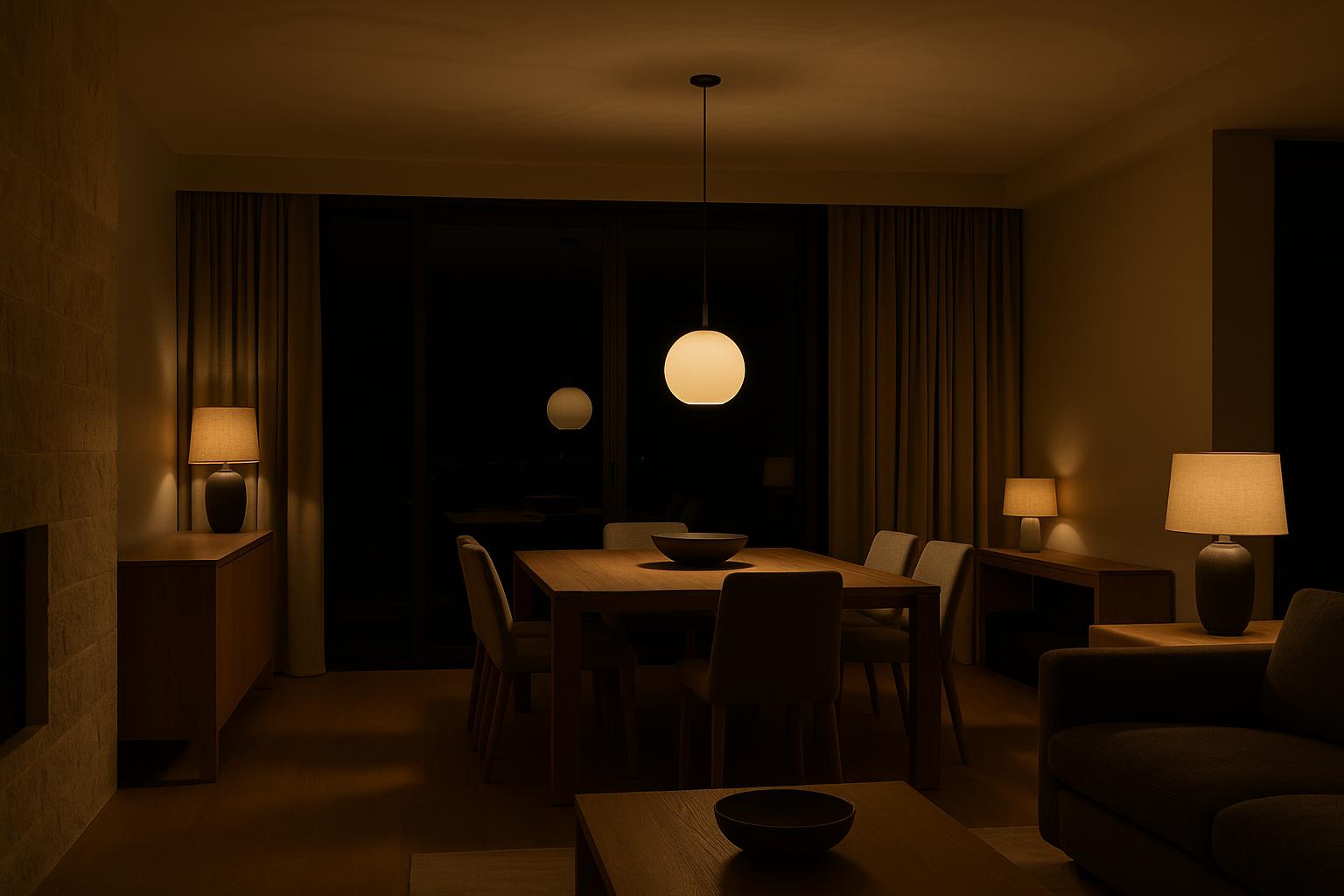
After sunset, its less obvious qualities take over. The position of the lamp becomes visible. Shade edges cast patterns across the ceiling. Reflective surfaces produce small, sharp highlights. A dark fitting that looked graphic during the afternoon may recede, while pale glass can become the most visually dominant object in the room.
Before committing to a feature light, picture an ordinary evening rather than a styled photograph. Which other lights will be on? Will curtains be open to black glass, or closed against a textured wall? Is the room meant for conversation, cooking, reading or moving between spaces? The answers matter more than whether the fitting looks impressive in isolation.
Start from the seat, not the ceiling
People experience most indoor lighting from below and often while seated. That makes eye level a more revealing reference point than the view gained while standing beneath a ceiling fitting.
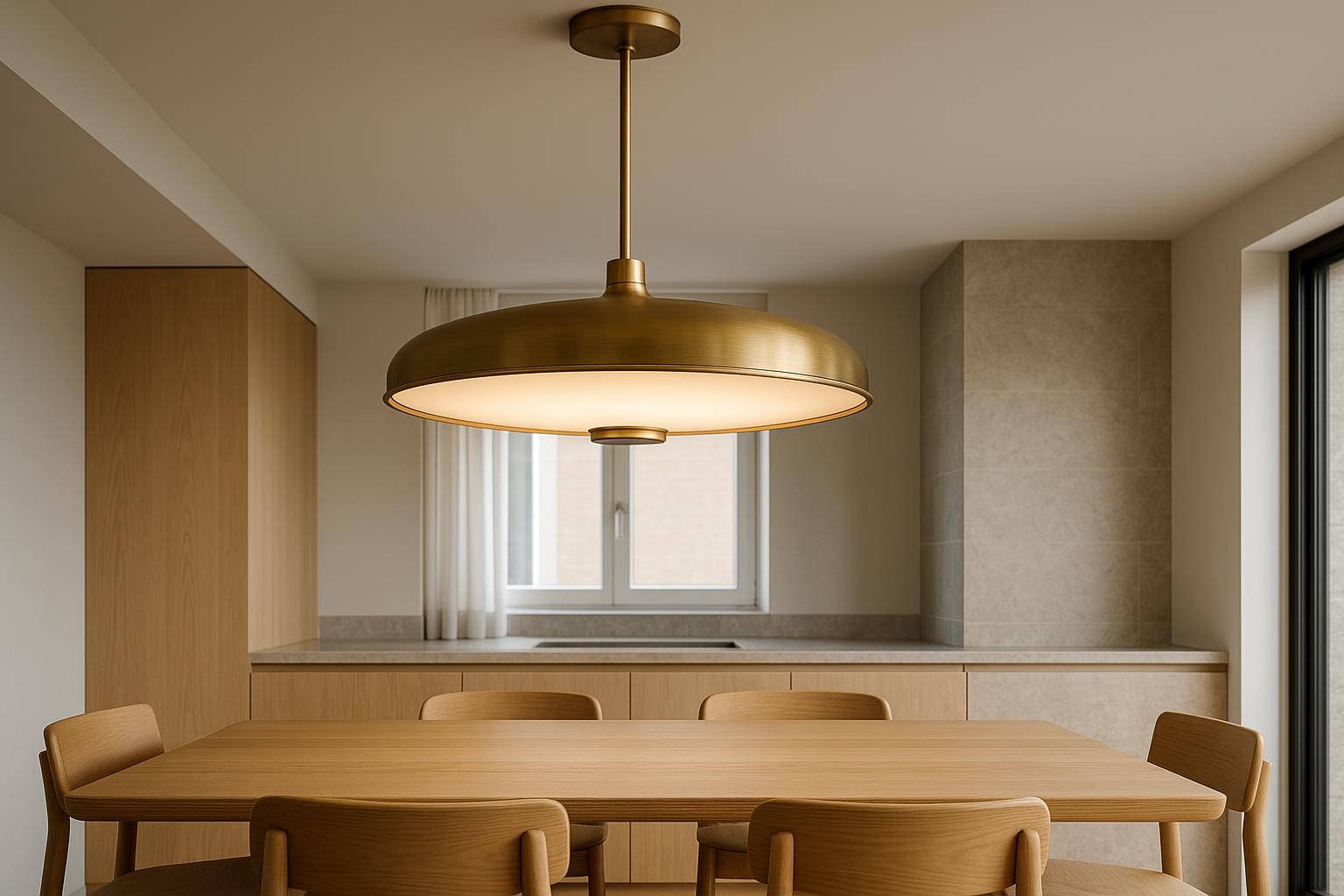
Consider a pendant over a kitchen island. Its light may be well shielded for someone preparing food, yet the lamp could remain exposed to a person sitting at the nearby dining table. In a bedroom, a bedside wall light may appear softly diffused when viewed straight on but become distracting from the pillow. A floor lamp can present the same problem if its shade is too high for the adjacent sofa.
Product dimensions help, but they need to be read in relation to furniture height, suspension length and likely viewing positions. Look for images showing whether the light source sits behind a diffuser, deep within a shade or directly in view. Designer lights do not need to hide every trace of brightness, but the glow should suit the fitting's purpose rather than produce an accidental hot spot.
Keep useful darkness in the room
A comfortable evening interior is rarely lit with equal intensity from wall to wall. Some shadow gives objects depth, separates adjoining zones and lets the eye rest. This is particularly valuable in open-plan homes, where the kitchen, dining area and lounge may need different moods at the same time.
Begin with the surfaces that genuinely need illumination. A kitchen bench requires clear task light. A dining table benefits from a defined pool that still allows faces to be seen comfortably. The television wall may need only restrained background light, while a reading chair deserves illumination close to the page.
- Protect task areas with light placed for the activity rather than general brightness.
- Use lower sources to bring warmth to seating areas and corners.
- Leave some boundaries quiet so the room retains depth after dark.
A decorative pendant can anchor the composition without being responsible for every task. Asking one fitting to light an entire room often leads to excessive brightness at the centre and inadequate light where it is actually needed.
To complement this topic, you can also read Make Every Dollar in Your Lighting Budget Count.
Notice what glass and screens reflect
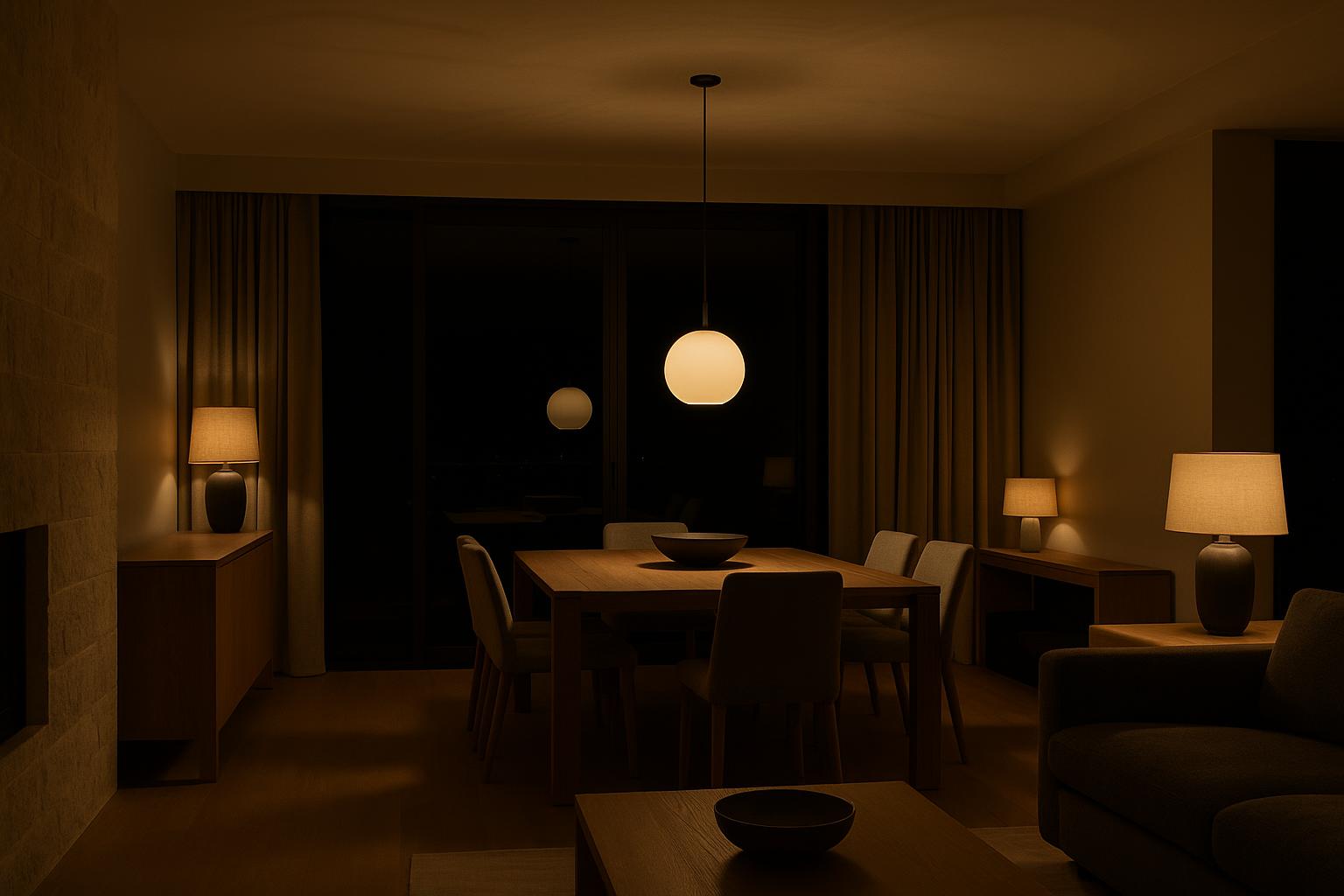
Glare does not come only from looking directly at a lamp. At night, windows become mirrors. A pendant that barely registers against a daytime garden may appear twice after sunset: once in the room and again in the glass. Polished stone, glazed tiles, framed artwork and television screens can create similar reflections.
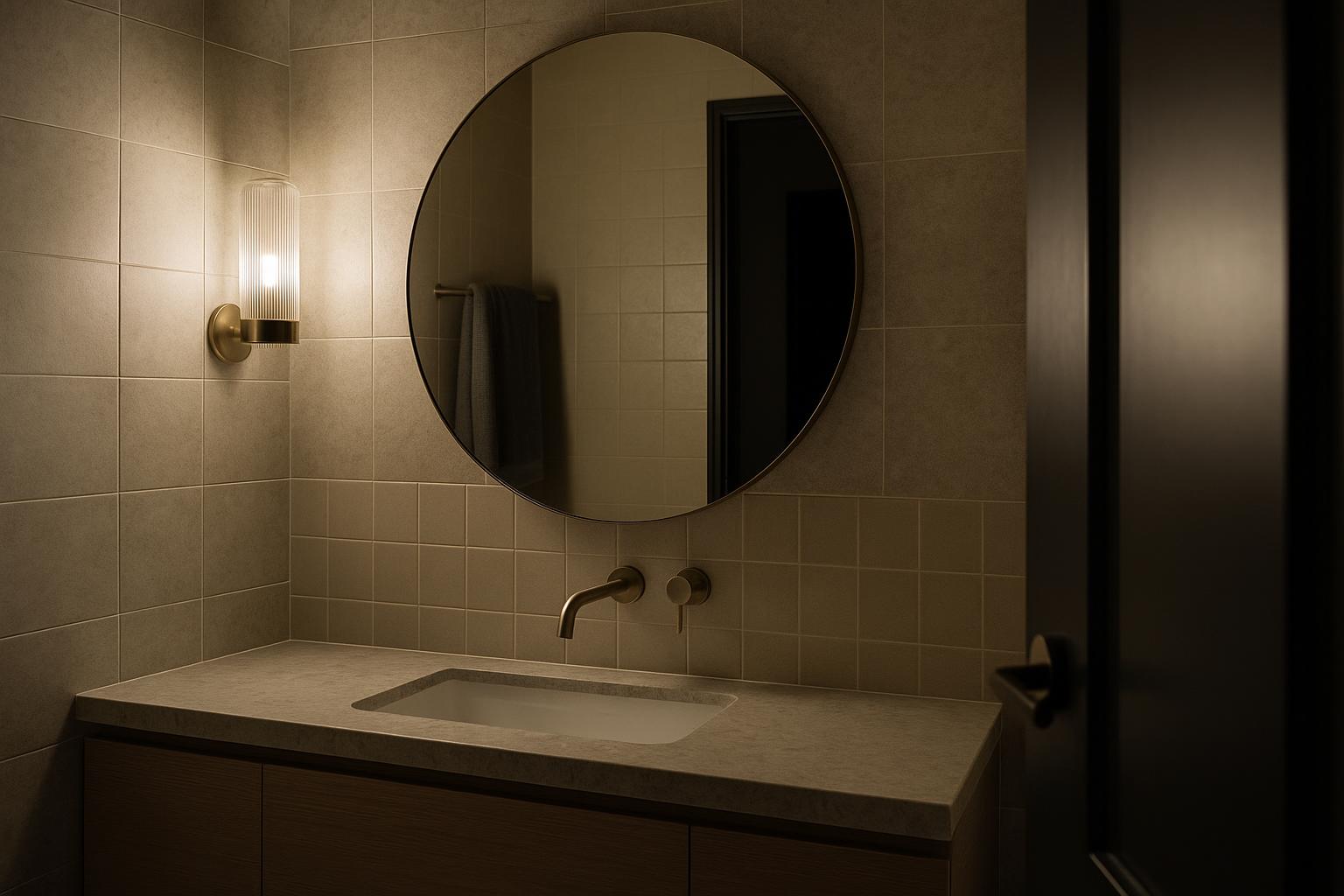
Stand where people are likely to sit and trace what lies opposite each reflective surface. A bright globe behind the sofa may be visible in the television. A row of pendants can repeat across sliding doors and make a restrained scheme look unexpectedly busy. In a bathroom, a decorative light beside the mirror may produce a sharper reflection than its direct view suggests.
This does not rule out clear glass or exposed lamps. It simply means their brightness and placement need more care. Diffusion, shielding and another layer of gentler light can reduce the contrast between a luminous fitting and its surroundings.
Walk the evening route
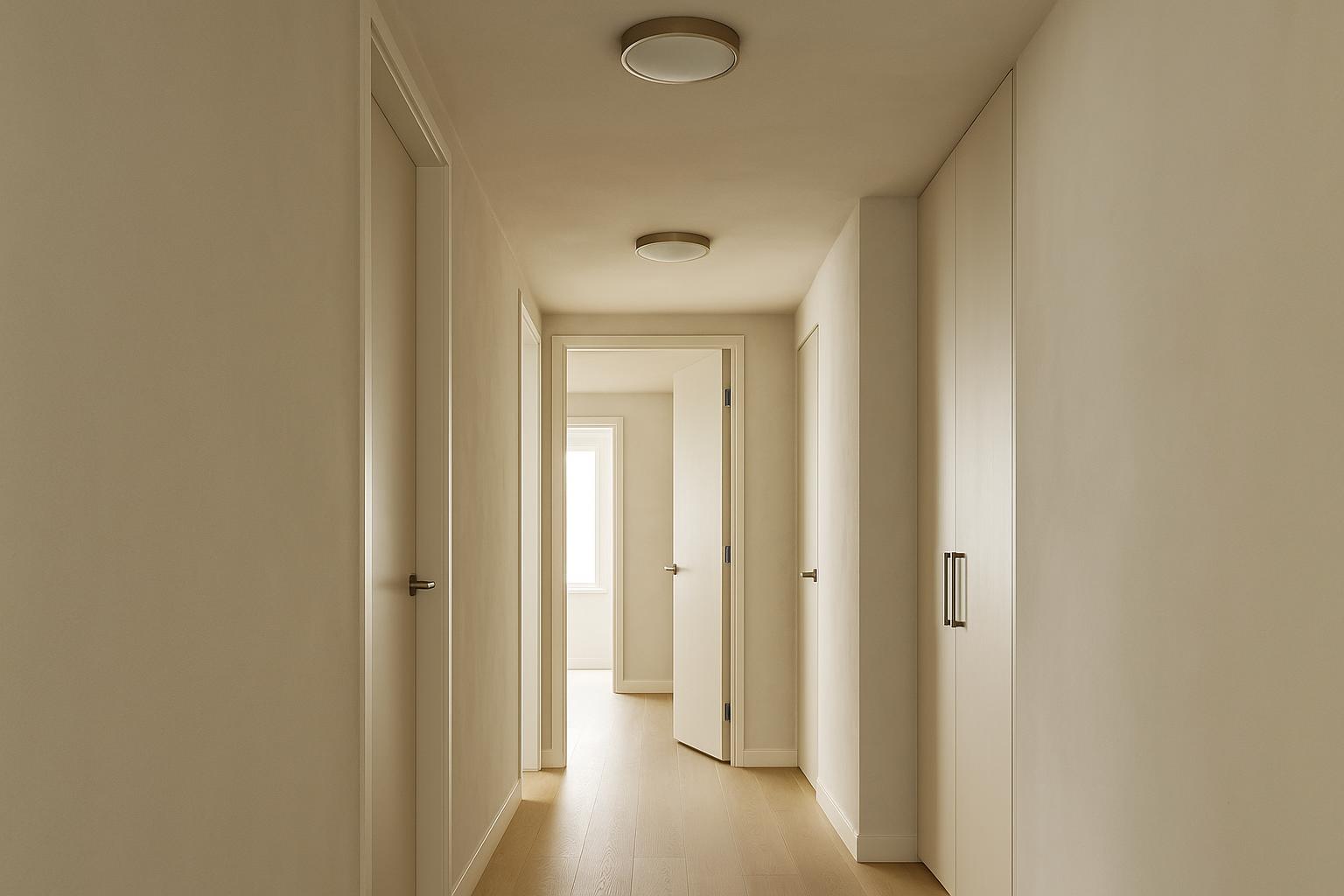
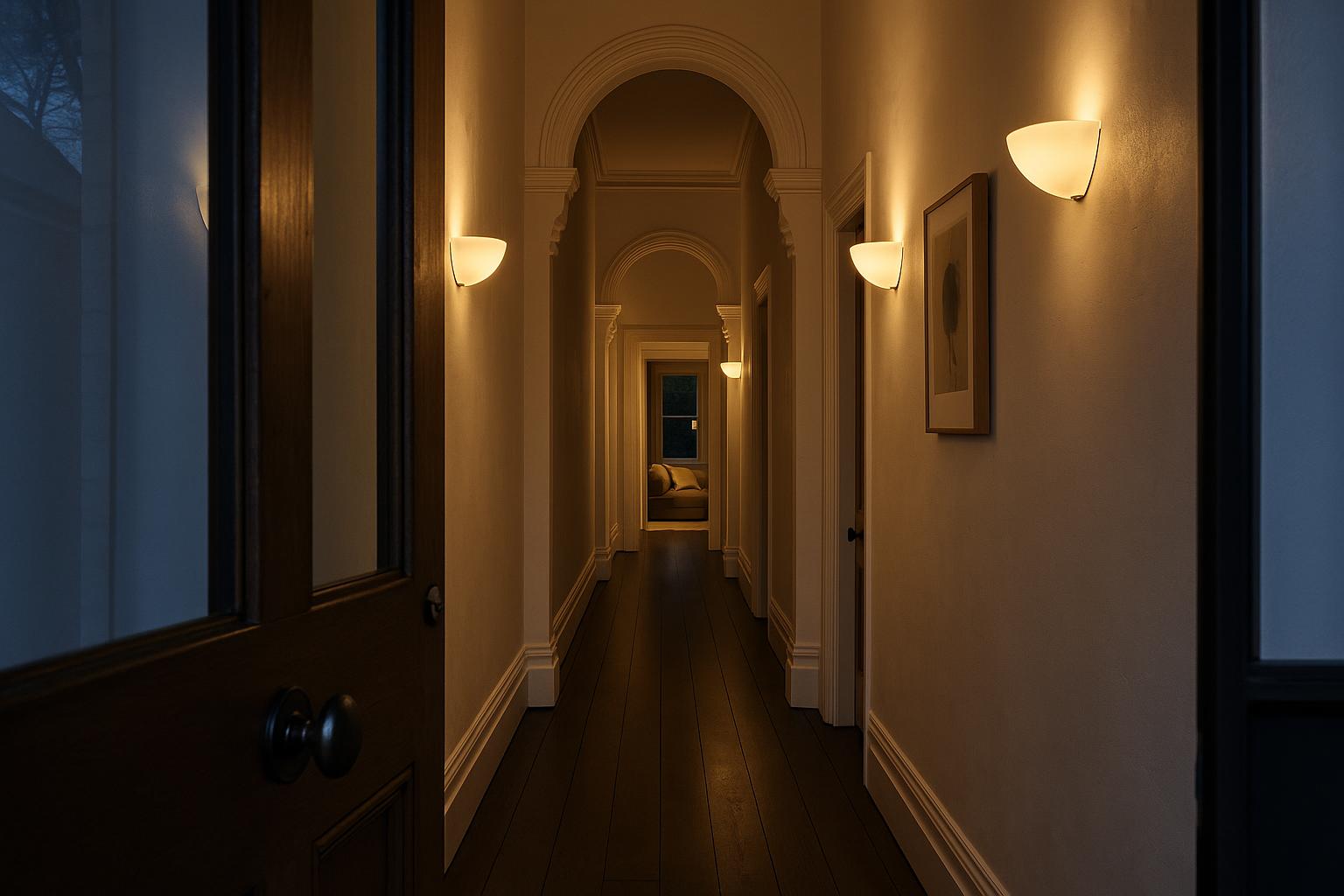
Entries, hallways and stairs are not usually experienced from a fixed position. Their lighting is read while approaching, turning and changing level. A successful scheme makes the route legible without placing a decorative statement at every point.

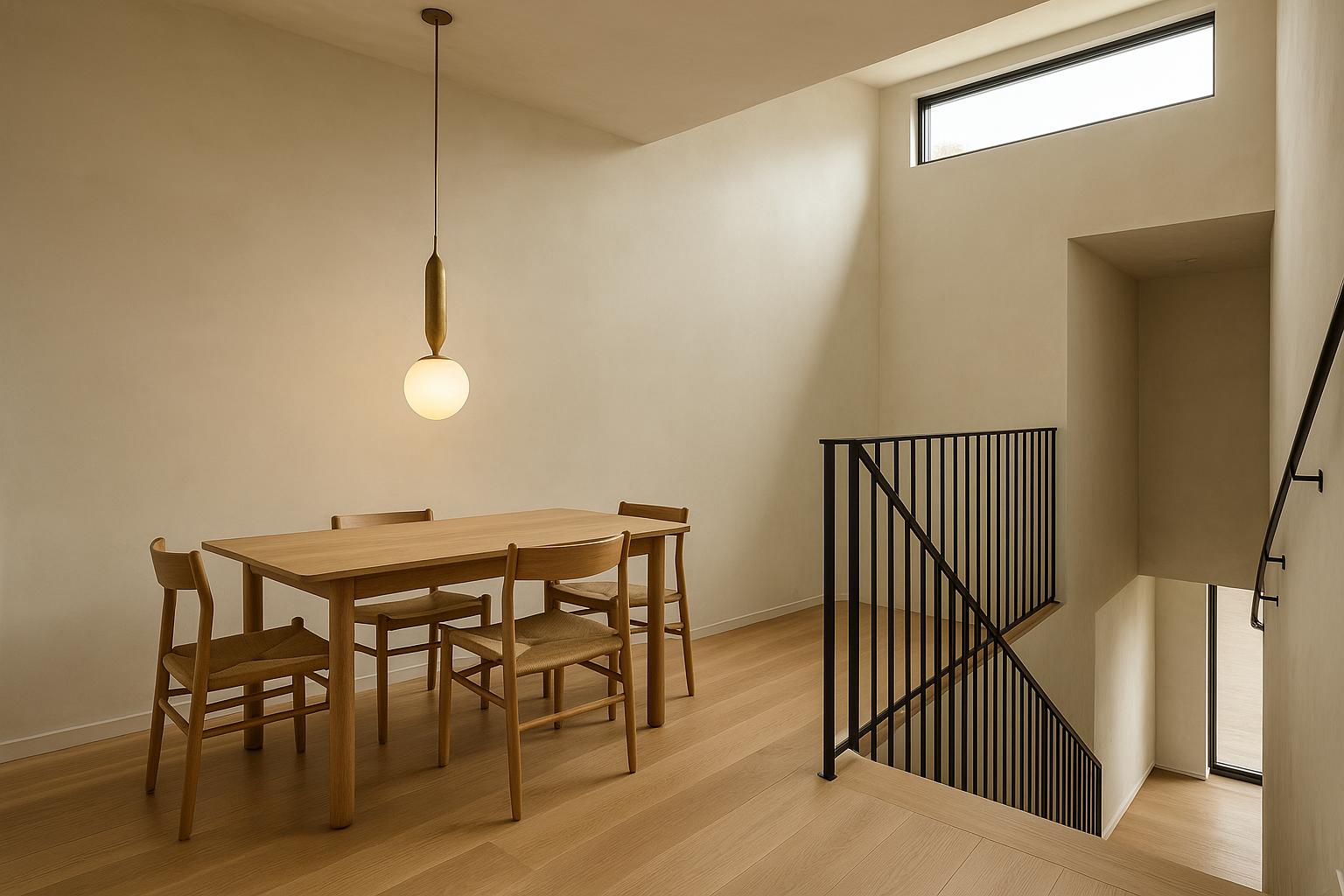
Check wall lights for physical projection as well as appearance, particularly in narrow circulation areas. At a stair, view a pendant from the lower floor, the landing and above; suspension hardware or the open top of a shade may be visible from one level even when the fitting looks resolved from another.
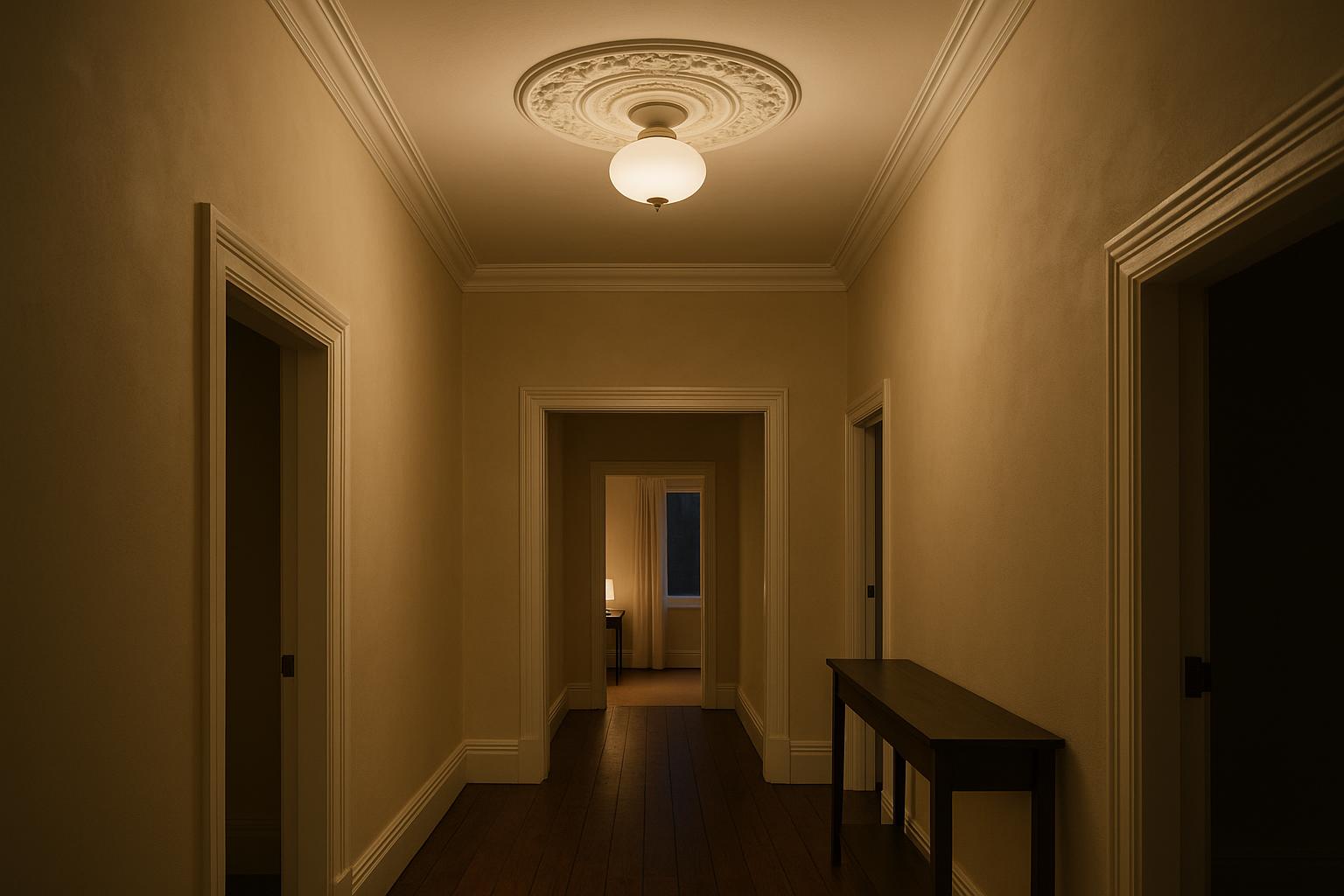
One light can also establish a destination. A pendant near the end of a passage, a softly lit artwork or a pool of light in the adjoining room can guide movement more calmly than a uniformly bright corridor.
See finishes under daylight and lamplight
Finish samples and product photographs describe only one set of conditions. Brushed brass may appear quiet beside a bright window and much richer under warm evening light. Black can give a room a precise outline by day, then merge into a dark ceiling after sunset. Opal glass shifts in the opposite direction, changing from a pale solid form into a luminous volume.
In the same direction, The Online Lighting Checklist for Australian Homes offers useful ideas for choosing home lighting more confidently.
Room orientation affects the daytime half of that transformation. Strong late sun in a west-facing Perth room can make polished metal and clear glass highly reflective. A Melbourne apartment with limited direct light may benefit from the lift those surfaces provide. Timber, stone, paint colour and curtains also influence how much light is absorbed or returned.
Exact metal matching is less important than a convincing relationship. A fitting can connect with cabinetry or furniture through a shared warmth, repeated curve or similar visual weight. This usually feels more considered than forcing every handle, tap and light into one identical finish.
Plan for changing room roles
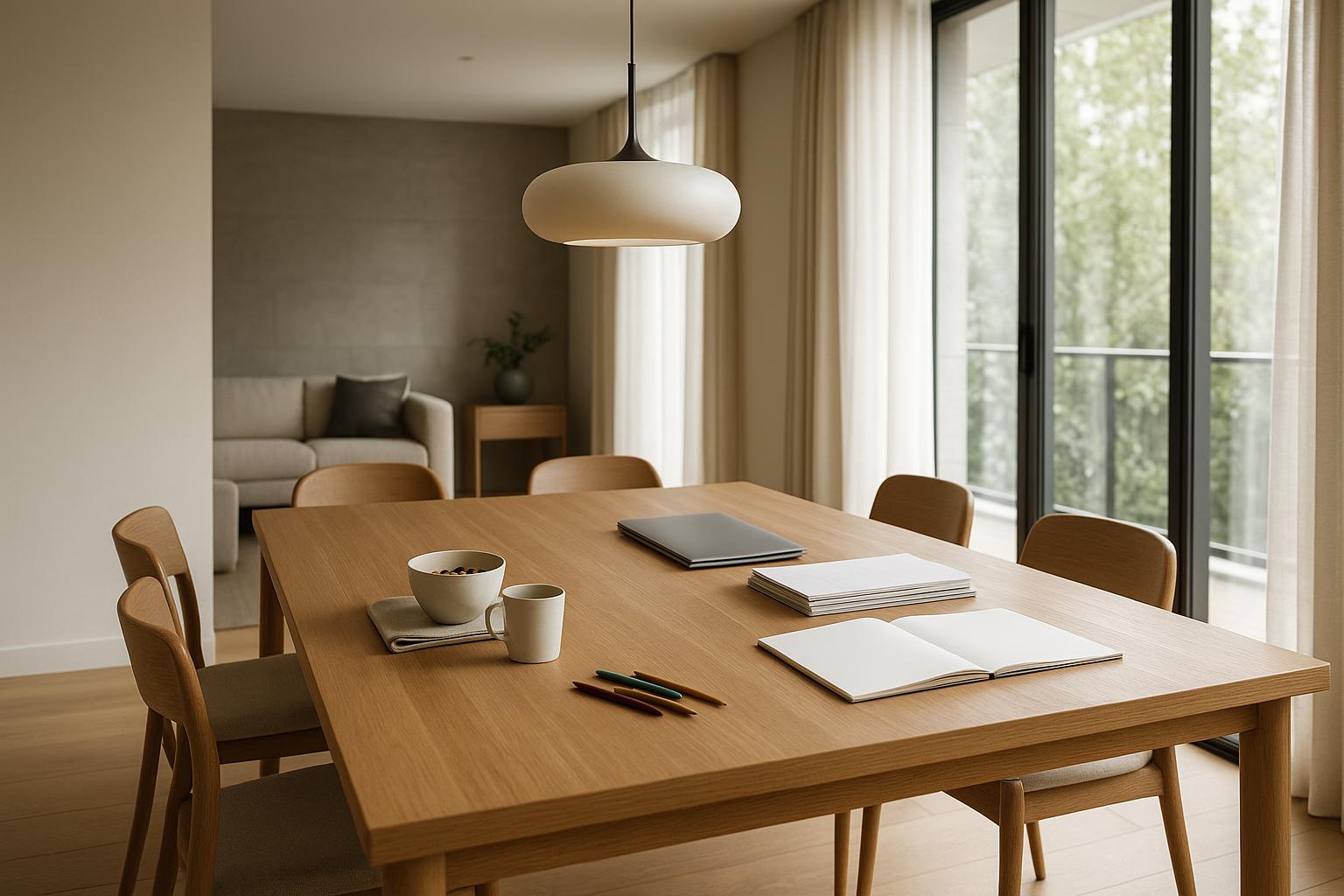
home lighting has to accommodate the untidy overlap of daily life. Dining tables become workstations. Spare rooms alternate between office and guest use. Open doors can extend a living area towards an alfresco space, then turn into dark reflective panels when closed at night.
Layering makes these changes easier to manage. A ceiling light may provide the practical base, while a table lamp or floor lamp introduces a quieter level in the evening. Dimming can broaden the useful range of a decorative fitting, provided the chosen lamp, fitting and control are compatible. Check the product information rather than assuming every combination will dim in the same way.
Controls should also make sense at the time the room is used. If creating a relaxed setting requires walking to several inconvenient switches, the intended layers may rarely be used. The arrangement of circuits and controls is worth discussing with a licensed electrician before installation begins.
Resolve the ceiling and installation
A fitting is always part of the ceiling architecture. Beams, rakes, roses, bulkheads, fans and existing mounting points affect where it can sit and how complete the result will look.
For more consistent lighting throughout the home, the article A Whole-Home Lighting Plan: Choosing Fittings That Belong Together may also be helpful.
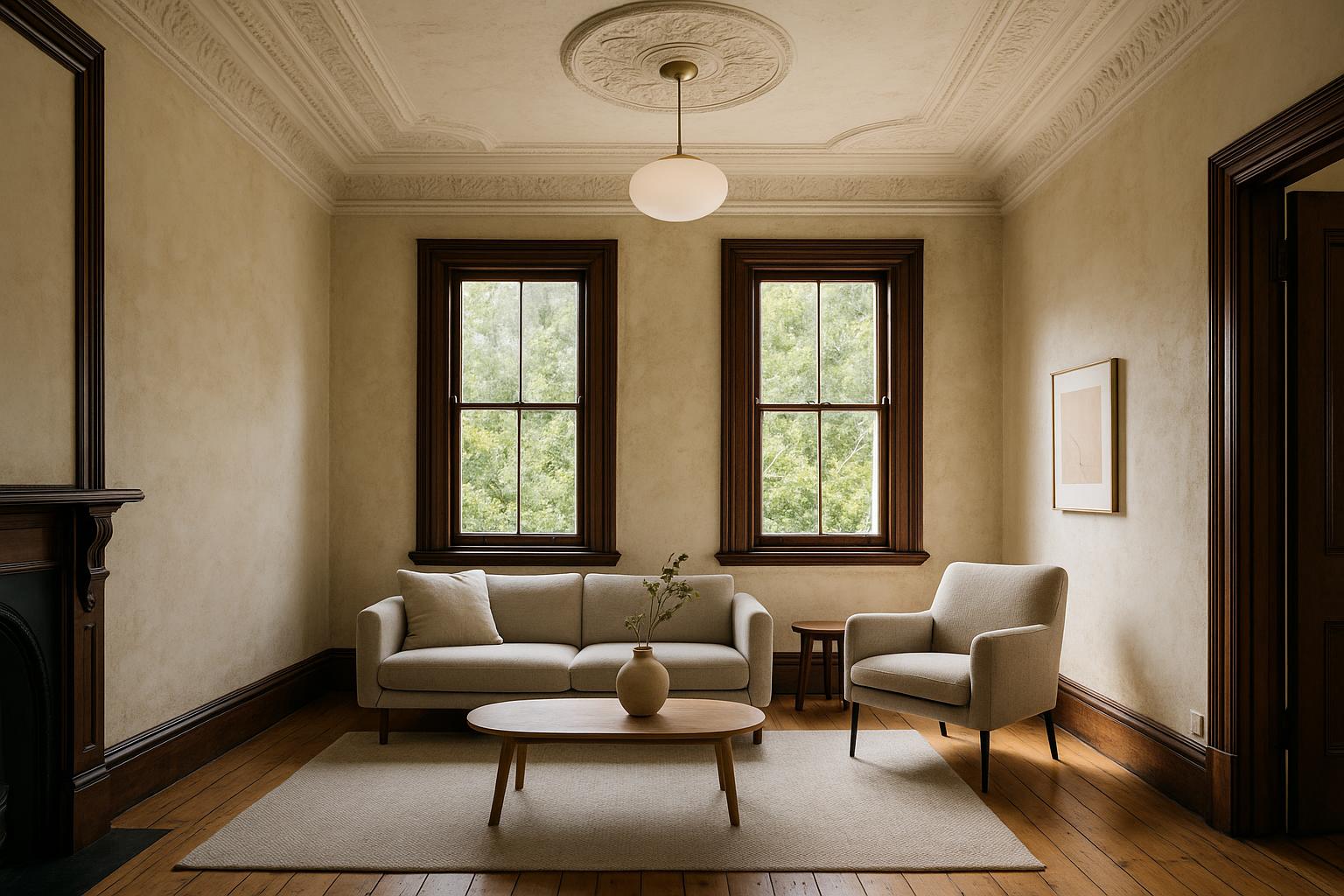
In a room with a low ceiling, a compact flush or semi-flush design can preserve visual space without disappearing. High or raked ceilings may accept a longer drop, but the suspension and canopy still need to suit the mounting position. In an older weatherboard home or villa, decorative plaster can be given room to remain visible rather than being crowded by an oversized ceiling plate.
Ceiling fans require particular attention because blade clearance, pendant position and the way air moves around a suspended fitting all influence the layout. Confirm dimensions, mounting details and installation requirements against the actual room. A licensed electrician can assess the site and the manufacturer's instructions before work proceeds.
Make the final edit
When comparing lights online, return to the simplest test: imagine the fitting switched off on a bright afternoon, illuminated during dinner and seen from the lowest nearby seat. Then picture its reflection in windows and its relationship with the other lights that will remain on.

The right choice may be less elaborate than the first one that caught your attention. It earns its place through comfortable brightness, clear sightlines and a useful contribution to the room after dark.
Once those details feel resolved, you can browse designer lighting and indoor lighting at Luxora Lighting. Choose for the evening you will actually live in, not only the photograph that first introduced the fitting.