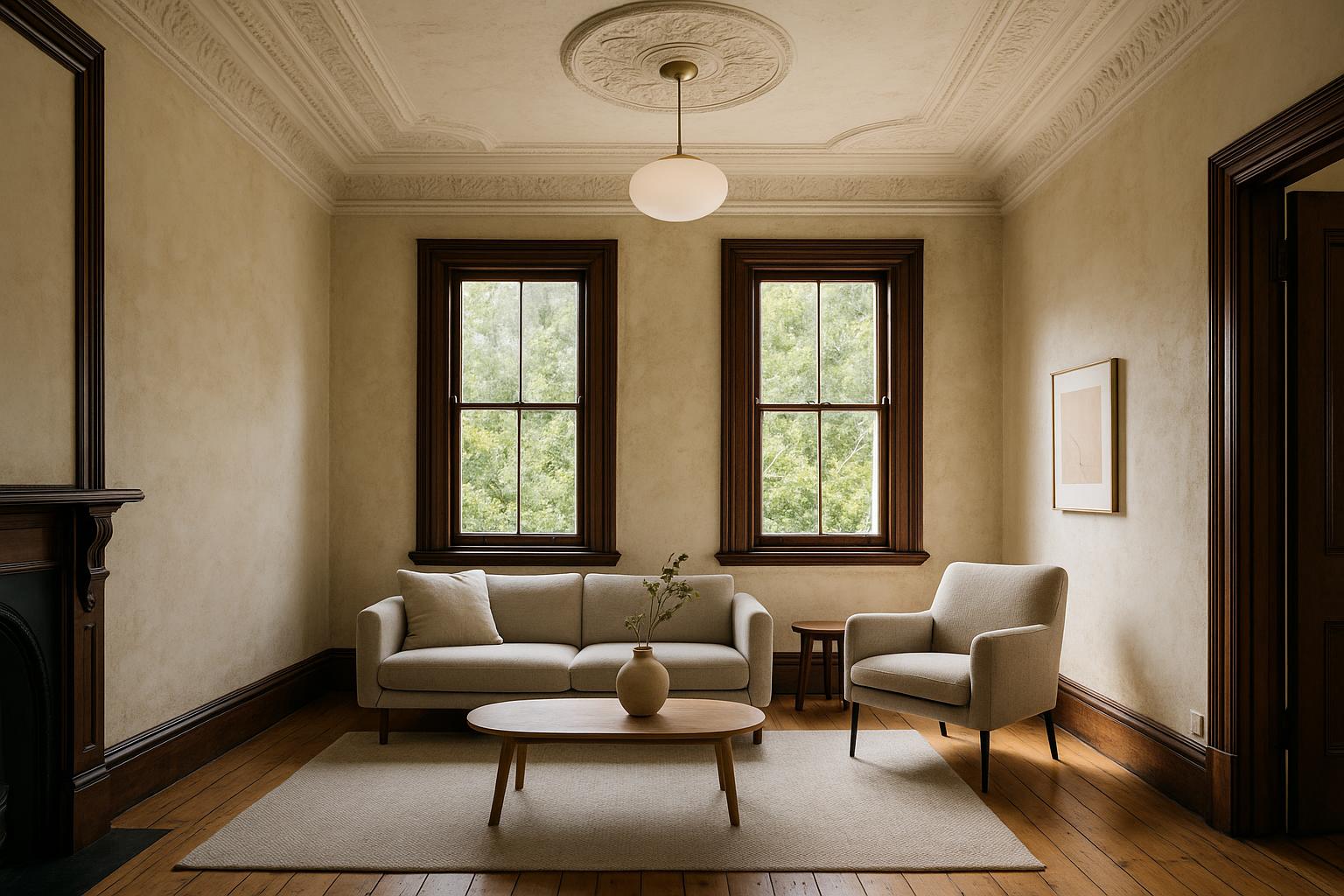
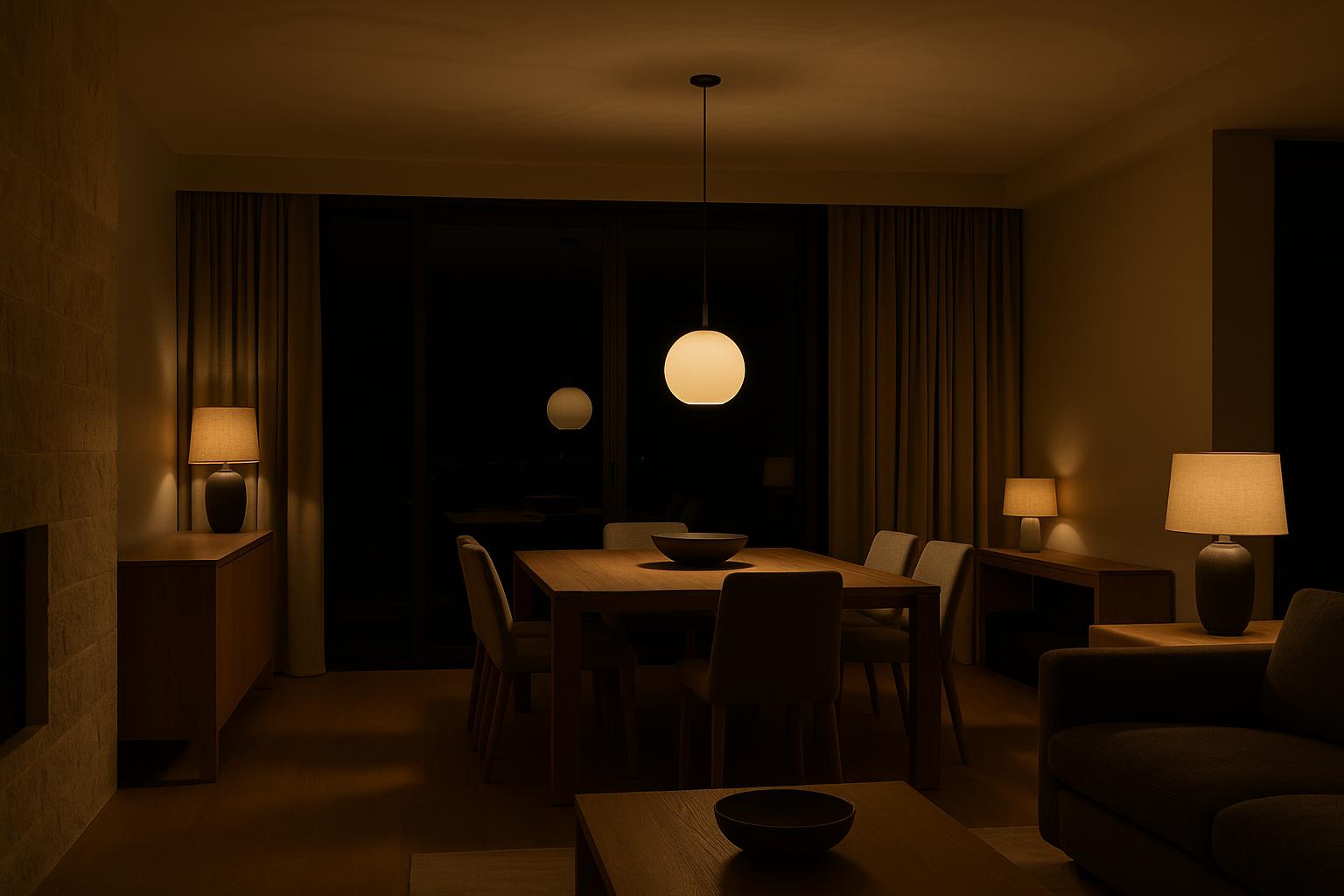
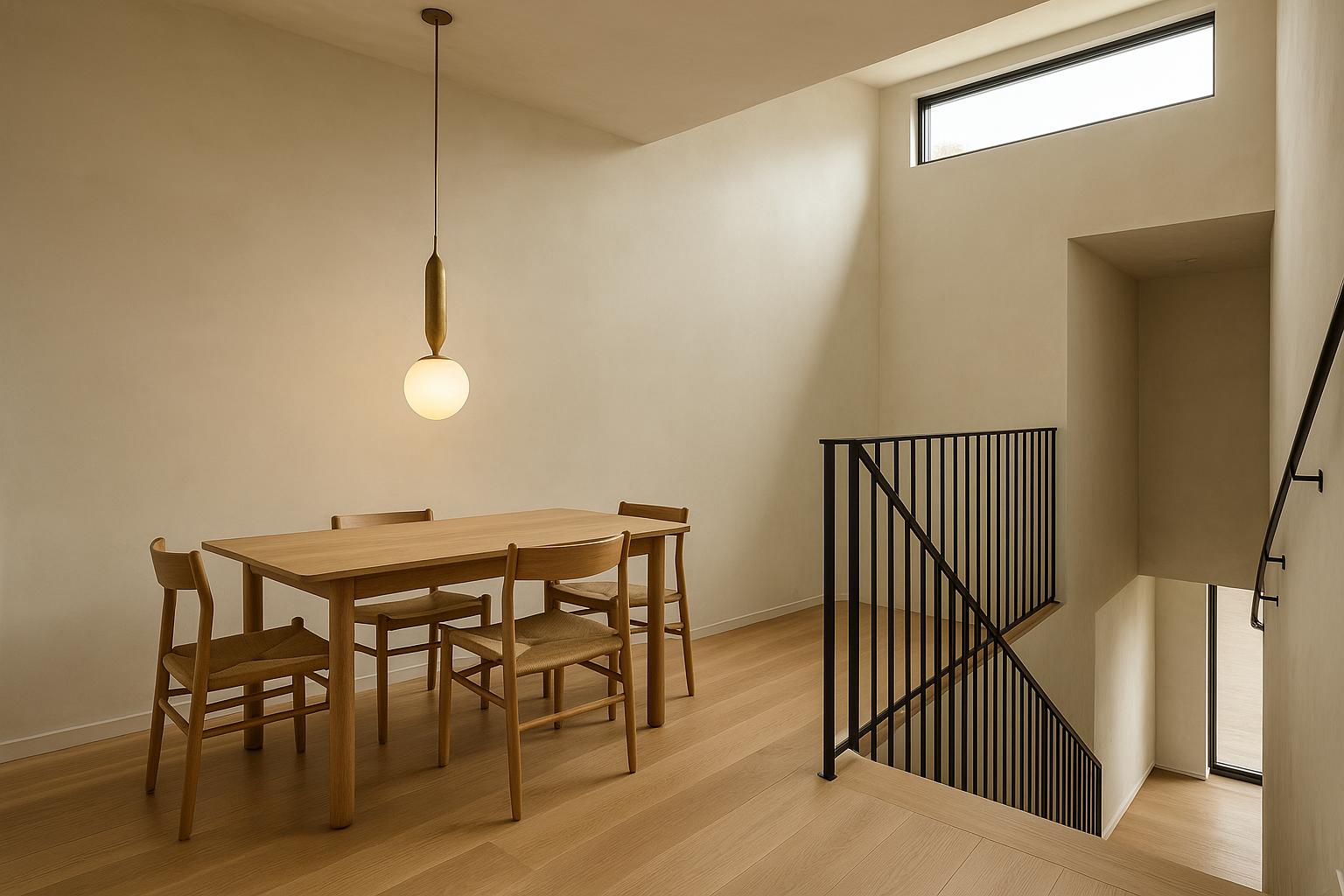
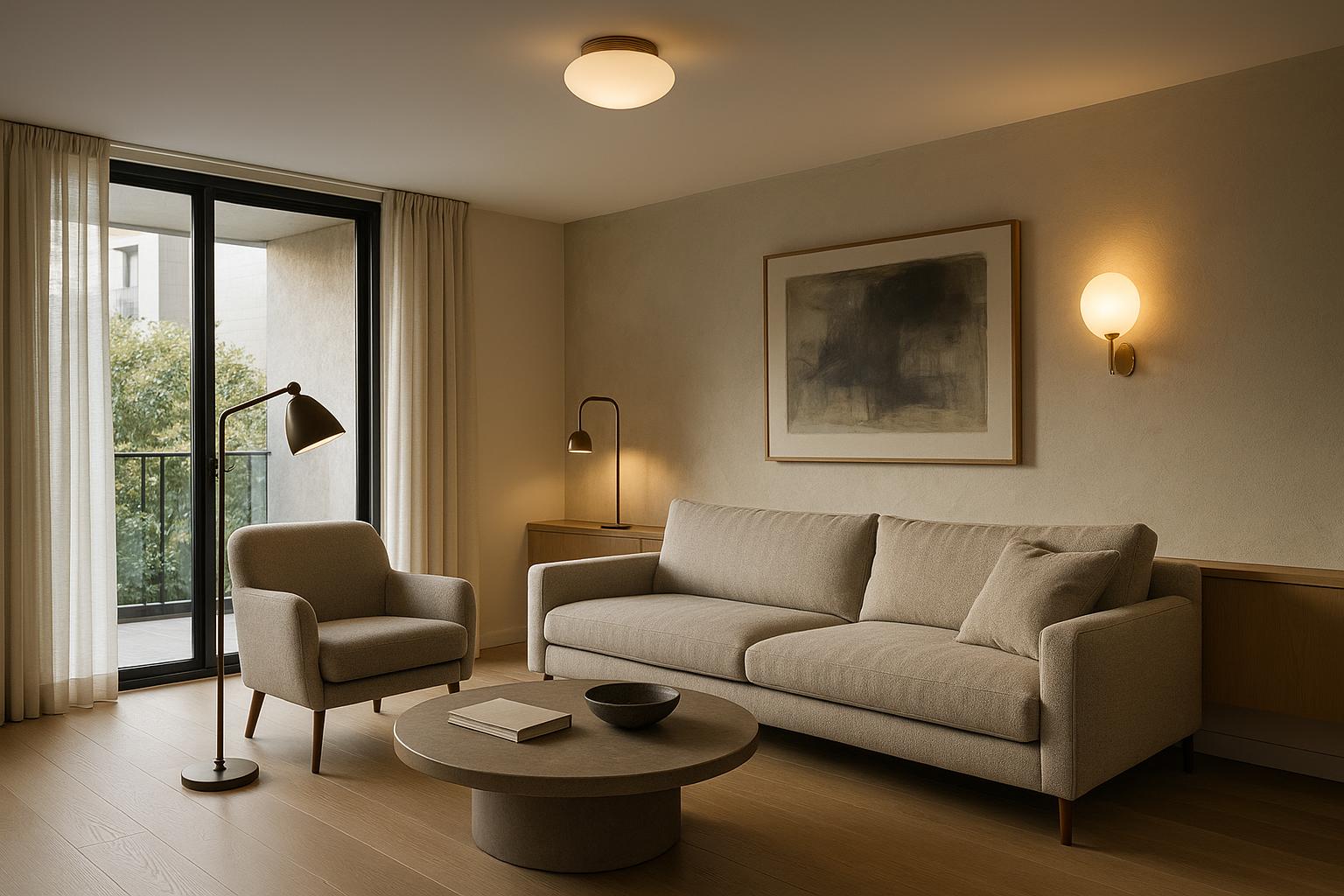
The most convincing light fittings respond to the architecture around them. Learn how to assess ceilings, walls,...
- There are no more items in your cart
- Shipping
- Total $0.00
A Whole-Home Lighting Plan: Choosing Fittings That Belong Together
Choosing lights one room at a time can leave a home feeling oddly disconnected. The kitchen pendants may be striking, the hallway may be bright enough and the living room may have a handsome floor lamp, yet the fittings compete rather than contribute to one scheme.
Coherence does not require a matching collection. It comes from repeating a few well-chosen ideas while responding to the practical demands of each room. Scale, brightness, material, shape and sightlines matter more than making every fitting look alike. A clear plan also makes it easier to compare products when visiting a lighting shop or browsing lights online.
Write a room-by-room lighting brief
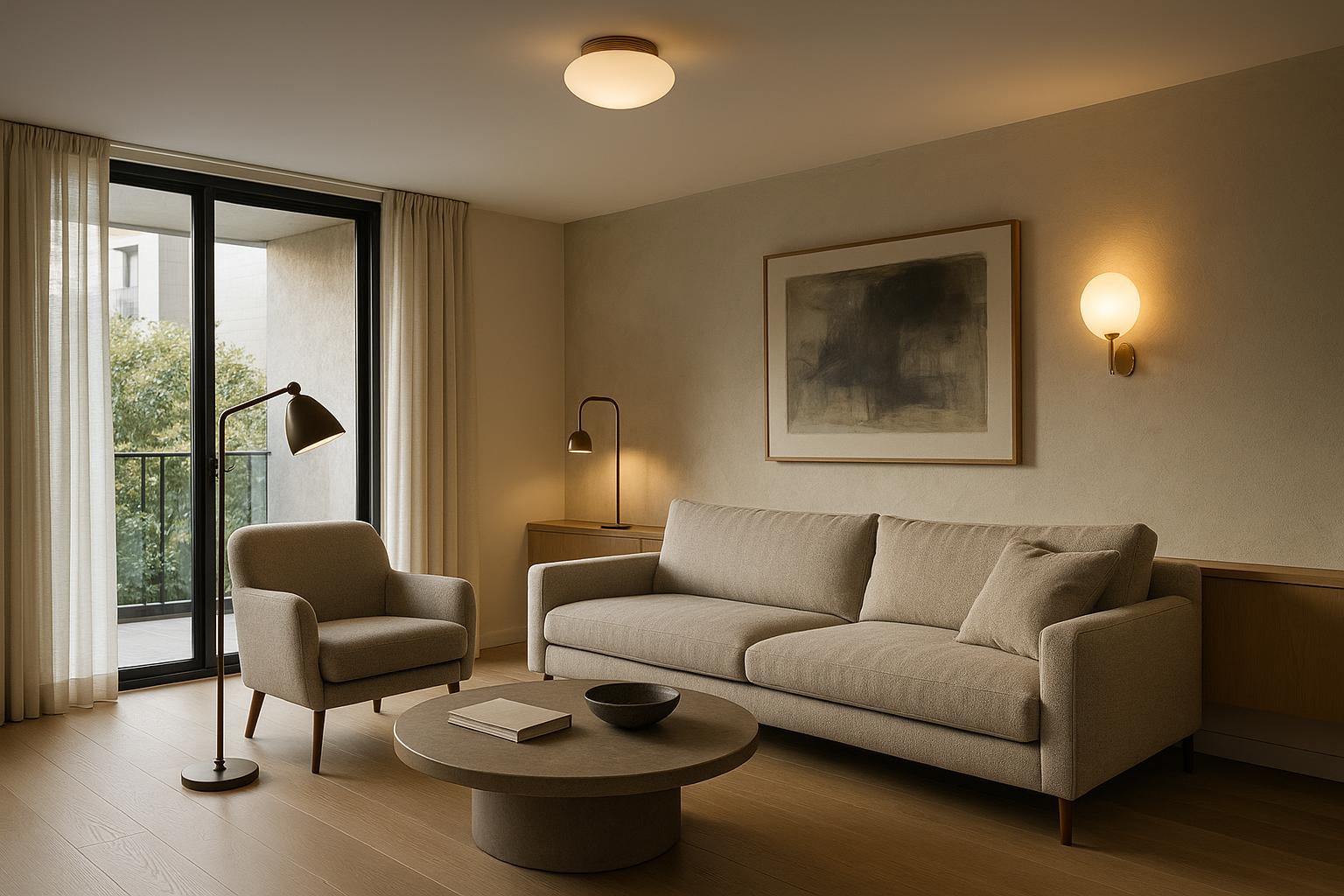
Before choosing products, note what happens in each room at different times. A kitchen used for preparation, homework and casual meals needs more flexibility than a guest bedroom. A living room may need comfortable background light, a focused reading light and enough illumination to move around safely without switching on every ceiling fitting.

Use three broad layers to identify gaps:
- Ambient light establishes the general brightness of a space.
- Task light directs useful light towards benches, desks, mirrors and reading positions.
- Accent light draws attention to artwork, joinery, texture or architectural details.
These layers do not always require separate fittings. A wall light might contribute both ambient and accent light, while an adjustable floor lamp can support reading and soften a dark corner. The point is to avoid asking a grid of downlights to perform every role.
Map the fittings that share a sightline
Walk through the home and note which lights can be seen together. In an open-plan interior, an island pendant, dining light and living-room lamp may all be visible from the entry. A stairwell pendant might also appear through a nearby doorway. These relationships are easy to miss when products are selected on separate days or from separate pages.
Choose one or two qualities to repeat across connected spaces. Rounded forms, warm metal details, opal glass or a restrained dark finish can create continuity without looking like a packaged set. The link can be subtle: a curved hallway sconce may be enough to relate to a larger pendant in the dining area.
Architecture should still lead the decision. A fitting that suits a broad stair void may overwhelm a narrow terrace entry, while a small pendant can look insubstantial beneath a high or raked ceiling. Check dimensions against the room rather than relying on tightly framed product photography.
Consider how fittings look during daylight
Indoor lighting remains part of the interior even when it is switched off. Strong Australian daylight can make polished finishes more prominent, expose cluttered ceiling arrangements and change the apparent colour of glass, metal and timber. Western sun may also create distracting reflections on glossy surfaces during the afternoon.
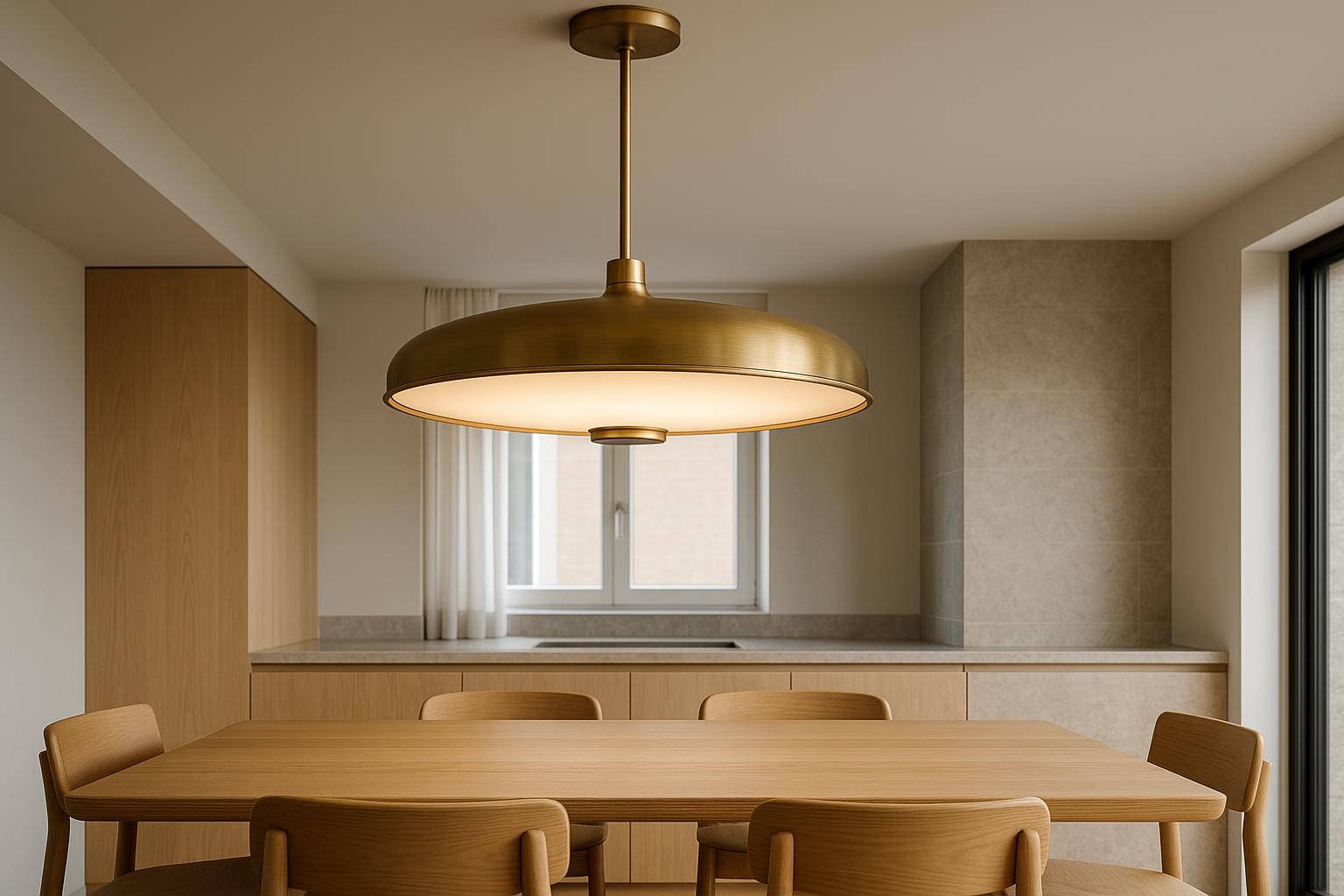
Look at a fitting as an object as well as a light source. Brass can introduce warmth to a cool palette of stone and painted cabinetry. Timber may soften a room with hard surfaces, while pale glass can retain visual breathing space in a compact apartment. There is rarely a need to repeat the same material in every room; one considered reference elsewhere is usually sufficient.
Orientation matters too. A bright north-facing living space may need little general light through the day but still require focused illumination over a shaded kitchen bench. A room with smaller windows may feel more open when lamps or wall lights brighten vertical surfaces instead of relying on intense overhead light.
Set a hierarchy in open-plan spaces
Several decorative fittings can work in one open-plan room, but they should not all demand equal attention. Decide which zone will carry the strongest visual statement, then let the other lights support it.

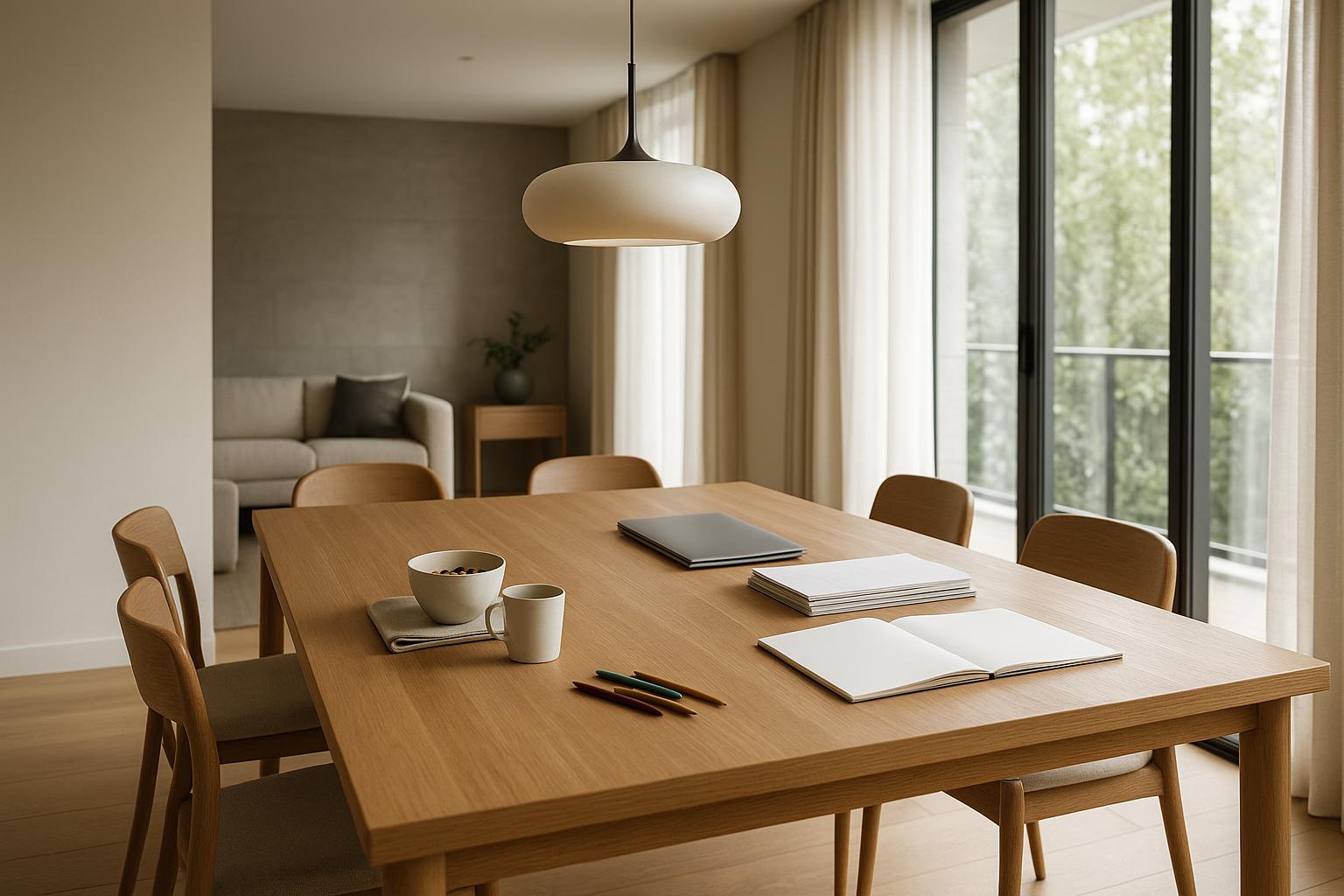
If a sculptural pendant anchors the dining table, island lights can use a quieter profile. If the island is the household’s social centre, a substantial linear fitting or a carefully spaced pendant group may take priority while the dining zone uses a restrained ceiling light. Lamps and wall fittings can then lower the visual level around sofas and armchairs.
Review each pendant from likely viewing positions, not just from directly in front. A bare lamp that appears attractive in a product image may produce uncomfortable glare when seen from a nearby stool. A pendant hung too high can lose its relationship with the table or bench, while one hung too low may interrupt conversation and views through the room. Ceiling fans must also be included in the layout so fittings do not crowd moving blades. Confirm suitable placement and installation requirements with an appropriately licensed electrician.
Solve task lighting before adding decoration
Kitchens, bathrooms and home offices need clear, well-directed light. Decorative fittings can form part of the solution, but appearance should not obscure the task.
At a kitchen bench, light needs to reach the work surface without the person preparing food casting a heavy shadow over it. Pendants may add atmosphere above an island, while downlights, adjustable spotlights or integrated joinery lighting provide practical support. Consider whether bright lamps will be visible to people seated nearby.
At a bathroom mirror, overhead light alone can create shadows around the eyes and under the chin. Suitable wall-mounted or mirror lighting can provide more balanced illumination. Bathrooms have location-specific installation considerations, so product suitability and placement should be checked with an appropriately licensed electrician.
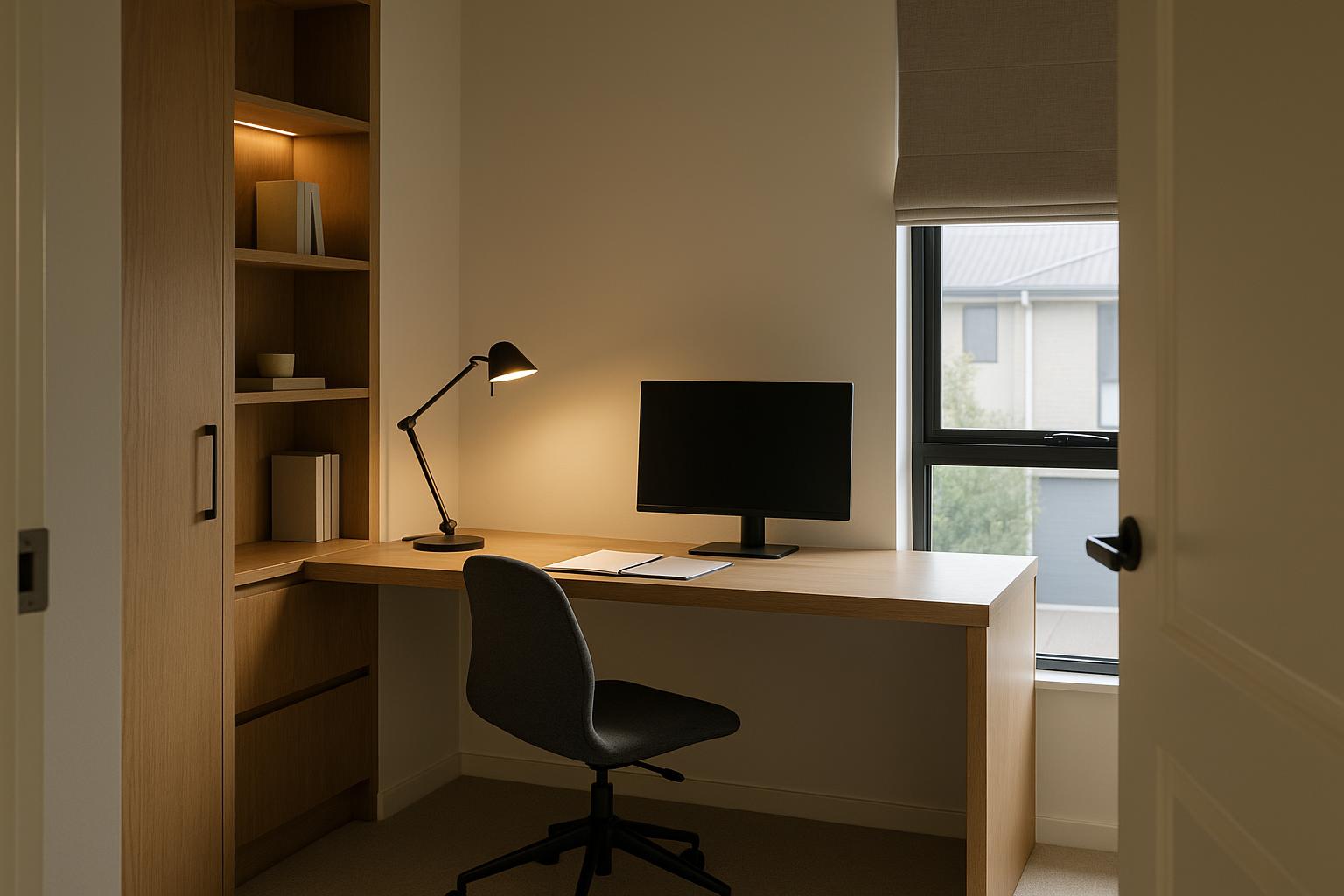
A home office presents a different problem. A bright screen against a dark room can feel uncomfortable, but a lamp reflected in the monitor is equally distracting. Use an adjustable task light for the desk and moderate background light elsewhere in the room. Position the lamp after considering screen angle, handedness and the direction of daylight.
Use lighting to improve entries and hallways
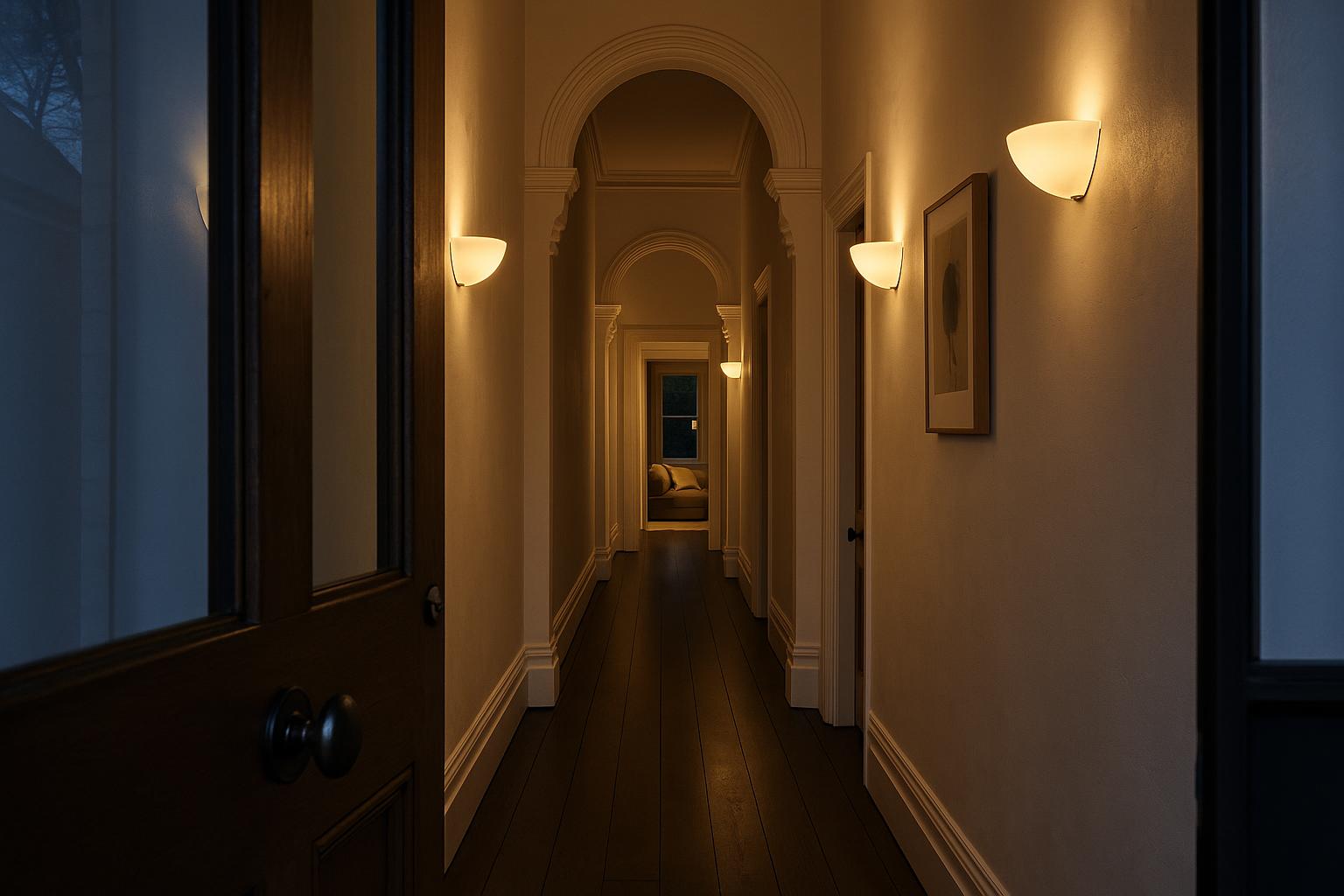
Circulation spaces shape the experience of moving through a home. A long hallway lit only by strong overhead light can appear flat, whereas gentle pools from wall sconces or spaced ceiling fittings can reveal floorboards, artwork and changes in direction.
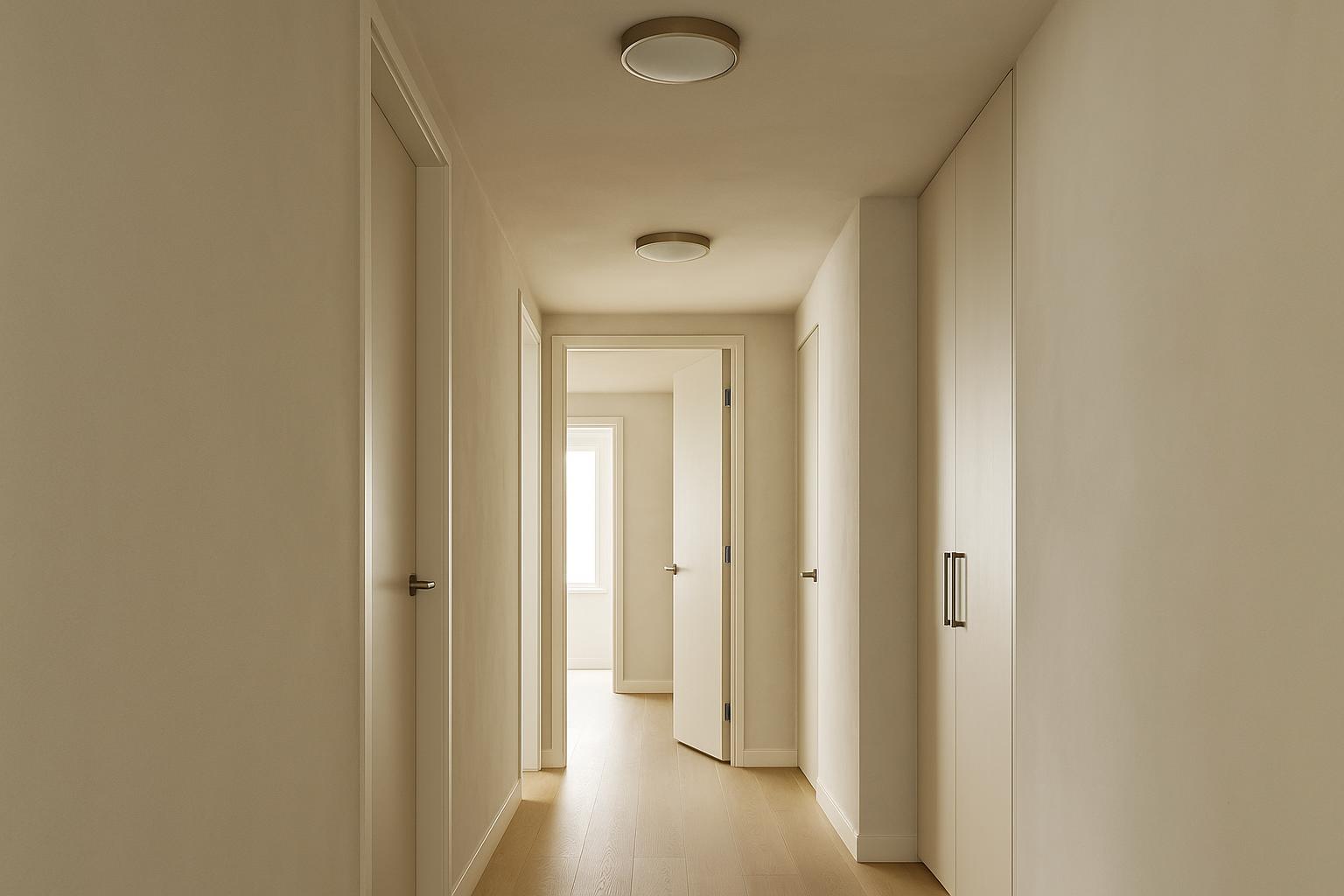
Compact entries often suit flush or semi-flush fittings that protect headroom and preserve a clear view. A tall stairwell can accommodate a larger pendant, but its scale and appearance should be assessed from the upper landing as well as from below. Avoid placing visual emphasis where it interferes with movement or makes a narrow route feel crowded.
Balance indoor and outdoor light
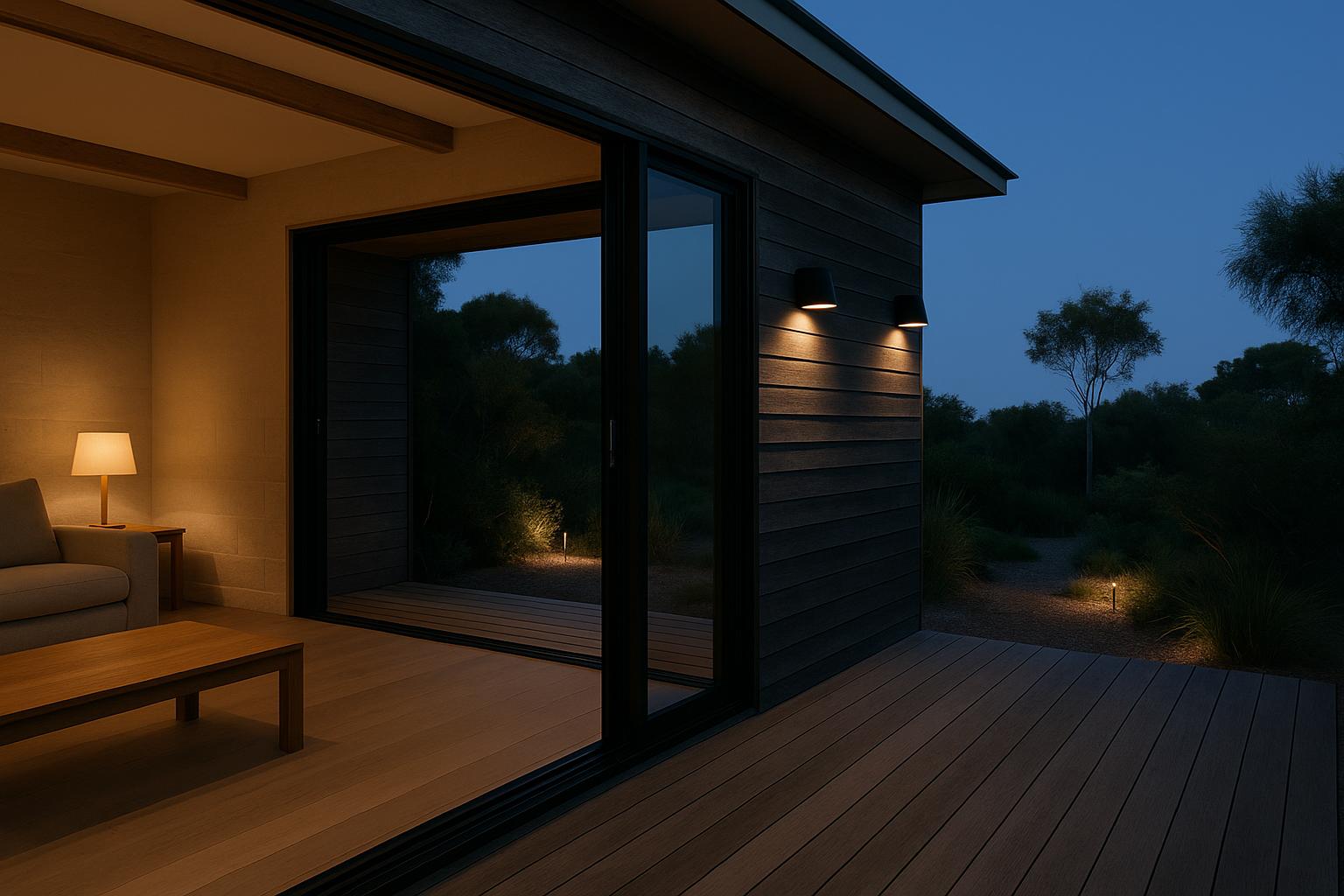
In many Australian homes, decks, verandahs and patios become part of the evening living area. The transition is most comfortable when neither side of the glazing is dramatically brighter than the other. A harshly lit patio can turn windows into reflective surfaces, while an over-bright interior can make the garden beyond disappear after dark.
Outdoor wall lights can identify doors and illuminate the immediate deck, with restrained landscape lighting adding depth farther into the garden. Aim for a sequence of useful light rather than blanket brightness. The decorative connection might come from similar proportions or a shared dark finish, but outdoor fittings must be expressly suitable for their intended location and exposure. Coastal conditions also warrant careful attention to the manufacturer’s guidance.
Review the complete selection before ordering
Gather every shortlisted fitting onto one page before buying. Record its width, height, ceiling drop, finish and lamp visibility. This simple comparison often reveals that two feature lights are competing, a hallway fitting is larger than expected or a room has plenty of decorative light but no practical task source.

designer lights tend to be more convincing when they have space around them. If several statement pieces share one view, removing one may strengthen the whole scheme. Quieter fittings are not an afterthought; they give the architecture, furnishings and lead pieces room to register.
When comparing a lighting store in Australia with other buying options, look beyond the styled image. Check product dimensions, installation information, intended location and any details affecting glare or ceiling clearance. Once the room brief and final edit are complete, you can explore Luxora Lighting’s range by fitting type, room and material, then confirm installation requirements with an appropriately licensed electrician.
A successful home lighting scheme does not call attention to every individual fitting. It supports daily routines, makes movement comfortable and gives important spaces a clear focus. The products can vary from room to room; the reasoning behind them is what creates continuity.