The most convincing light fittings respond to the architecture around them. Learn how to assess ceilings, walls,...
- There are no more items in your cart
- Shipping
- Total $0.00
Read the Room Before You Choose the Light
Begin with what cannot move
A light fitting is one of the last elements installed, but it should not be considered in isolation from everything already built. Ceiling heights, door openings, window frames, cabinetry and wall finishes establish the conditions in which the light will be seen. They also determine where it can sit comfortably.

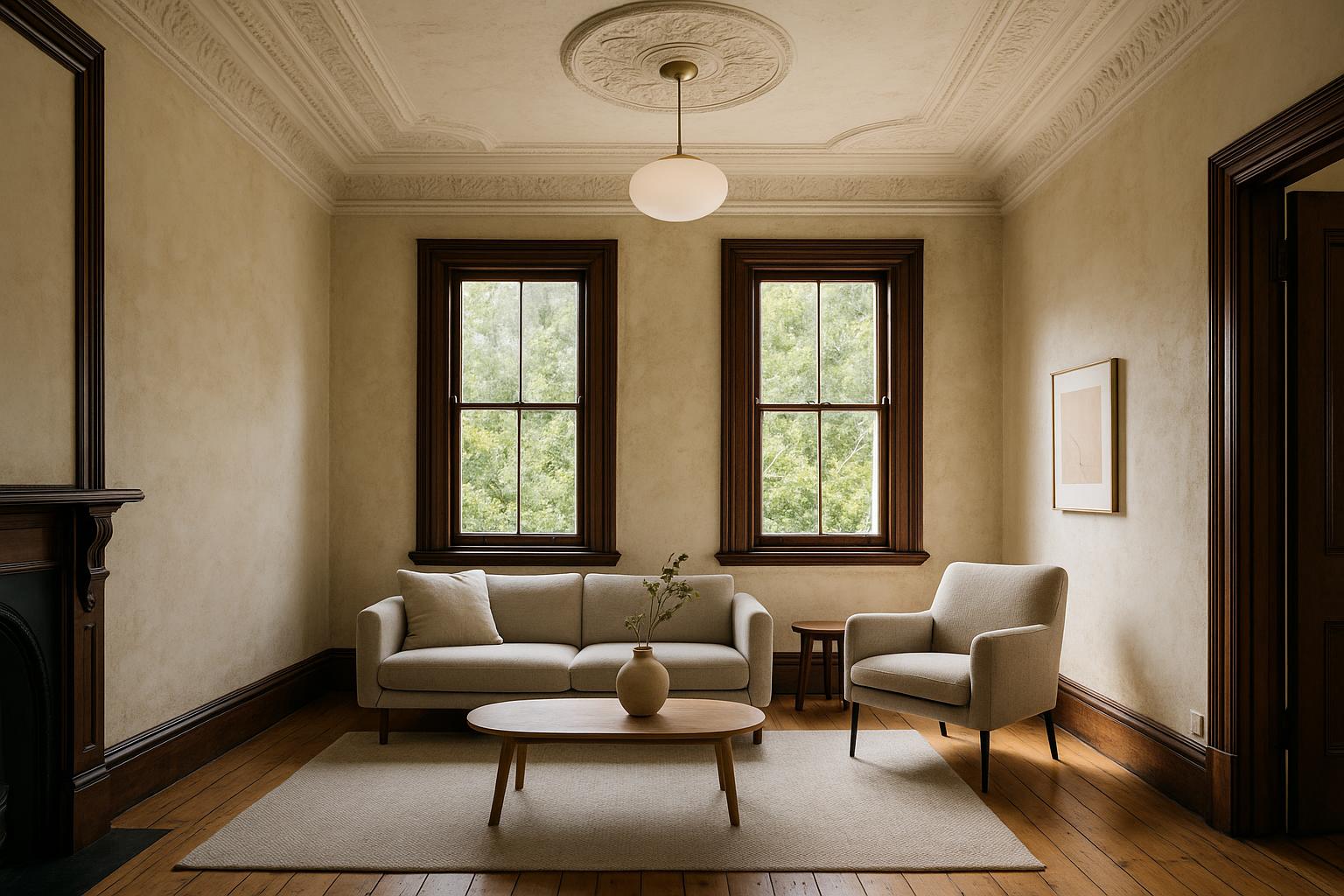
This is particularly important when choosing luxury lighting in Australia, where housing types range from Victorian terraces and Queenslanders to compact apartments and open-plan new builds. A pendant that commands a generous room with a decorative ceiling may overwhelm a modest apartment. A restrained wall light can have far greater presence when it aligns neatly with panelling, a mirror or a run of joinery.
Start with the elements that are difficult or expensive to change. Note the ceiling construction, fixed services, furniture positions and main walking paths. The objective is not to make every line match. It is to understand the architectural framework before introducing another shape into it.
Read the room in elevation
Floor plans are useful for spacing, but they do not show how a fitting will relate to the room at eye level. An elevation reveals whether a wall light is crowded by a door frame, whether a pendant interrupts a view through a window, or whether a bedside fitting sits at a practical height beside the mattress.
A simple photograph taken square-on can be enough for an initial check. Mark the proposed fitting position on the image and compare it with nearby edges. For a pendant, use removable tape or a length of string on site to represent its width and lowest point. This makes an unexpectedly bulky form or awkward drop easier to recognise before ordering.
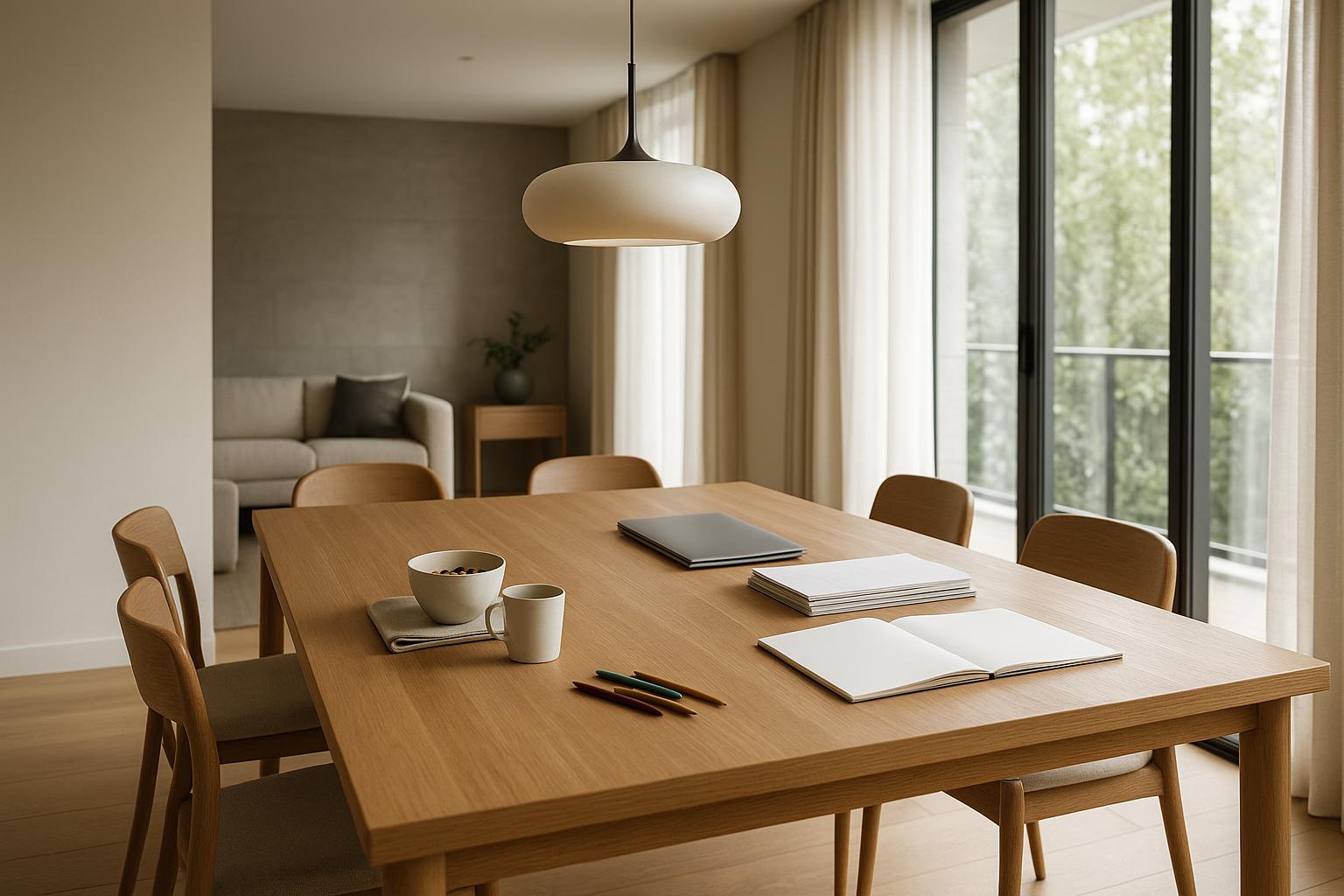
Pay attention to visual centres rather than assuming the geometric centre is correct. A dining table, kitchen island or bed may establish the centre that matters. In an open-plan room, the fitting often needs to relate to the furniture group below rather than the full ceiling area.
Resolve the ceiling before selecting a feature
Ceilings contain more competition than product photography suggests. Cornices, roses, beams, bulkheads, fans, air-conditioning outlets and downlights all affect how a decorative fitting reads. Adding a pendant without mapping these elements can leave the ceiling looking congested.
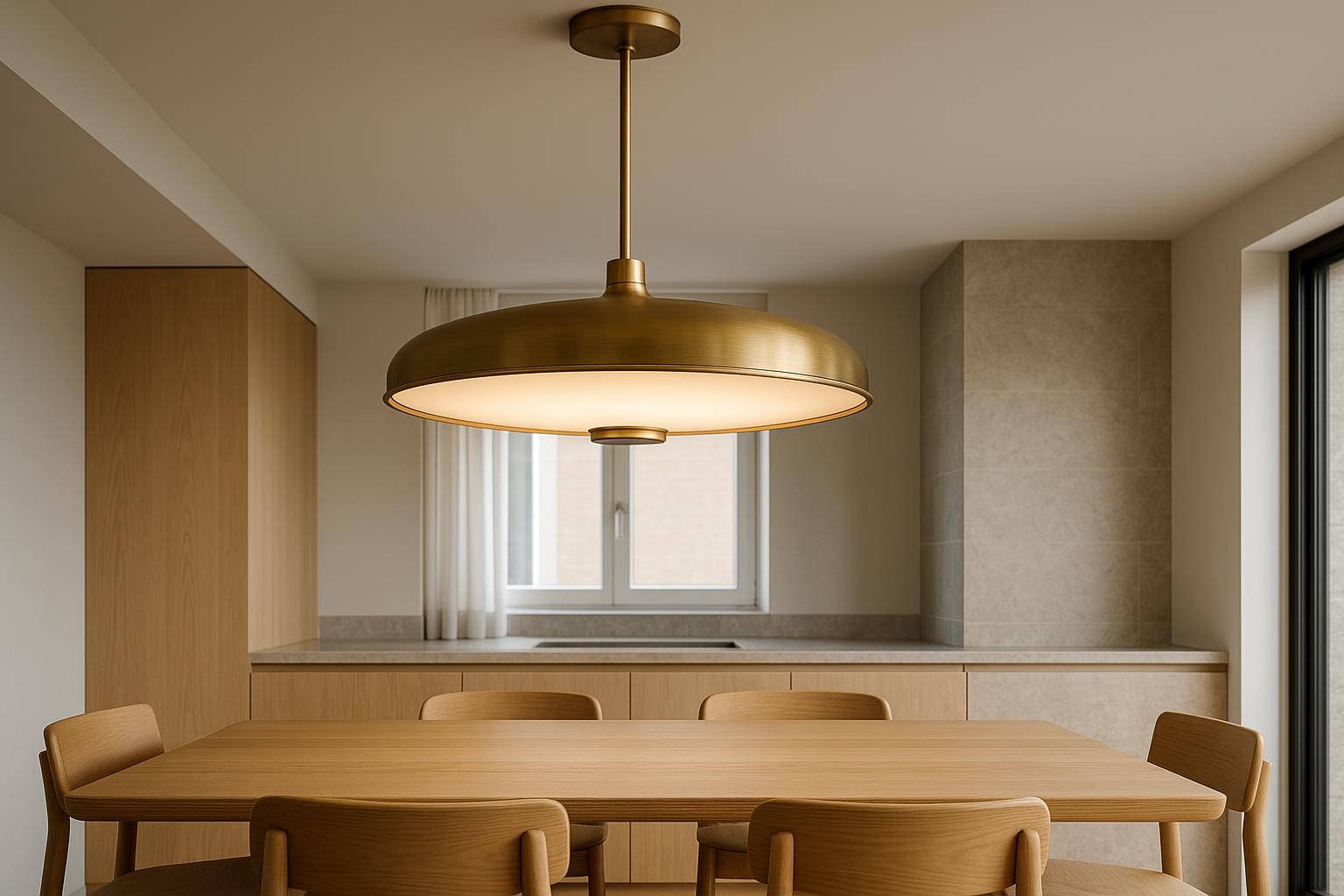
In a Brisbane Queenslander with a high ceiling and generous room proportions, a suspended fitting may help bring the scale down to the occupied part of the room. In a lower Melbourne apartment, a flush or semi-flush light can preserve a sense of height while adding material and shape. Neither response is inherently more luxurious; suitability is what gives the choice authority.
To complement this topic, you can also read What Good Lighting Does After Sunset.
Raked ceilings require particular care because the suspension point, roof line and furniture arrangement may pull in different directions. View the proposed location from the doorway and any adjoining living area, not only from directly underneath. Installation method, weight, clearances and compatibility with the ceiling should be confirmed from the product information and discussed with an appropriately licensed electrician.
Use joinery as a setting-out guide
Cabinetry provides strong lines that lighting can either reinforce or disrupt. Kitchen islands, vanity units, shelving, wardrobes and built-in desks are often better setting-out references than the outer walls of the room.

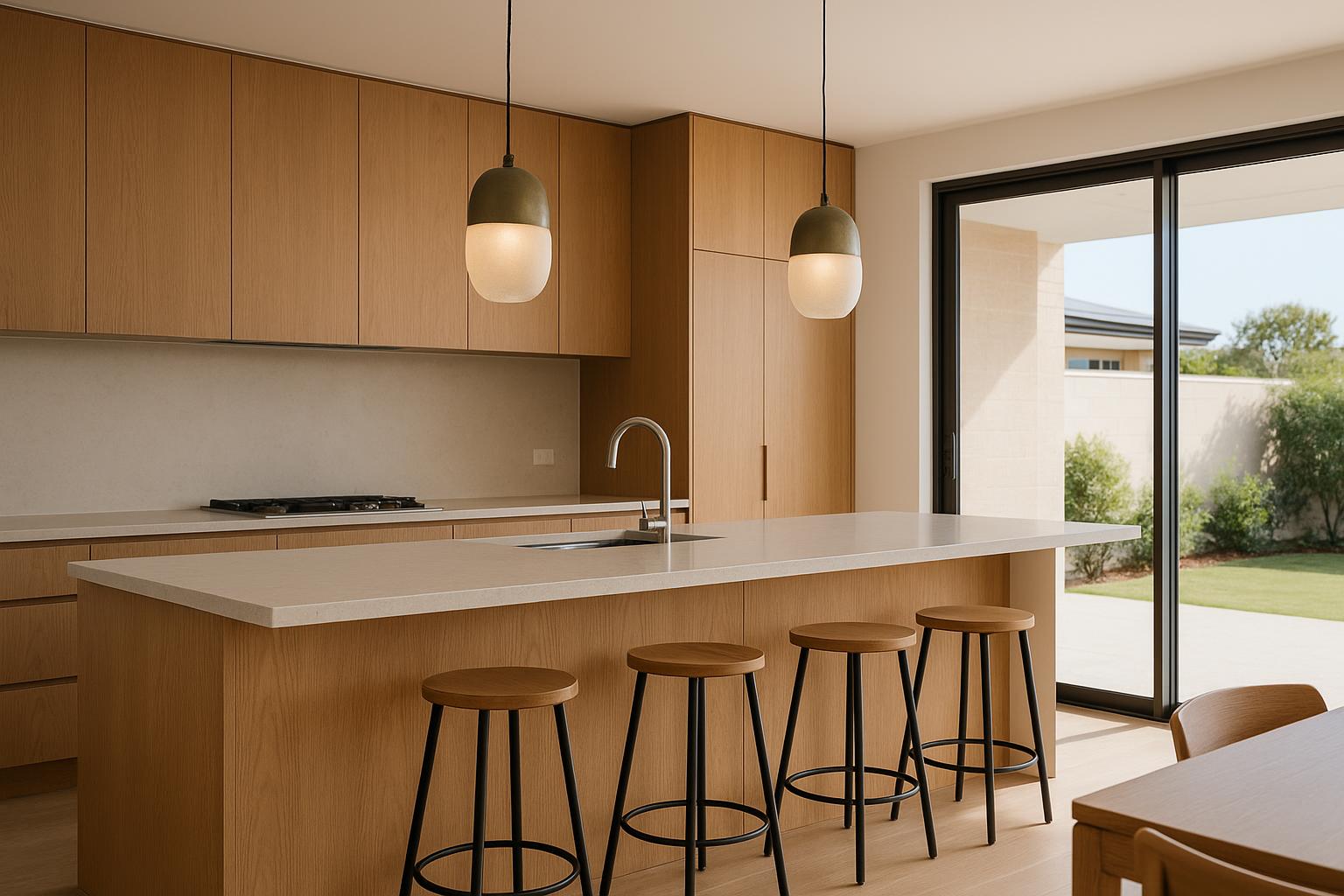
Above an island, consider the usable benchtop rather than including an overhang or an unused end in the spacing calculation. Check whether pendant shades will obstruct conversation, clash visually with tapware or compete with strongly patterned stone. Two well-separated fittings may look calmer than three compressed into the same span. The right number depends on the dimensions and light distribution, not a standard styling formula.
Joinery can also carry quieter forms of indoor lighting. A small source within a bookshelf can give depth to selected objects, while task lighting at a desk or preparation area reduces the burden on the ceiling scheme. Lighting every compartment usually weakens the hierarchy. Choose the shelves, work surfaces or recesses that benefit from emphasis and allow the rest to recede.
Anticipate how finishes will handle light
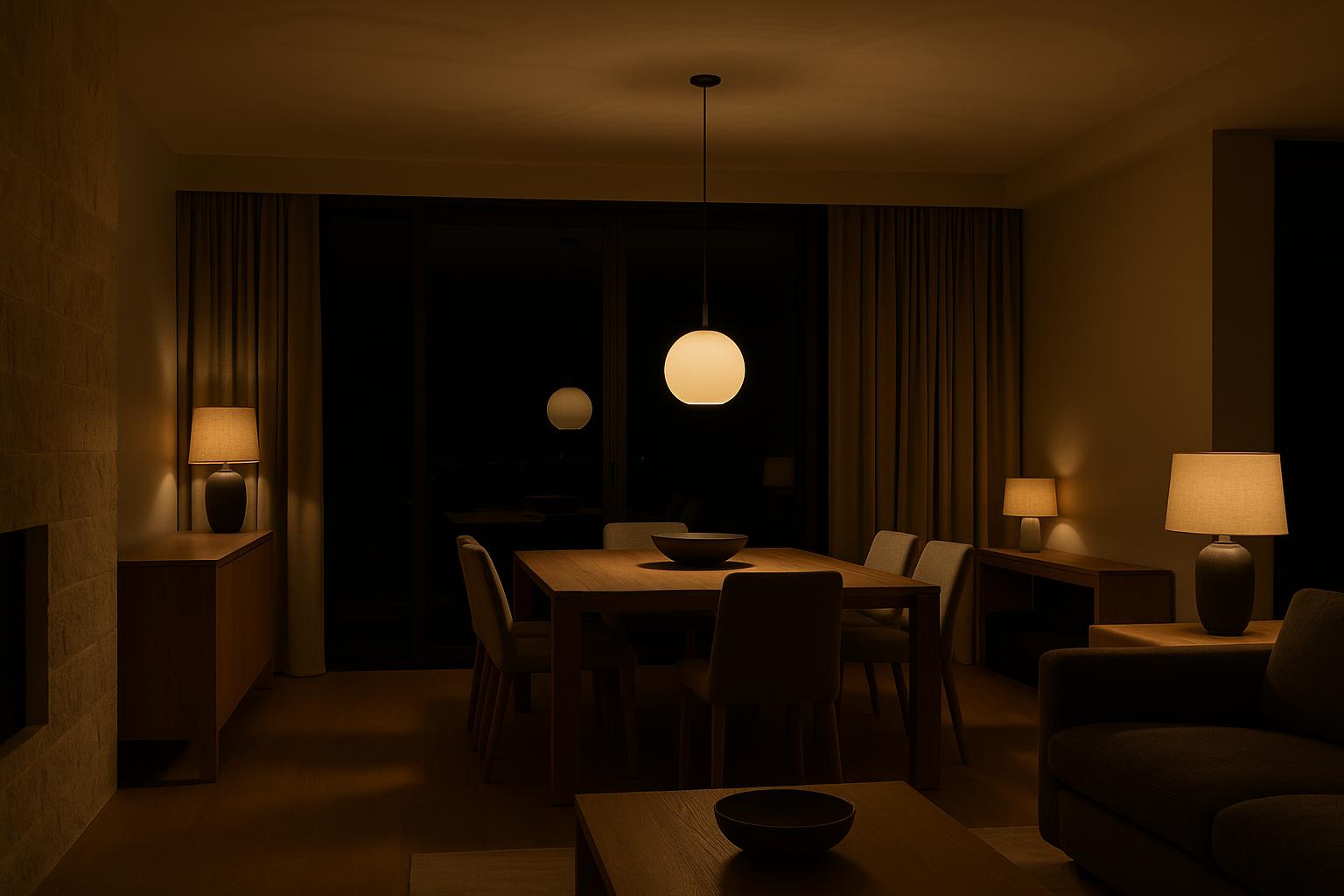
The surface receiving the light matters as much as the object producing it. Matt plaster tends to soften a wash, while polished stone, glass and glossy cabinetry can expose reflections and bright points. Dark timber may absorb more of the effect than a pale wall, changing how prominent the fitting appears after sunset.
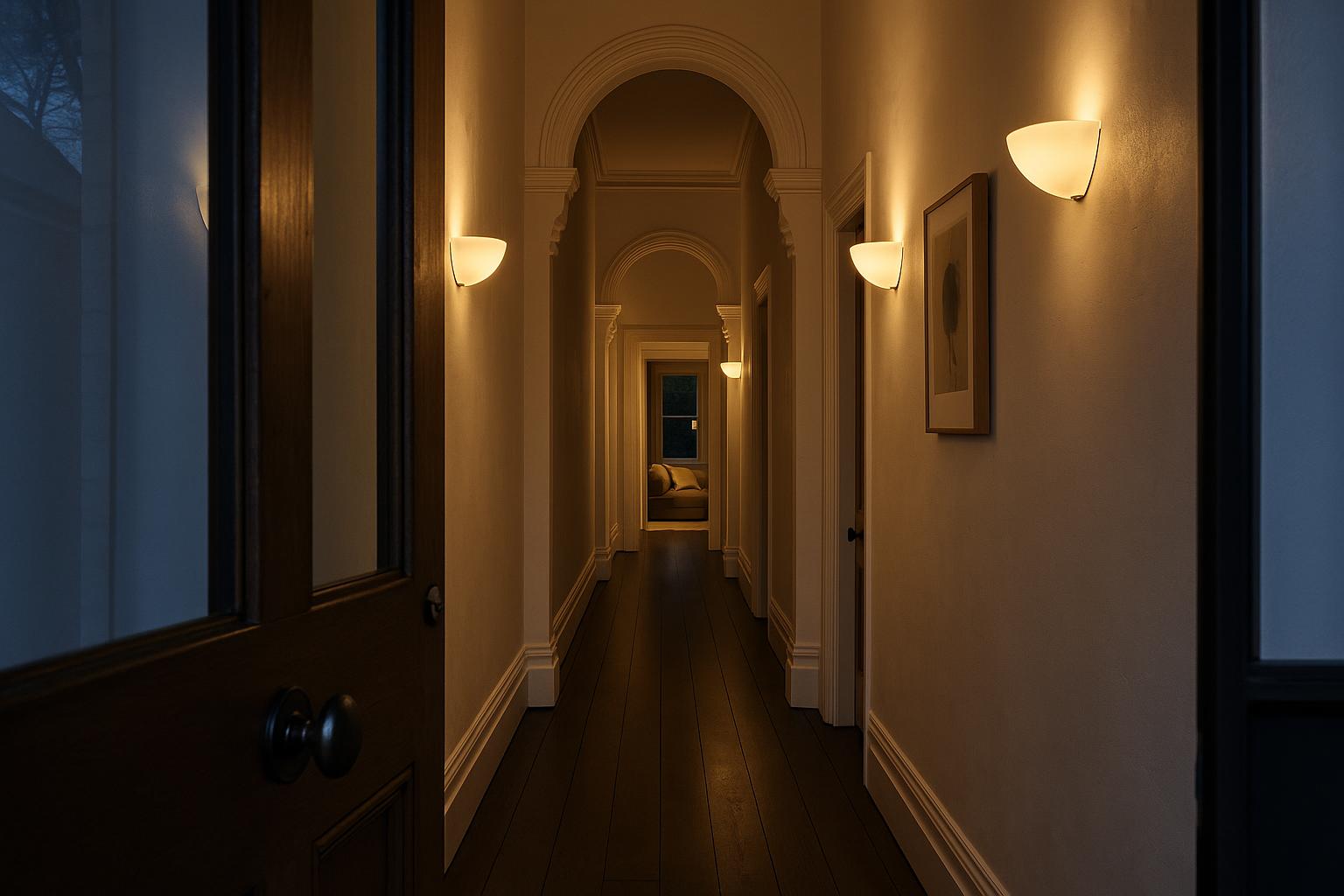
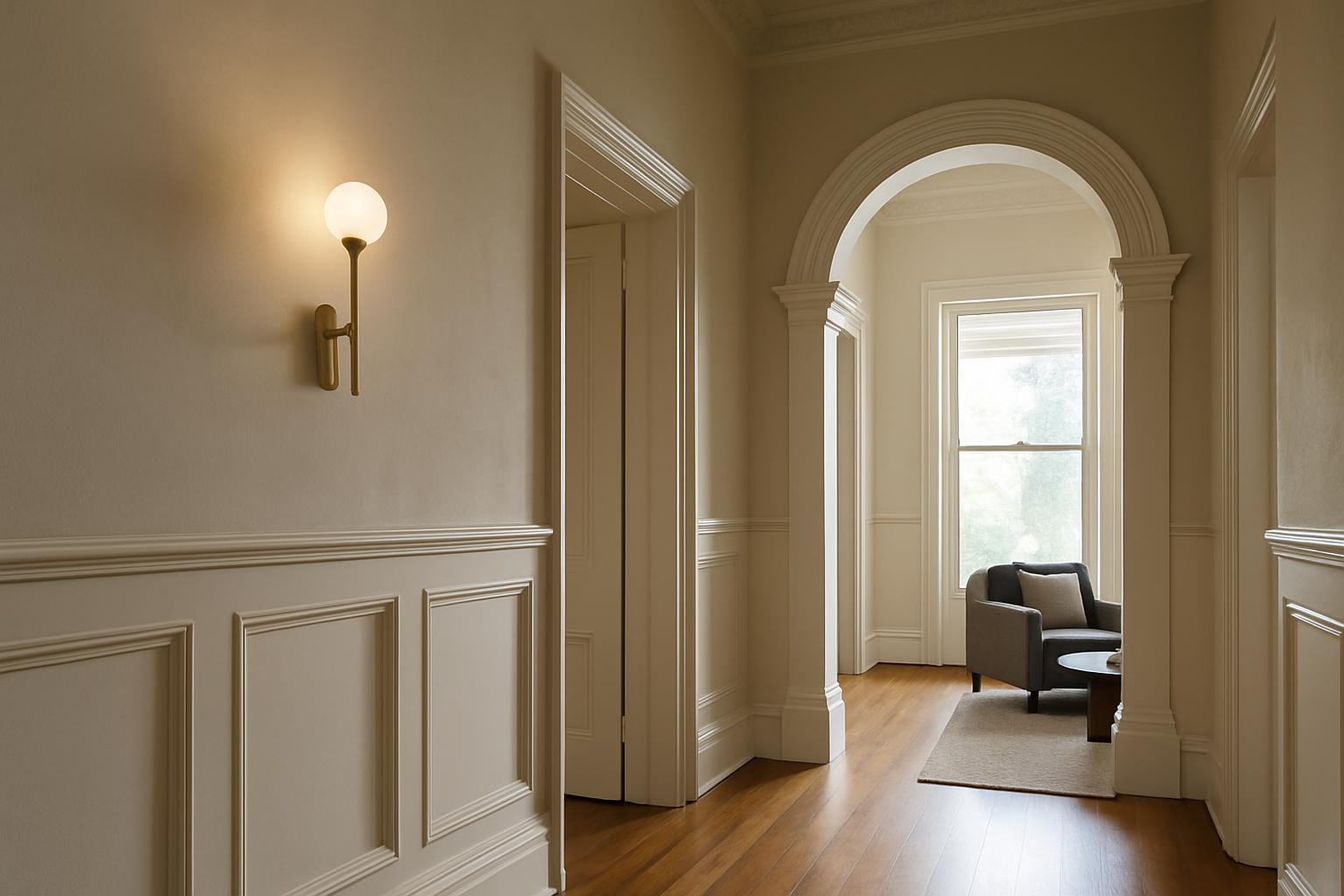
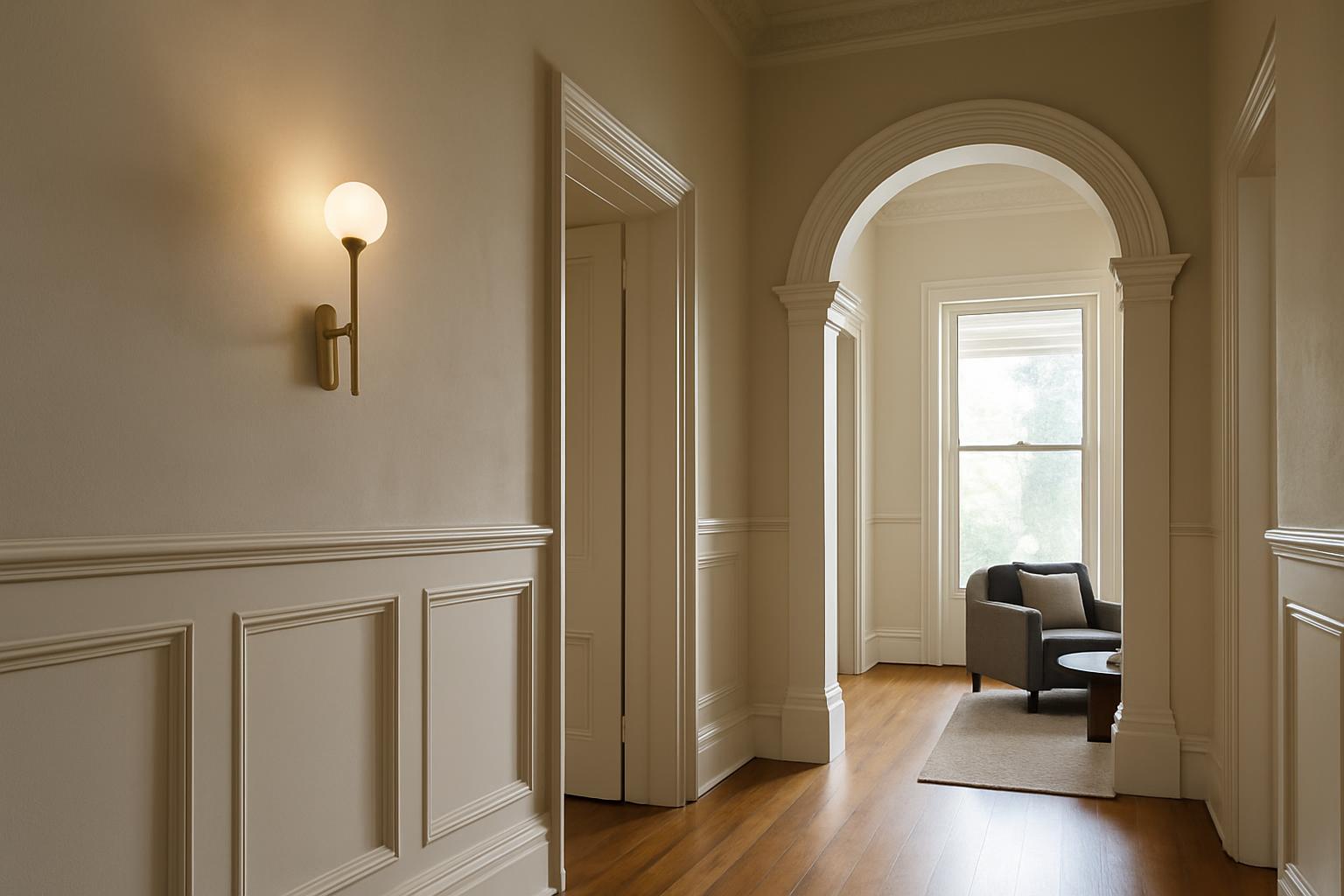
Before specifying a wall sconce, inspect what falls within its beam. A textured brick wall may become richer under grazing light, but uneven plaster can reveal every repair. A mirrored splashback may reflect the lamp itself from several positions. In a hallway, generous blank space around a sconce often looks more considered than placing it between artwork, switches and closely spaced doorways.
In the same direction, Make Every Dollar in Your Lighting Budget Count offers useful ideas for choosing home lighting more confidently.
Bathrooms add practical constraints. Mirror lighting should relate to the basin position, mirror width and the faces of the people using it, rather than being placed solely for symmetry in a wall elevation. Choose products suitable for the proposed location and have placement and installation requirements checked by an appropriately licensed electrician.
Test the important views
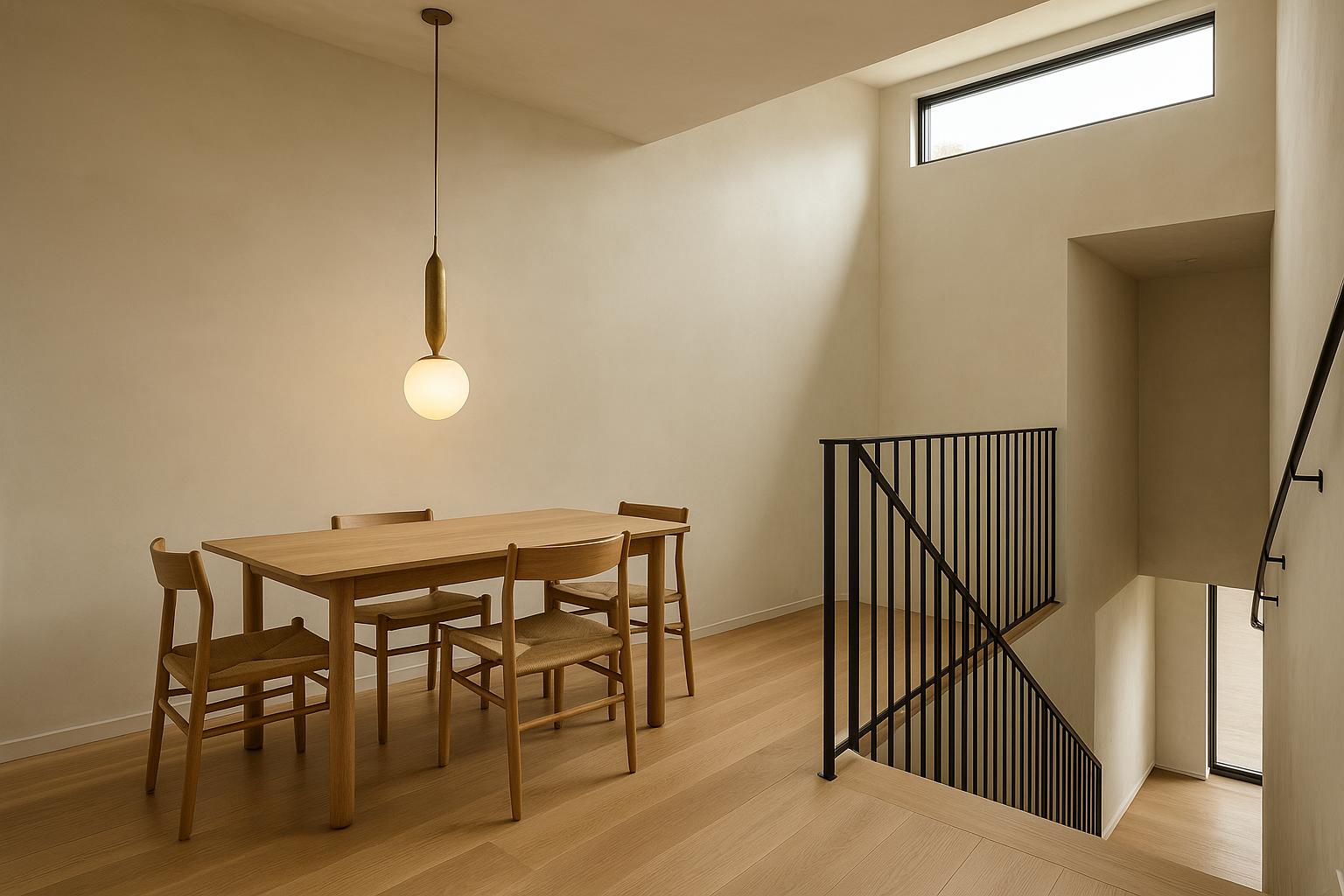
Feature lights are rarely experienced from a single fixed position. A dining pendant may also be visible from the entry, kitchen and garden doors. A stairwell fitting can be seen from two levels. These longer views quickly reveal an awkward scale or a suspension point that looked reasonable only on plan.
Walk through the home along the routes used every day. Pause at the front door, the end of the hall and the transition between kitchen and living areas. Check whether the proposed fitting overlaps a window mullion, artwork, ceiling fan or another decorative light. If several views cannot all be resolved, favour the approach seen most often rather than chasing perfect alignment from every angle.
Also consider the view through the fitting. Open glass, fine frames and restrained forms can preserve outlooks across a room. Solid shades and broad sculptural forms need enough space around them to avoid becoming visual barriers.
Create definition in compact rooms
Small rooms do not need anonymous lighting. They need fittings with clear roles and disciplined placement. Because every object occupies more of the visual field, one poorly scaled light can make the room feel busier than it is.
For more consistent lighting throughout the home, the article The Online Lighting Checklist for Australian Homes may also be helpful.
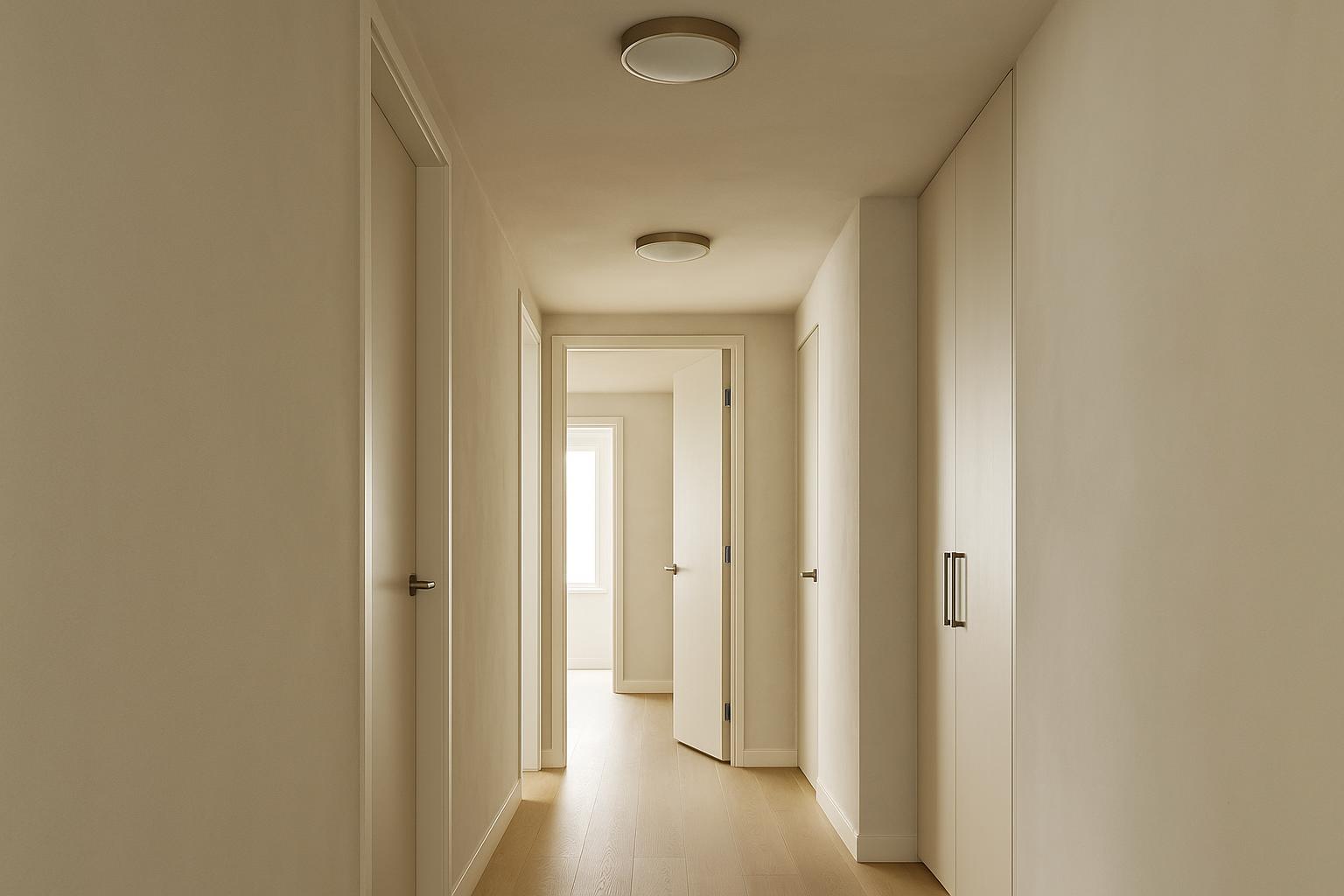
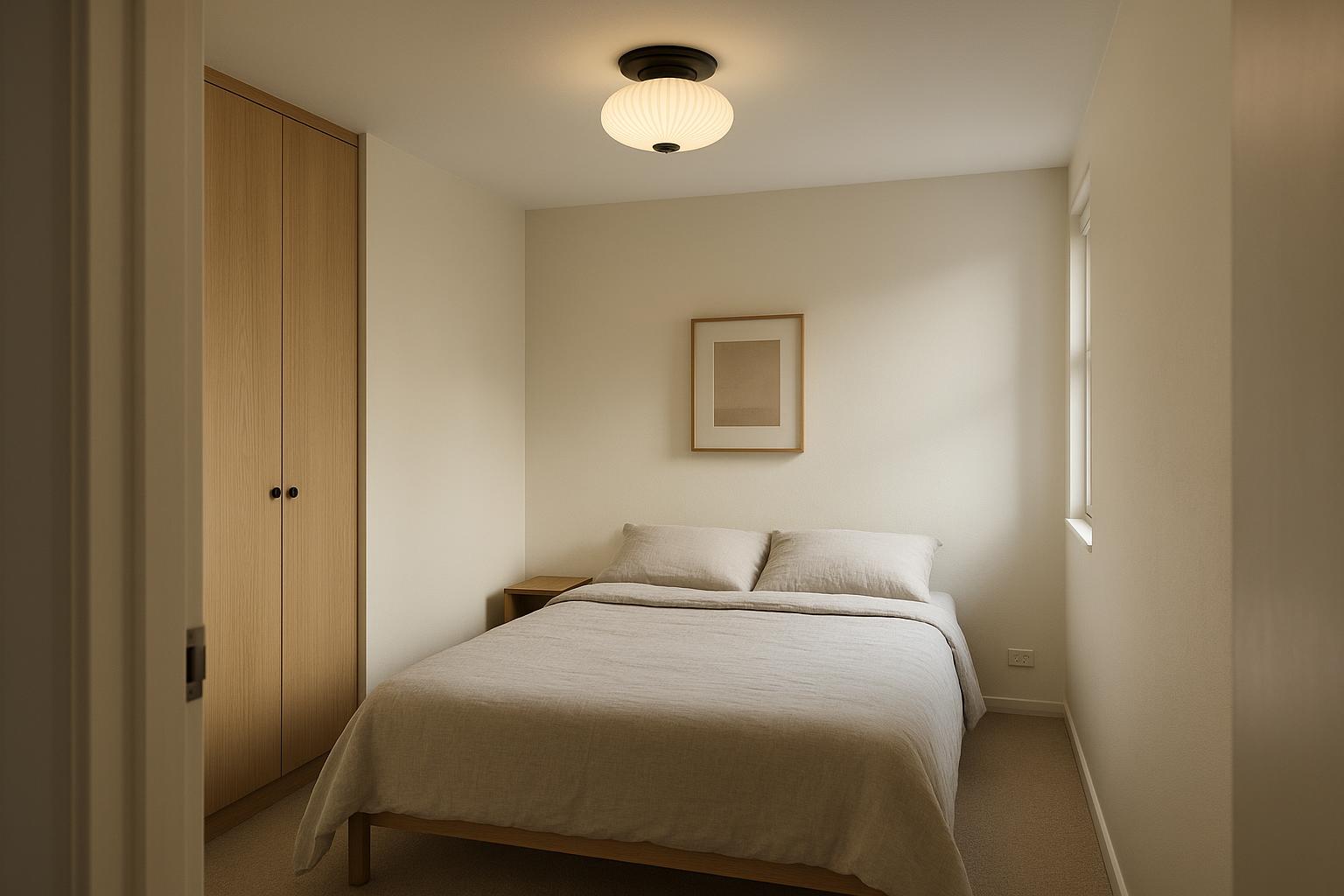
In a compact Sydney bedroom, wall-mounted reading lights can leave narrow bedside ledges free, while a discreet ceiling fitting supplies general illumination. In a short entry, one ceiling light paired with a controlled wash on a wall may create more depth than several decorative fittings. A narrow corridor can gain rhythm from repeated pools of light, provided doors and artwork leave enough uninterrupted wall area.
Layering remains useful, but it does not require a large number of products. Ambient light, a focused task source and one softer light at a lower level can support different activities without crowding the architecture.
Make a room-based buying decision
Before buying, place the shortlisted product dimensions beside a photograph, elevation or sketch of the actual room. Compare canopy size, overall width, projection and drop with the nearby architectural lines. Review finishes alongside samples of paint, timber or stone in both daylight and evening light. Product images are a starting point, not a reliable indication of scale in your home.

- Reserve the strongest fitting for a location with a clear approach and enough surrounding space.
- Let quieter lights support rooms already led by artwork, joinery or expressive materials.
- Check the fitting from adjoining rooms as well as from the furniture directly below it.
- Confirm product suitability and site-specific installation requirements before purchase.
When you are ready to compare options, explore luxury lighting for Australian interiors with your room dimensions and photographs close at hand. The useful question is not simply which fitting looks most impressive online, but which one makes the architecture feel more resolved.
A successful choice may be sculptural or almost unobtrusive. Its sense of luxury comes from proportion, placement and the way its light meets the surrounding surfaces. When those relationships are right, the fitting looks as though the room was prepared for it from the beginning.