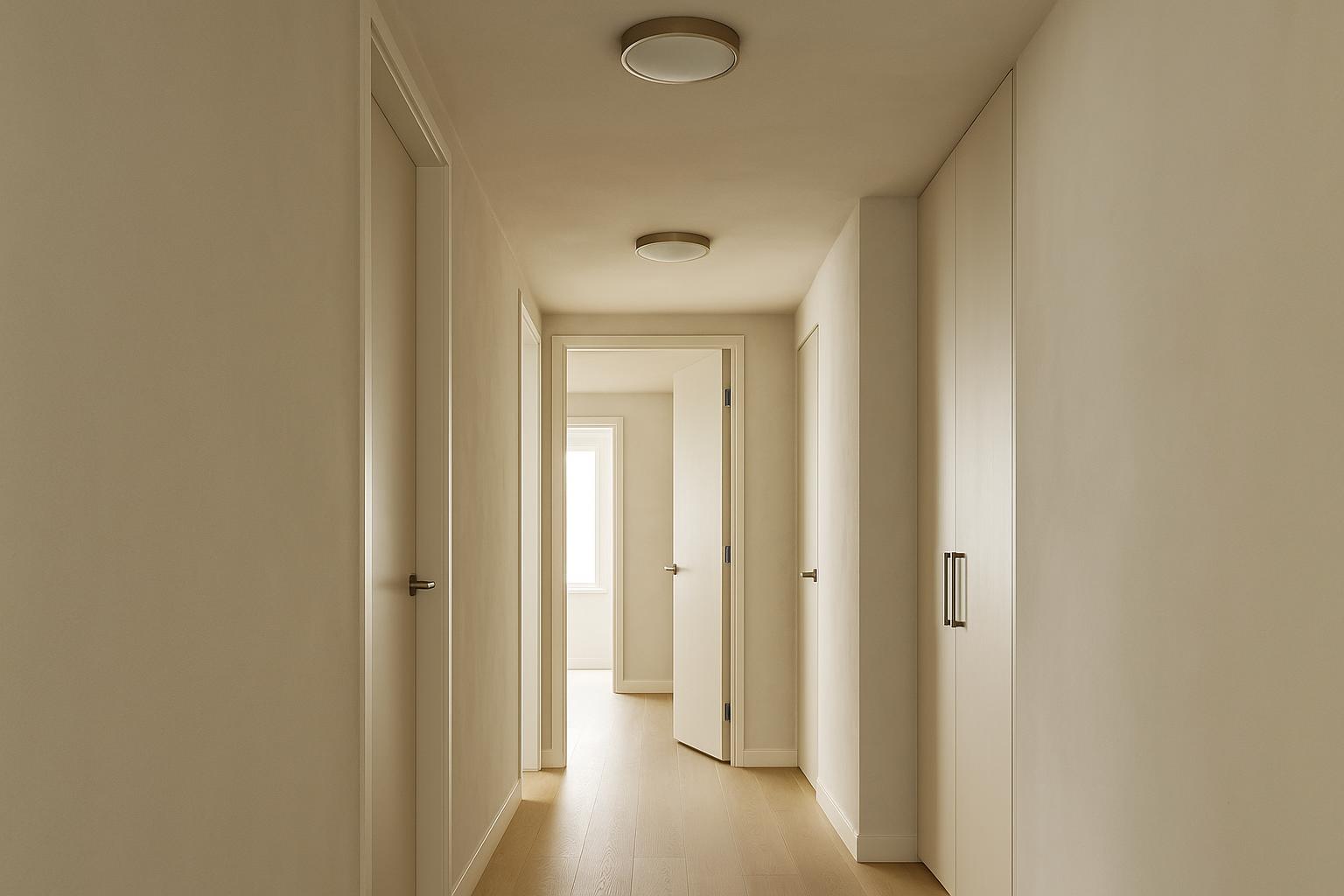
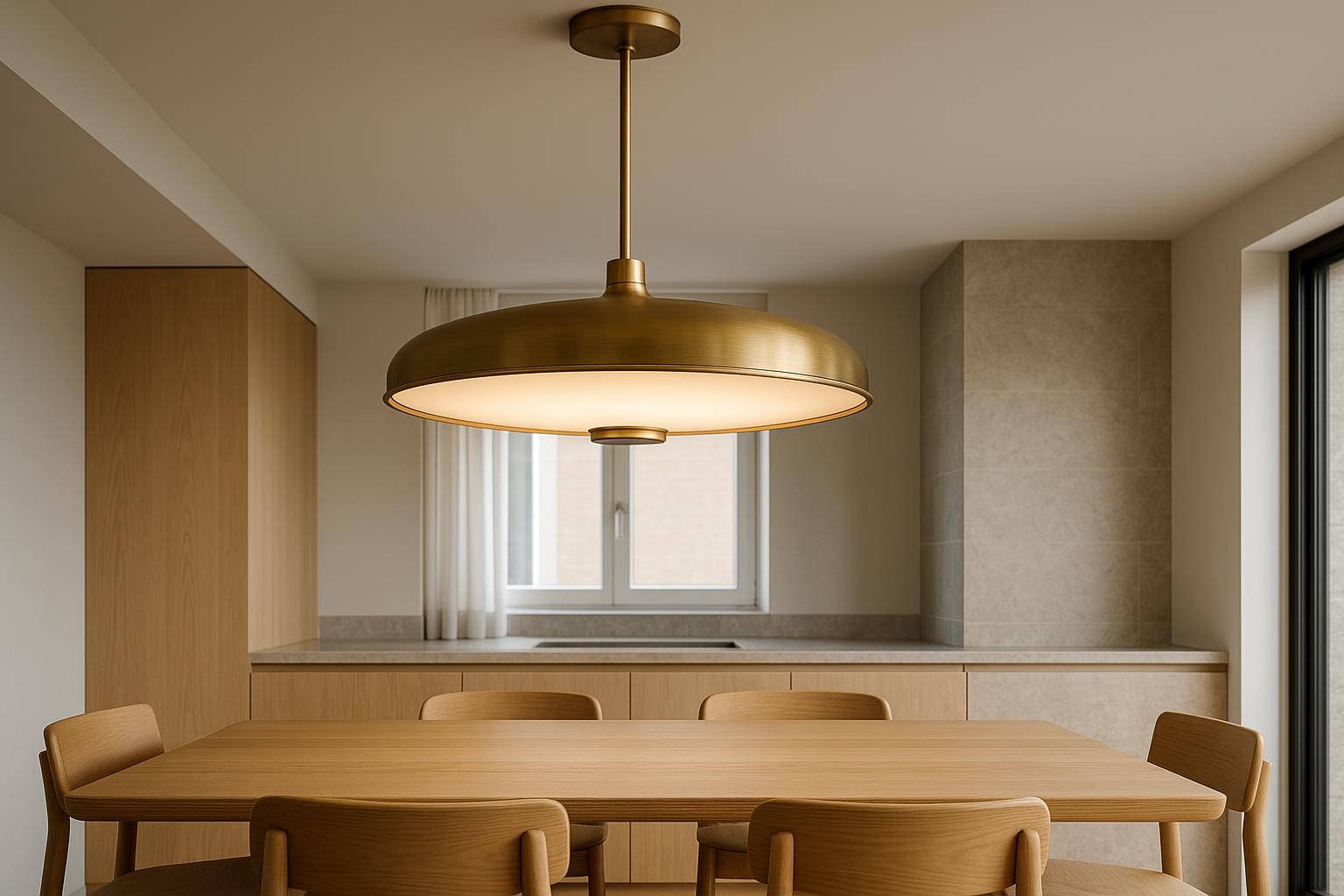
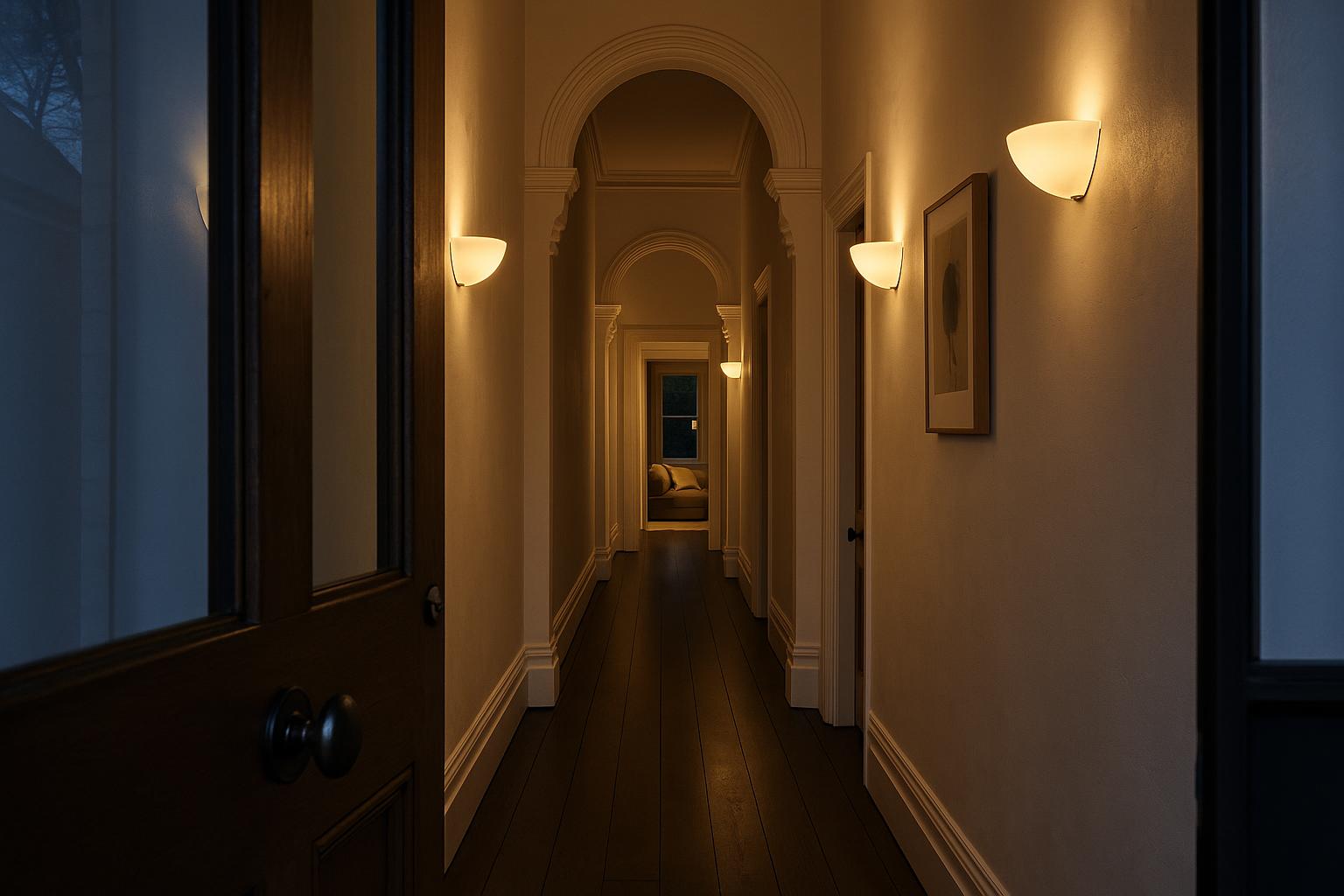
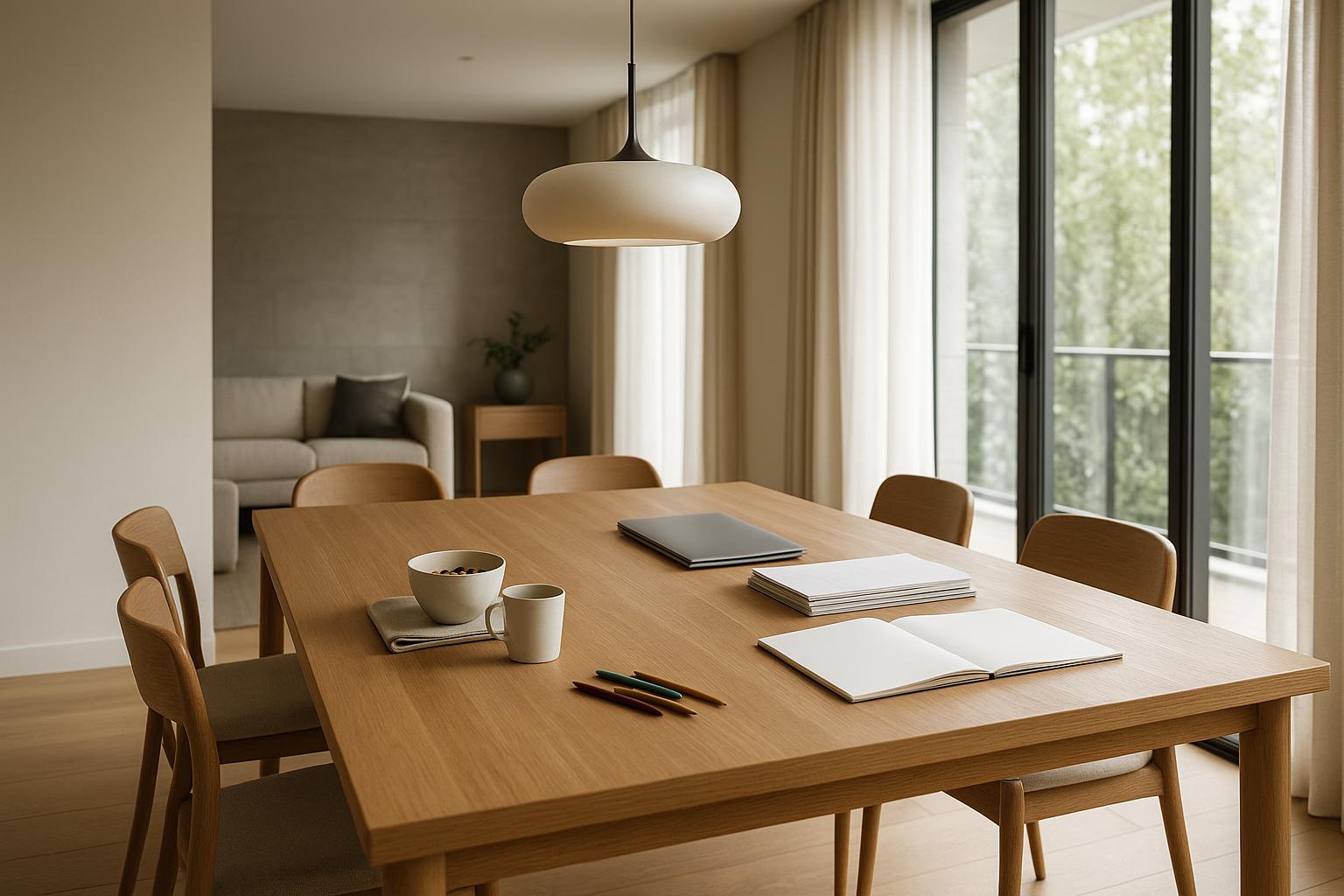
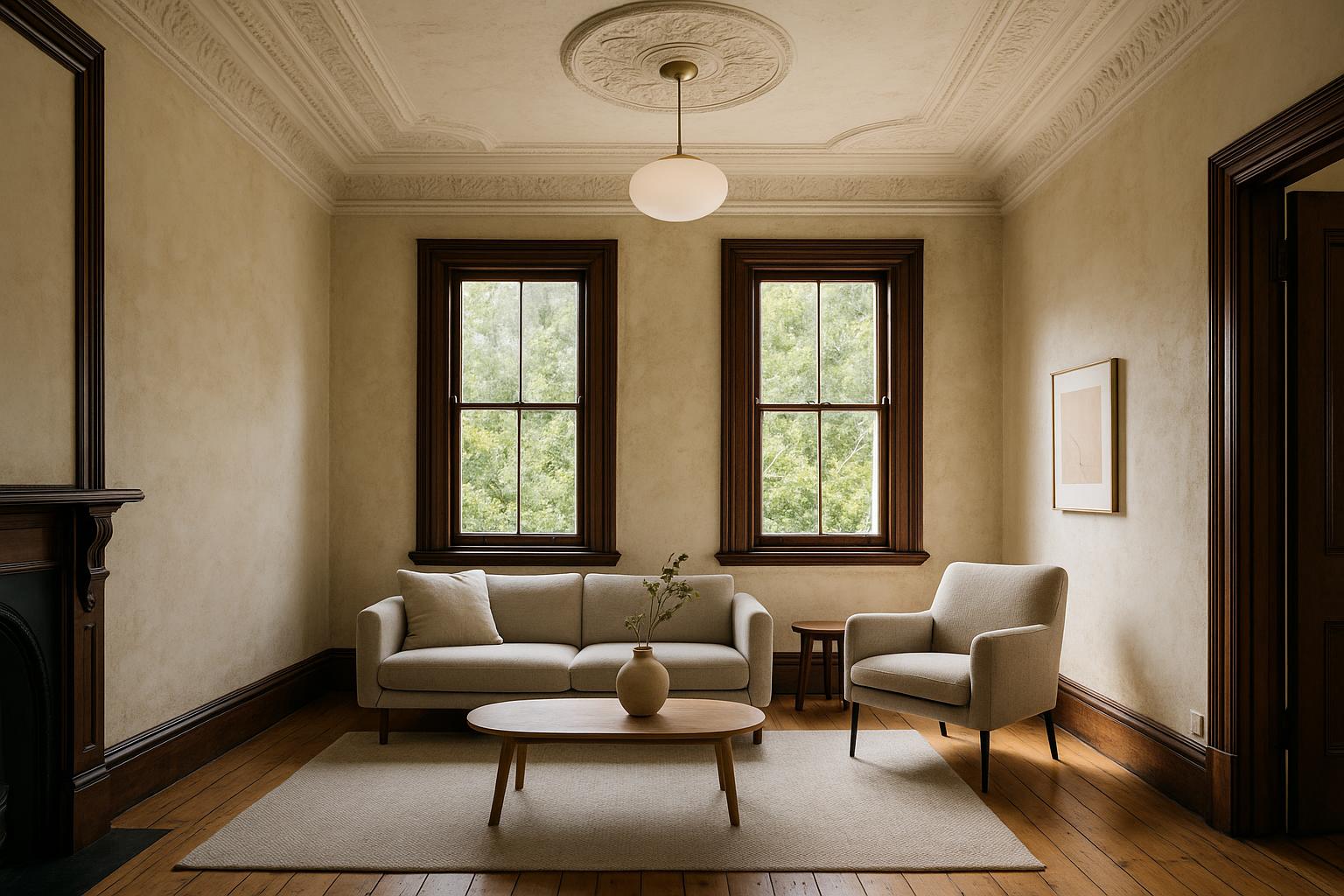
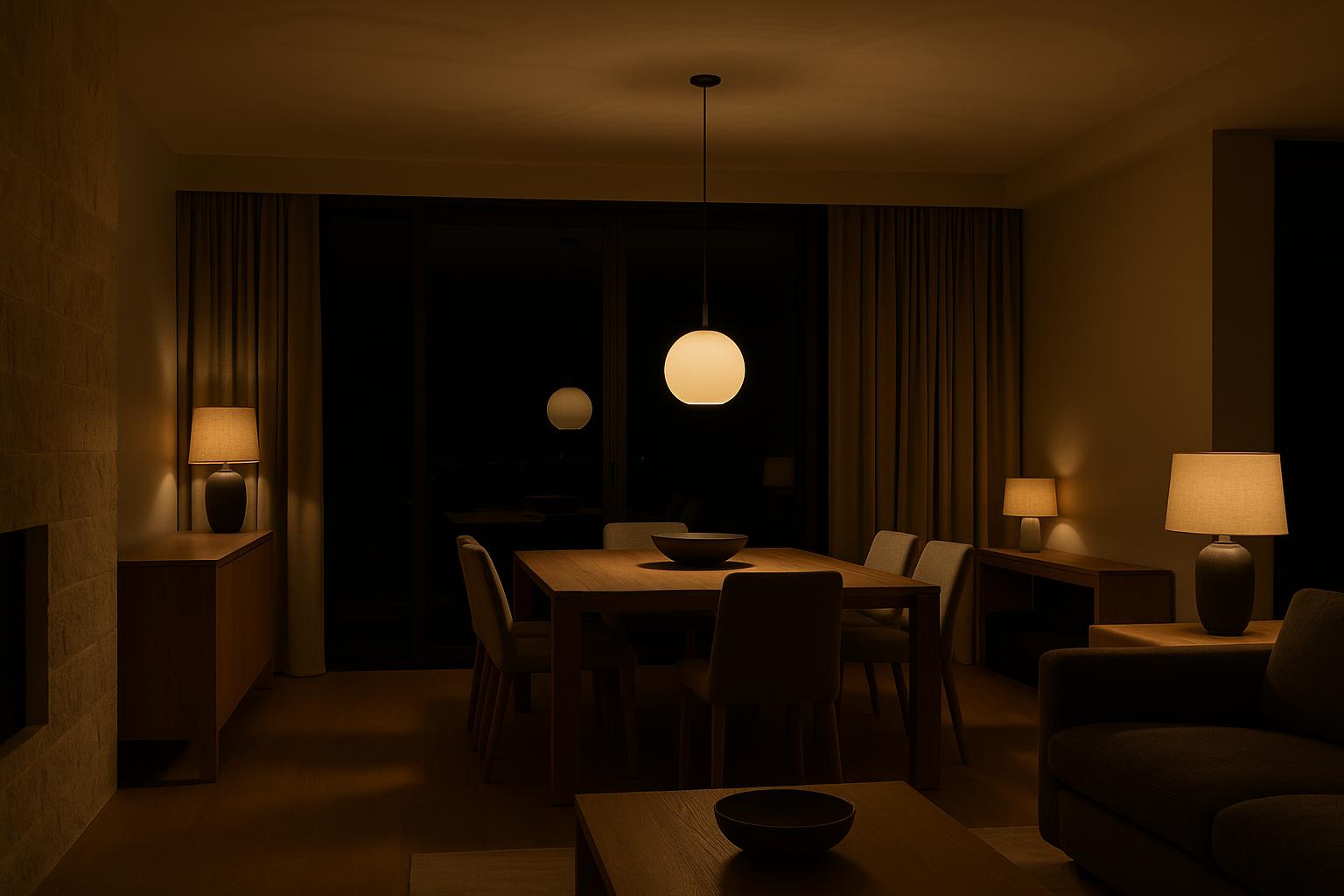
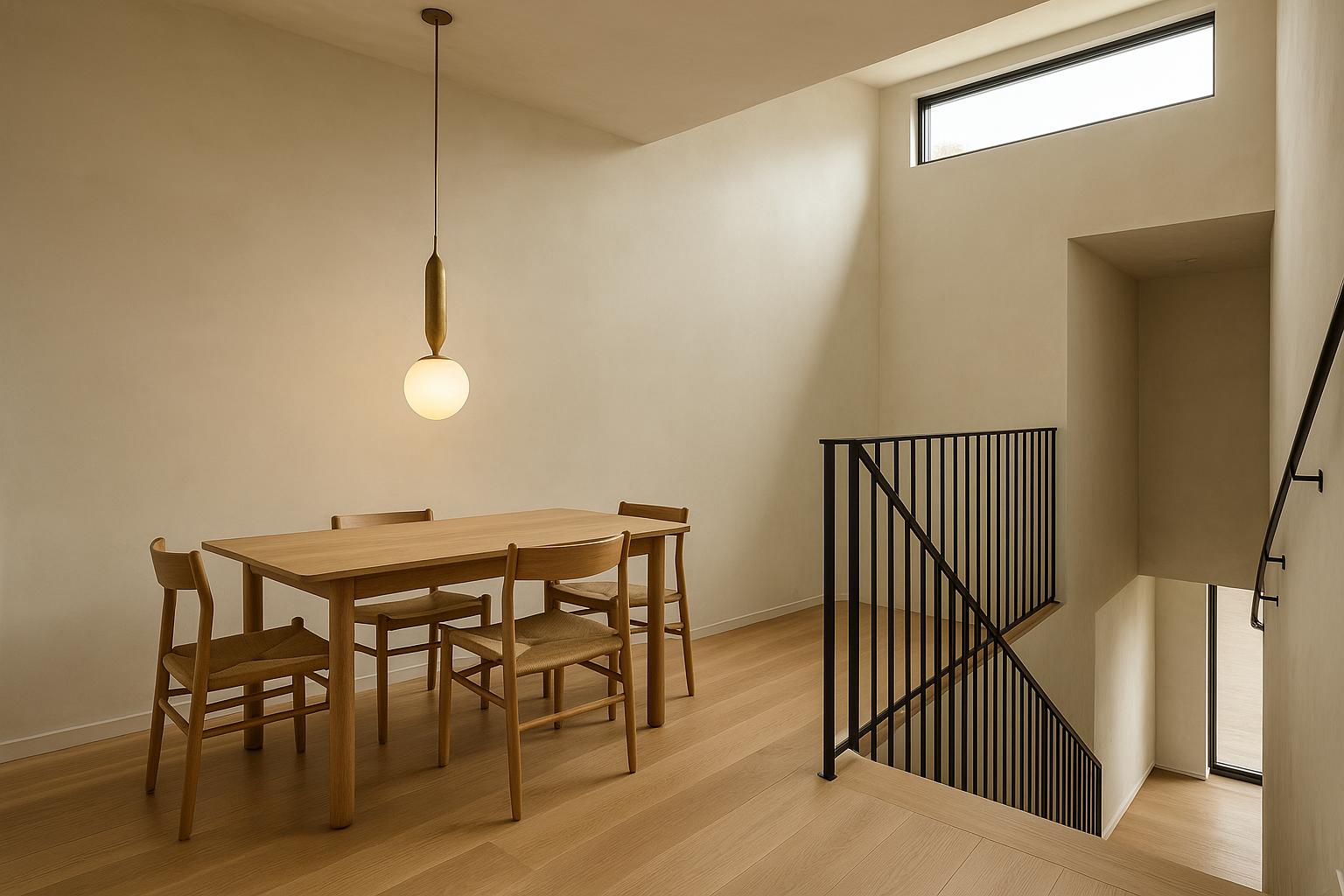
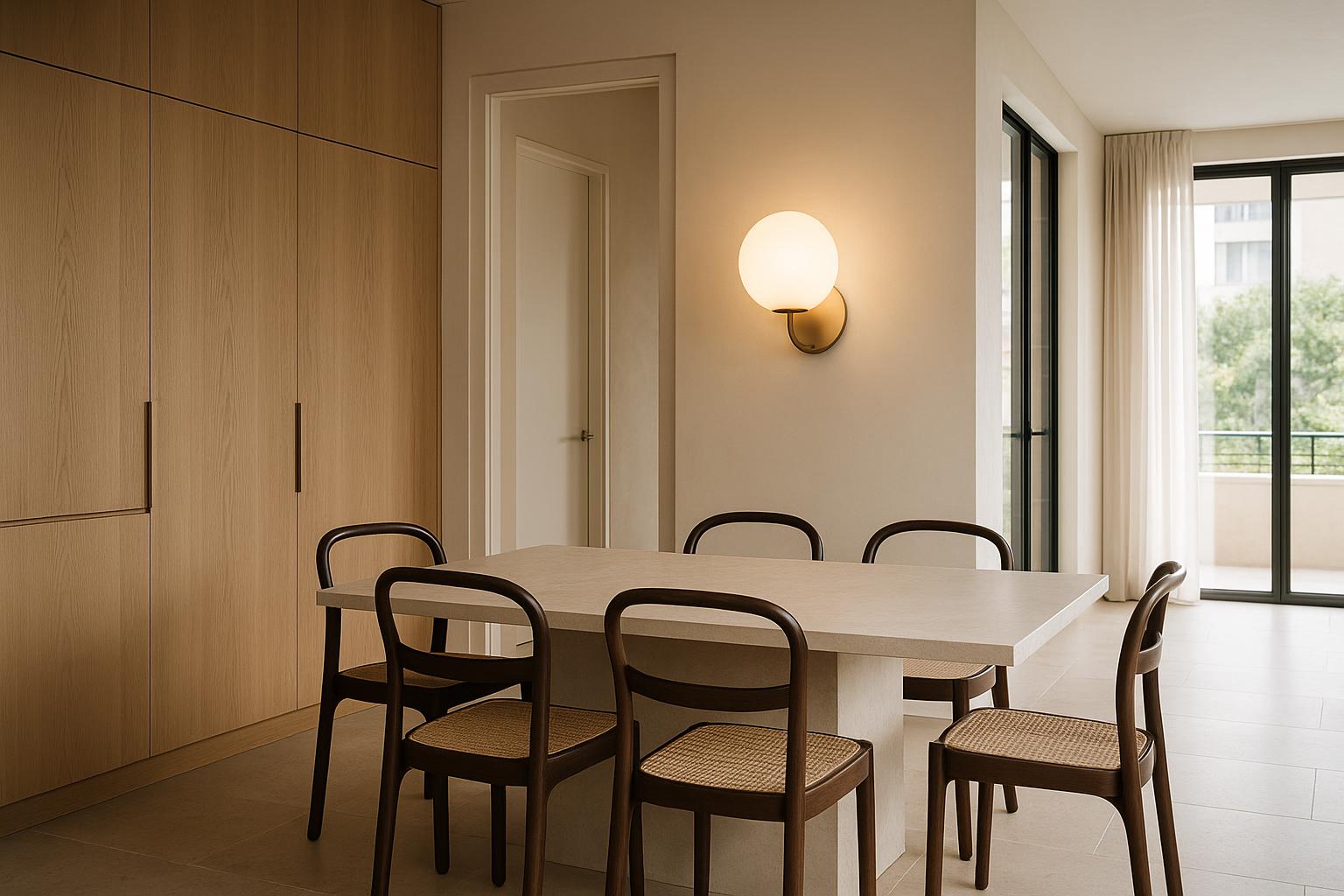
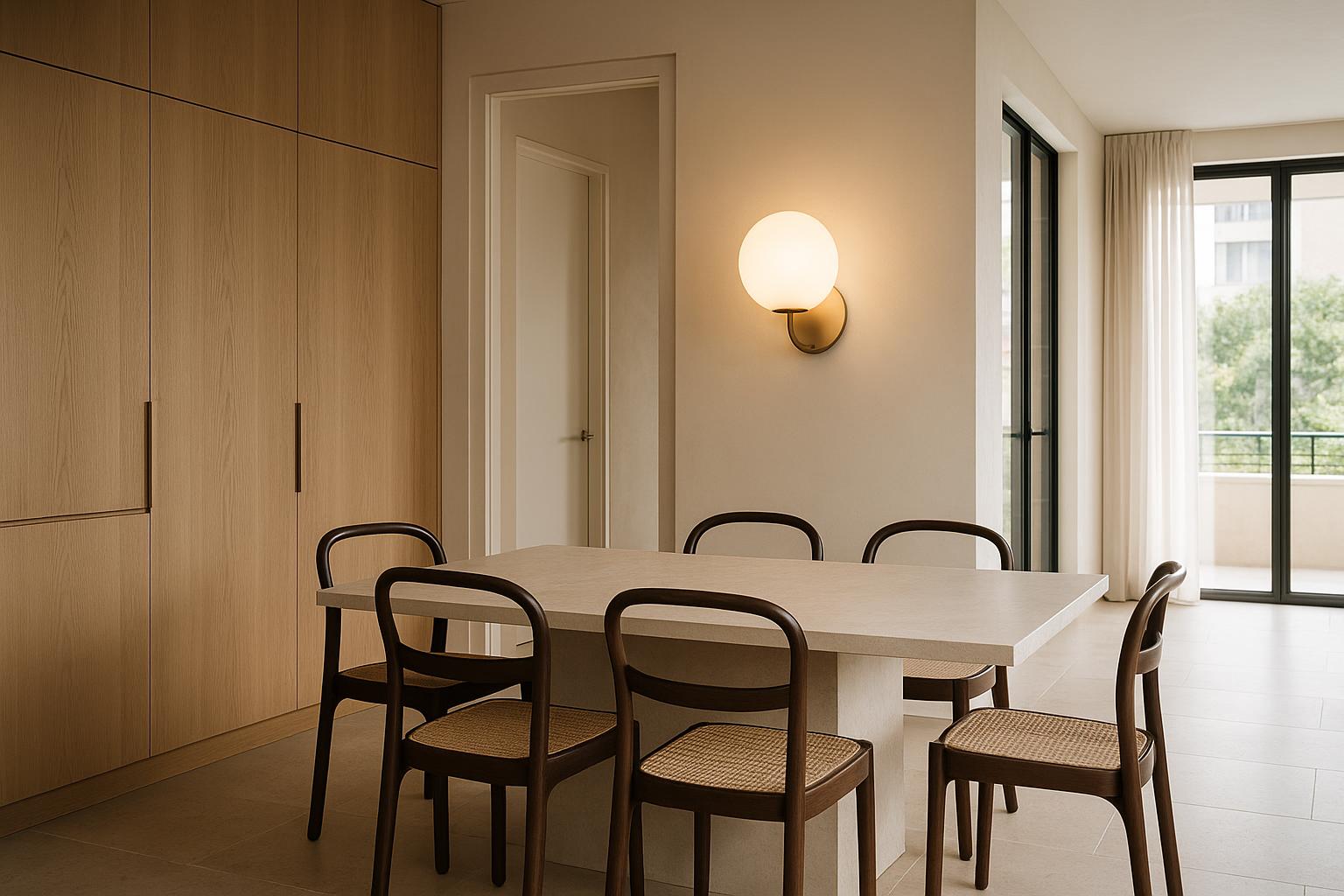
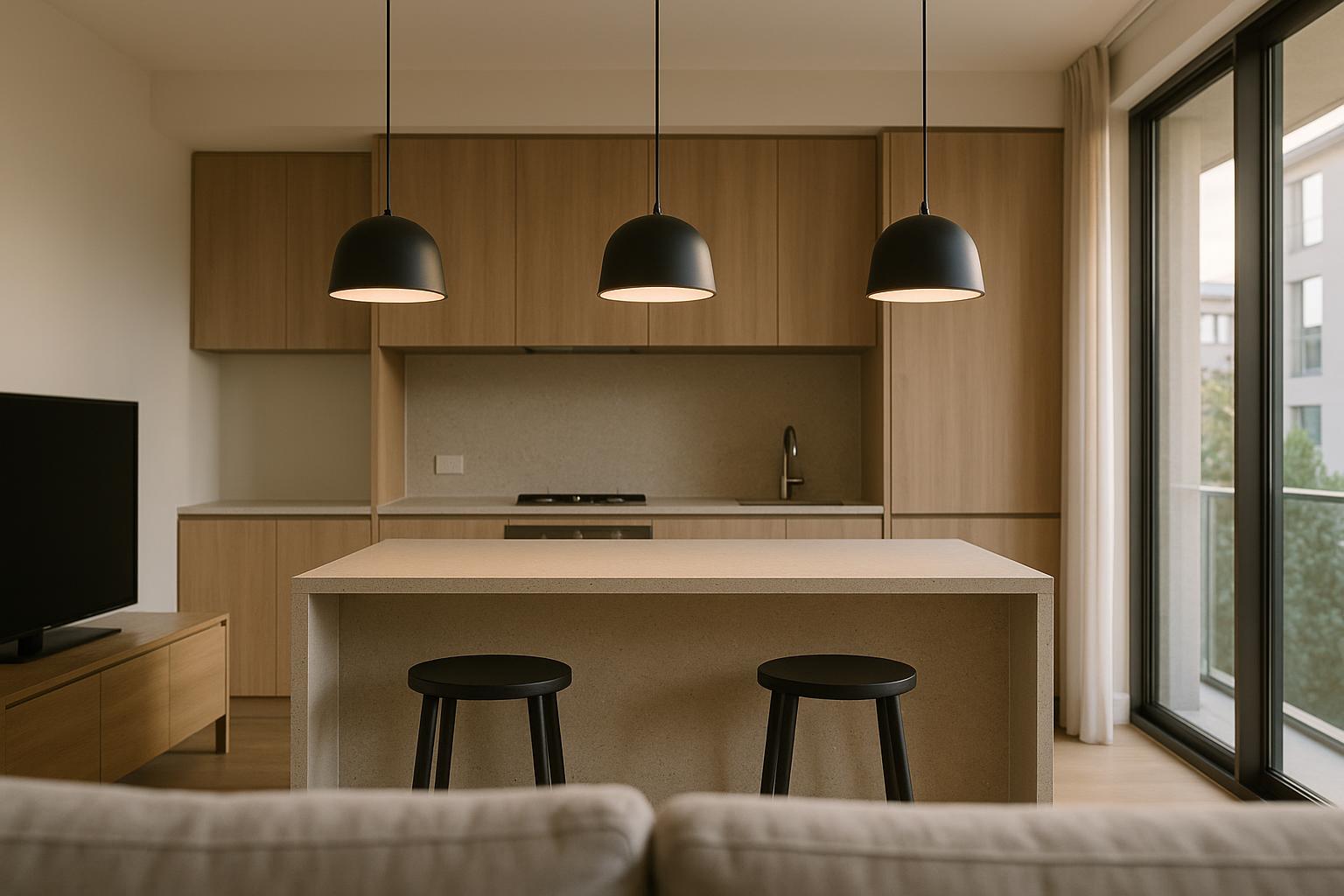
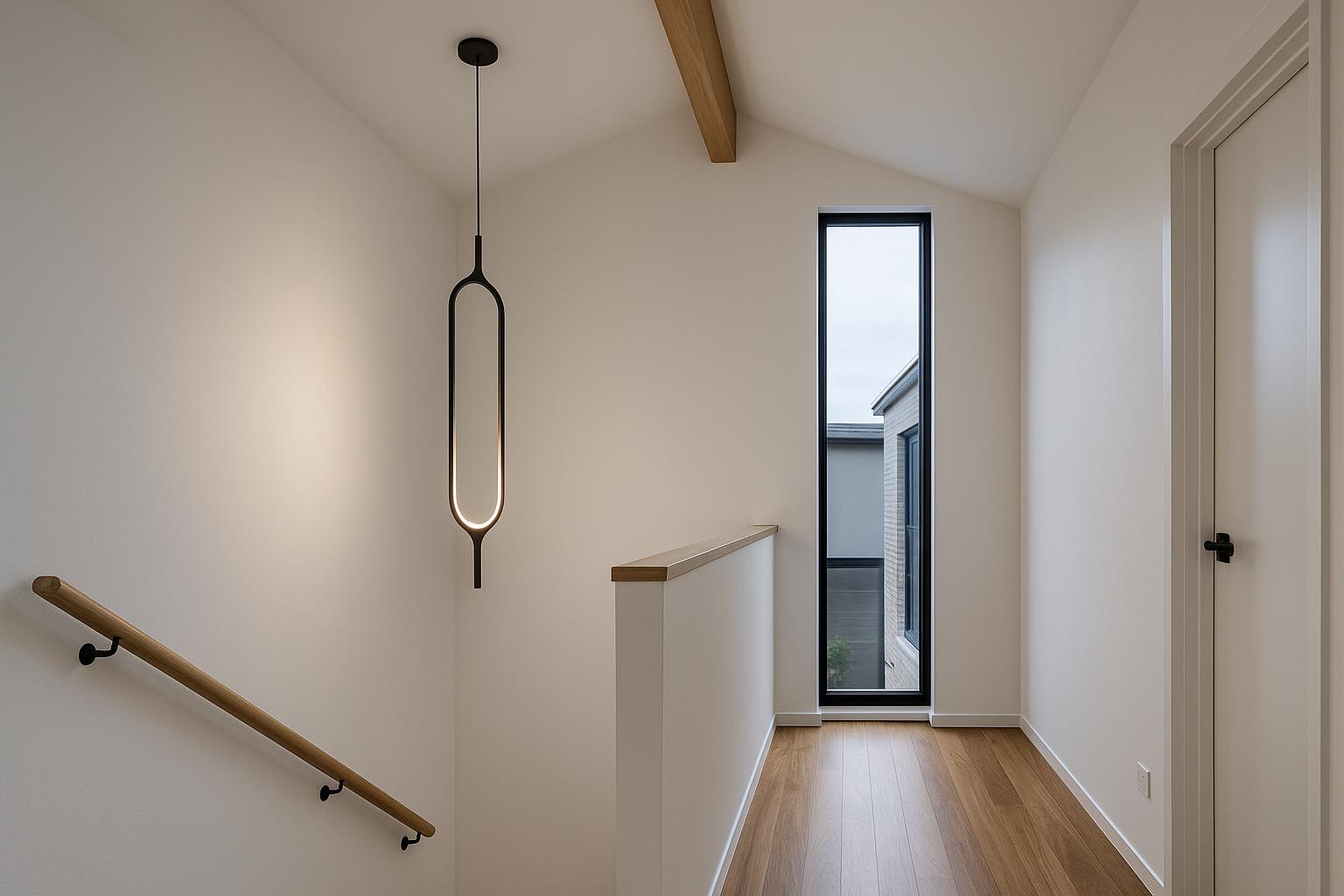
The most convincing light fittings respond to the architecture around them. Learn how to assess ceilings, walls,...
- There are no more items in your cart
- Shipping
- Total $0.00
The Online Lighting Checklist for Australian Homes
A light can look perfectly proportioned online and feel quite different once it leaves the frame of a product photograph. The shade may be deeper than expected, the ceiling canopy more prominent or the exposed globe uncomfortable to look at from the sofa. None of these issues necessarily makes it a poor product. They mean the fitting has been judged without enough information about the room.
Buying lighting online becomes easier when the process starts with the space rather than the style. A few measurements, a simple mock-up and a close reading of the specifications will eliminate many unsuitable options before colour or finish enters the decision.
Use photographs as clues, not measurements
Styled interiors are useful for understanding a fitting's character. They may show whether a pendant has a heavy silhouette, whether a wall light throws illumination above and below, or how transparent glass behaves when lit. They cannot reliably establish size.

Camera position changes perceived proportion. A wide-angle view can make a small dining area appear generous, while a photograph taken from below can conceal the thickness of a ceiling fitting. Furniture may also have been chosen to suit the product rather than reflect an average Australian room.
Look through every image, including unlit views and close details. Compare the fitting with recognisable elements such as doors, chairs and cabinetry, but use those references only as a check on your first impression. The listed dimensions remain the more dependable guide.
Record the room before browsing
Measure the ceiling height, available width and distance from the mounting point to nearby walls, doors and cabinetry. For a wall light, note its projection as well as its face dimensions. In a passage or beside a bed, projection can matter more than width because it affects movement and sightlines.
Existing features also belong in the room record. Mark ceiling fans, bulkheads, beams, air-conditioning outlets and tall cupboard doors that could conflict with a new fitting. Over a kitchen island or dining table, check the mounting point rather than assuming it is centred on the furniture. Moving a table is straightforward; changing a fixed electrical position may not be.
Photograph the room from standing and seated eye level. A pendant that clears a walkway may still interrupt the view across an open-plan living area when seen from a chair.
Test the actual size in the space
Product names such as compact, grand or slim are subjective. Translate the measurements into a full-size outline instead. Painter's tape can represent a wall light, while cardboard cut to the stated width can be suspended temporarily to test a pendant. Keep any mock-up safely clear of existing lamps, fans and electrical fittings.
To complement this topic, you can also read A Whole-Home Lighting Plan: Choosing Fittings That Belong Together.
For models that suit this style, you can also browse our selection of online lighting store Australia.
Include the body height, canopy and suspension length where those measurements are provided. A 500 mm-wide shade can feel light and open if it is shallow, or visually dominant if it is also deep and opaque. The mock-up should represent the volume of the fitting, not just its diameter.
View it from adjoining rooms as well as directly beneath it. This is particularly useful in apartments and open-plan homes, where one hanging light may be visible from the kitchen, dining area and entry.
Consider where the light will travel
Decide what the fitting must contribute before comparing decorative details. General lighting should support comfortable movement through the room. Task lighting needs to reach a work area. Accent lighting draws attention to a surface, object or architectural feature. A decorative fitting may contribute to one or more of these roles, but appearance alone does not show how effectively it will do so.
Shade shape offers useful clues. An opaque pendant with a lower opening directs much of its light downwards. Clear glass exposes the lamp and allows light to spread more broadly. A wall fitting with openings at both ends can create a strong pattern without providing much illumination away from the wall.
Wattage mainly describes power use, so avoid treating it as a complete measure of brightness or comfort. Review the stated light output, colour appearance, beam direction and lamp information where available. Also consider the surrounding surfaces: dark finishes absorb more light, while glossy stone, mirrors and pale cabinetry can amplify reflections.
Assess glare from normal viewing positions
Glare is easy to overlook because product pages are usually viewed straight on. In the room, the fitting may be seen from below, across a table or reflected in a television. Check whether the lamp or integrated light source appears exposed from those positions.

This is especially important above kitchen islands, beside bathroom mirrors and near sofas or beds. A visible decorative globe can provide sparkle, but it can also become the brightest object in the field of view. Frosted glass, a deeper shade or a recessed light source may produce a softer result, depending on the design.
If the photographs never show the underside of a pendant or the side profile of a wall light, look for a drawing or specification that clarifies the construction. Do not assume the missing angle will resemble the front view.
Expect finishes to change with their surroundings
Screen colour is not a finish sample. Display settings, photography and ambient light all affect how brass, bronze, black, white and timber tones appear. A reflective metal may look warm at night but cooler beside strong daytime light. Matte black can read as a crisp outline against a pale wall yet lose detail against dark joinery.
Consider what the fitting will sit beside rather than trying to match a screen image exactly. Door hardware, tapware and cabinetry can coordinate without being identical. Repeating a similar undertone, shape or level of sheen is often more useful than collecting nominally matching finishes from unrelated photographs.
For bathrooms, covered outdoor areas and coastal homes, read the stated location, care and finish information. A product's appearance does not establish its suitability for moisture, weather or salt-laden air.
Check the lamp, controls and installation details
Before ordering, establish what is included and what must be selected separately. Useful checks include:

- Light source: confirm whether the fitting uses a replaceable globe or an integrated LED source.
- Lamp requirements: check the specified cap type, permitted lamp shape and other stated limitations.
- Dimming: verify that the fitting, lamp and proposed control arrangement are intended to work together.
- Suspension: review the minimum and maximum drop rather than relying on the longest photographed setting.
- Mounting: note the canopy, fixing surface and access requirements listed by the supplier.
- Location: confirm that the product information identifies the intended indoor or outdoor position as suitable.
Fixed electrical work should be assessed and completed by an appropriately licensed electrician. If ceiling construction, access, controls or mounting capacity is uncertain, raise it before purchase rather than expecting the installer to make an unsuitable fitting work.
Compare a short list on equal terms
Once unsuitable sizes and light distributions have been removed, compare three or four options using the same notes. Record width, depth, drop, visible light source, finish, controls, location information and unresolved installation questions. This prevents a striking hero image from outweighing a practical limitation.
When browsing an online lighting store in Australia, filter first by room needs and product type. Style is easier to judge after the options already fit the available space and intended purpose.
Review package contents, delivery information and return conditions before placing the order. Keep a copy of the relevant product information, particularly when the fitting will be stored until a later stage of a renovation.
Confirm the choice in the room
Return to the proposed location in daylight and after dark. Check the mock-up from common seats and walkways, then consider which surfaces will receive the light. Confirm nearby fans, doors and cabinetry have been allowed for.
With those checks completed, choose the fitting that best balances scale, useful illumination and visual character. The aim is not to predict every effect from a screen, but to remove avoidable surprises before the light arrives and have the installation details confirmed on site.