A premium light fitting earns its place through resolved construction, comfortable illumination and details that...
- There are no more items in your cart
- Shipping
- Total $0.00
Old Rooms, New Light: Contemporary Fittings for Character Homes
An older home does not need period-style lighting in every room. Nor does a renovation require the original architecture to become a neutral backdrop for sharply contemporary fittings. The more useful question is which element should carry the visual weight in each space.
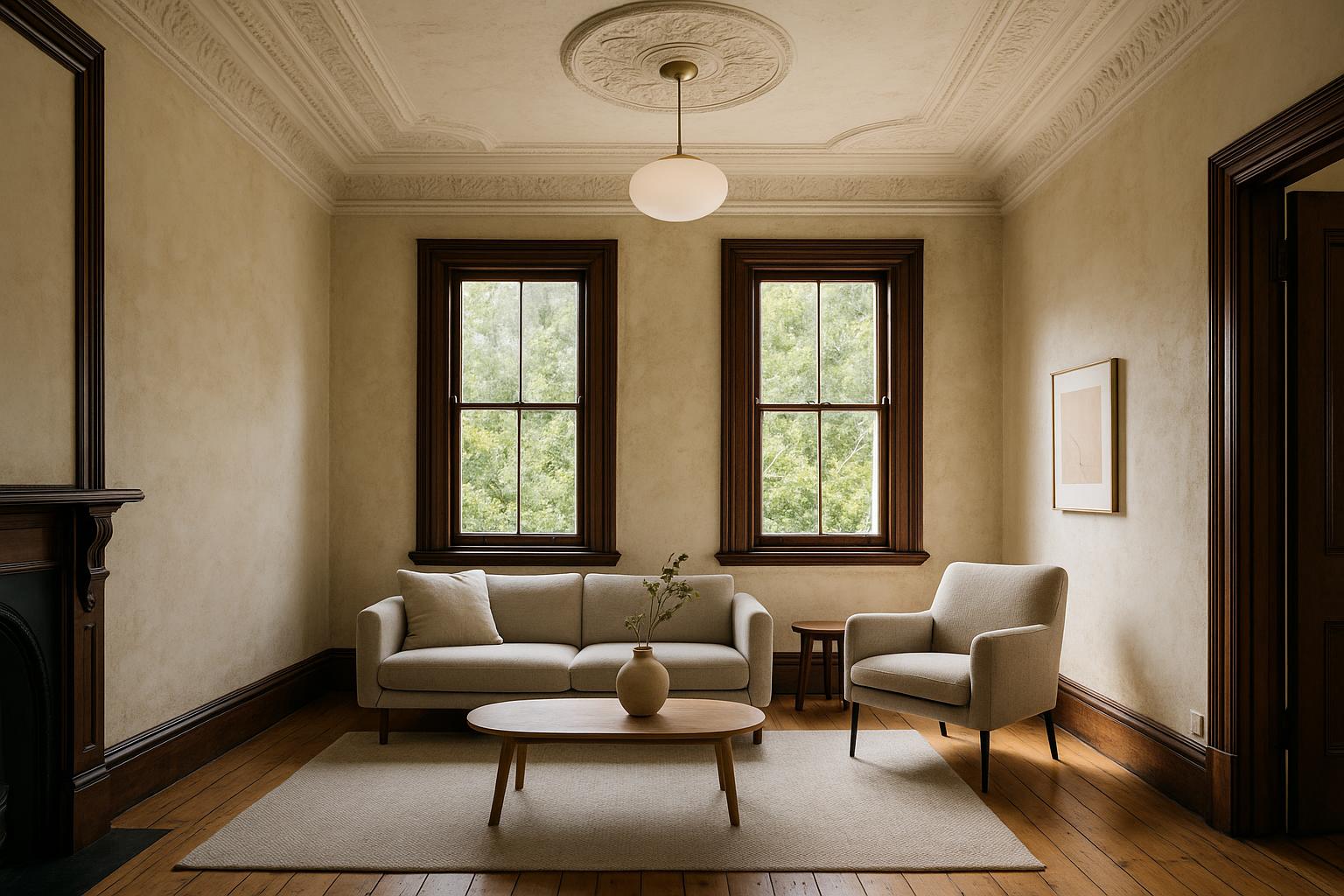
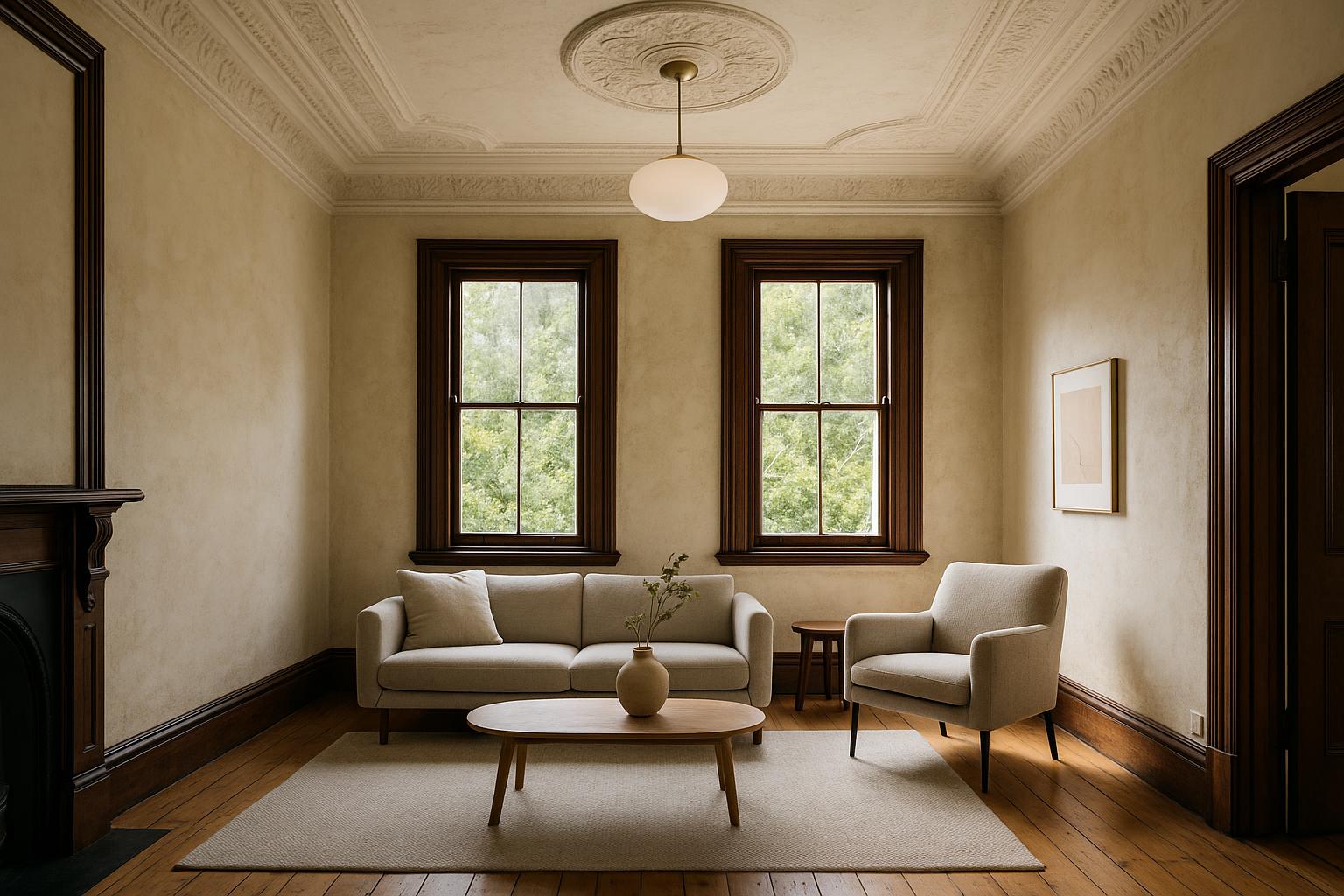
In a Federation sitting room, that might be the plaster ceiling and timber joinery. In a new kitchen behind a Melbourne terrace, it may be the island and its pendant. Modern lighting works best in homes with history when it adds a distinct layer without pretending to be original or pushing the existing character out of view.
Let the building show its age
Begin with the features that cannot be changed as readily as a lamp or pendant. Ceiling height, cornices, window proportions, brickwork, timber and the width of a hallway establish the room before a light is introduced. These fixed elements should influence the fitting's scale and position.

It also helps to separate genuine character from alterations that simply happen to be old. A pressed-metal ceiling or a set of original leadlight windows may deserve visual space. A bulky light installed during an unsympathetic renovation does not need to dictate the next decision. Australian terraces, villas and weatherboards often contain work from several periods, so preserving everything equally can produce a muddled result.
Choose what should remain prominent. A quiet ceiling light may be right where plasterwork is already elaborate. A plain room with high ceilings may benefit from a more assertive pendant. Character is not measured by the number of decorative elements competing for attention.
Find one point of connection
A contemporary fitting does not need to copy the architecture to belong in it. A small connection is usually enough: a related curve, a sympathetic proportion or a material that responds to something already in the room.
A smooth opal globe can relate to the circular geometry of a ceiling rose without reproducing its ornament. Warm metal may sit naturally near honey-coloured floorboards, while a broad fabric or metal shade can balance substantial cornices better than a very fine frame. The relationship should be visible but not laboured.
Be cautious about collecting too many historical references in one fitting. Fluted glass, ornate arms, antique finishes and exposed decorative globes can become period pastiche when combined. One clear modern form beside authentic old detail is often more convincing than a reproduction that almost, but not quite, matches the house.
Resolve the ceiling junction
In a character room, the top of a pendant matters as much as the shade. The canopy, suspension and cable are seen against the ceiling rose, so an awkward junction is difficult to ignore. A tiny canopy may look accidental at the centre of broad plasterwork, while oversized hardware can cover the very detail being retained.
To complement this topic, you can also read Read the Room Before You Choose the Light.
Check the dimensions of every upper component, not only the pendant body. Confirm whether the suspension length can be adjusted and consider where the lowest point will sit relative to doors, furniture and normal movement. A long drop that works above a dining table may be intrusive in a bedroom or through a circulation path.
Existing decorative plaster should not be treated as evidence of a suitable fixing point. Ceiling condition, support, wiring and mounting requirements need to be considered together. An appropriately licensed electrician should assess the proposed installation against the fitting instructions and the condition of the building.
Vary the approach from room to room
Older Australian homes rarely have one consistent type of space. Formal front rooms may be tall and enclosed, bedrooms modest, hallways narrow and rear additions wide open to the garden. Repeating the same lighting treatment throughout can emphasise those differences in unhelpful ways.

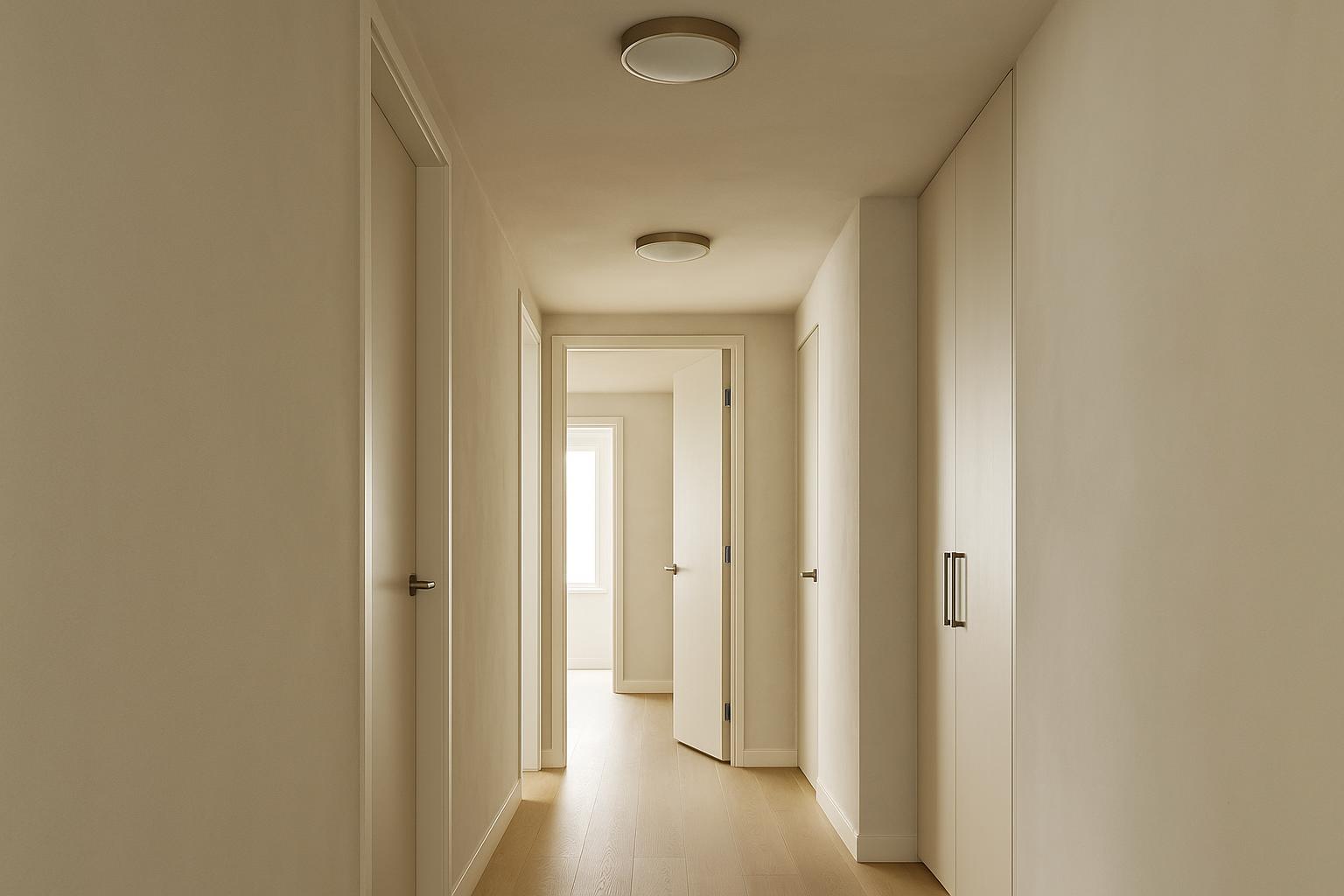
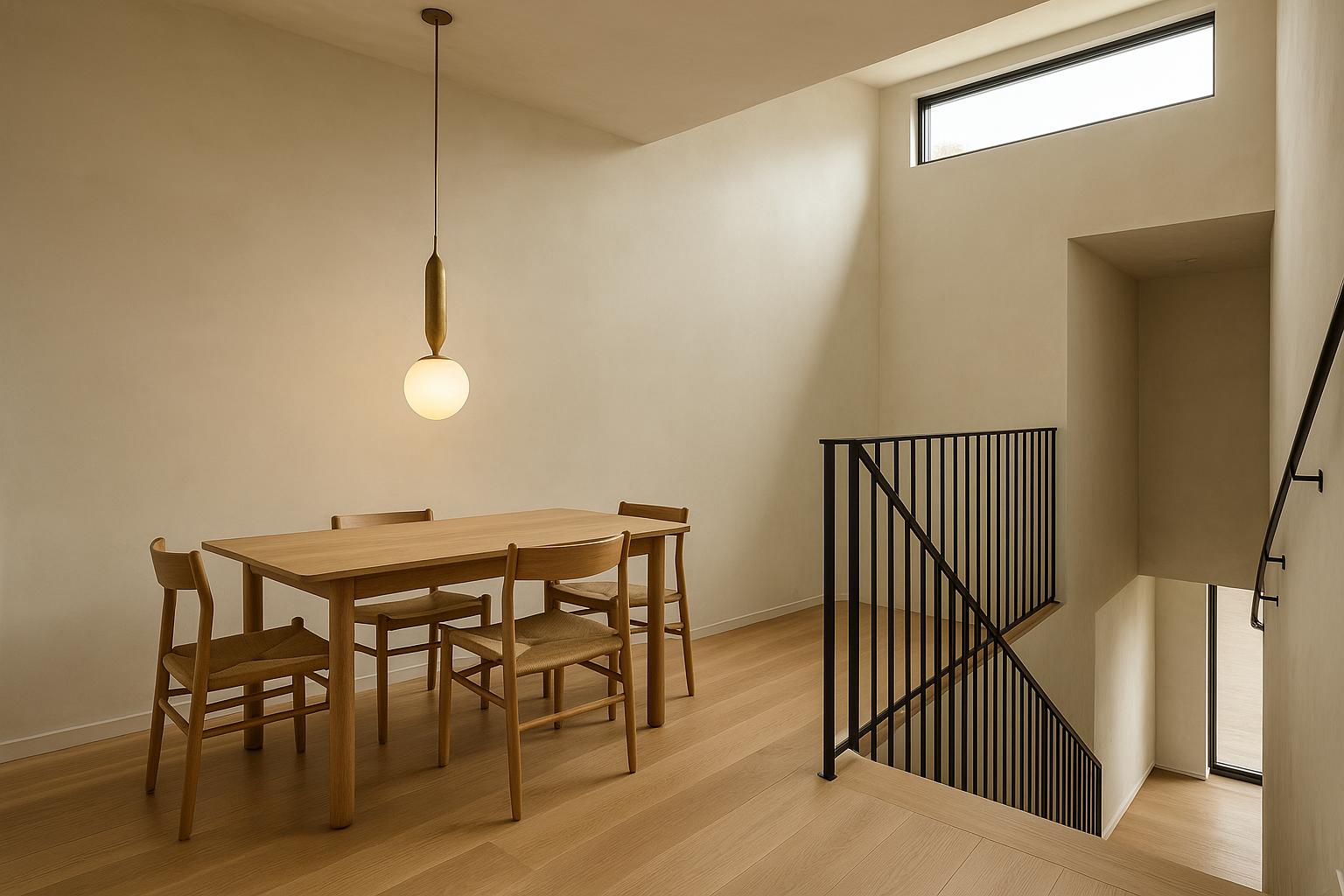
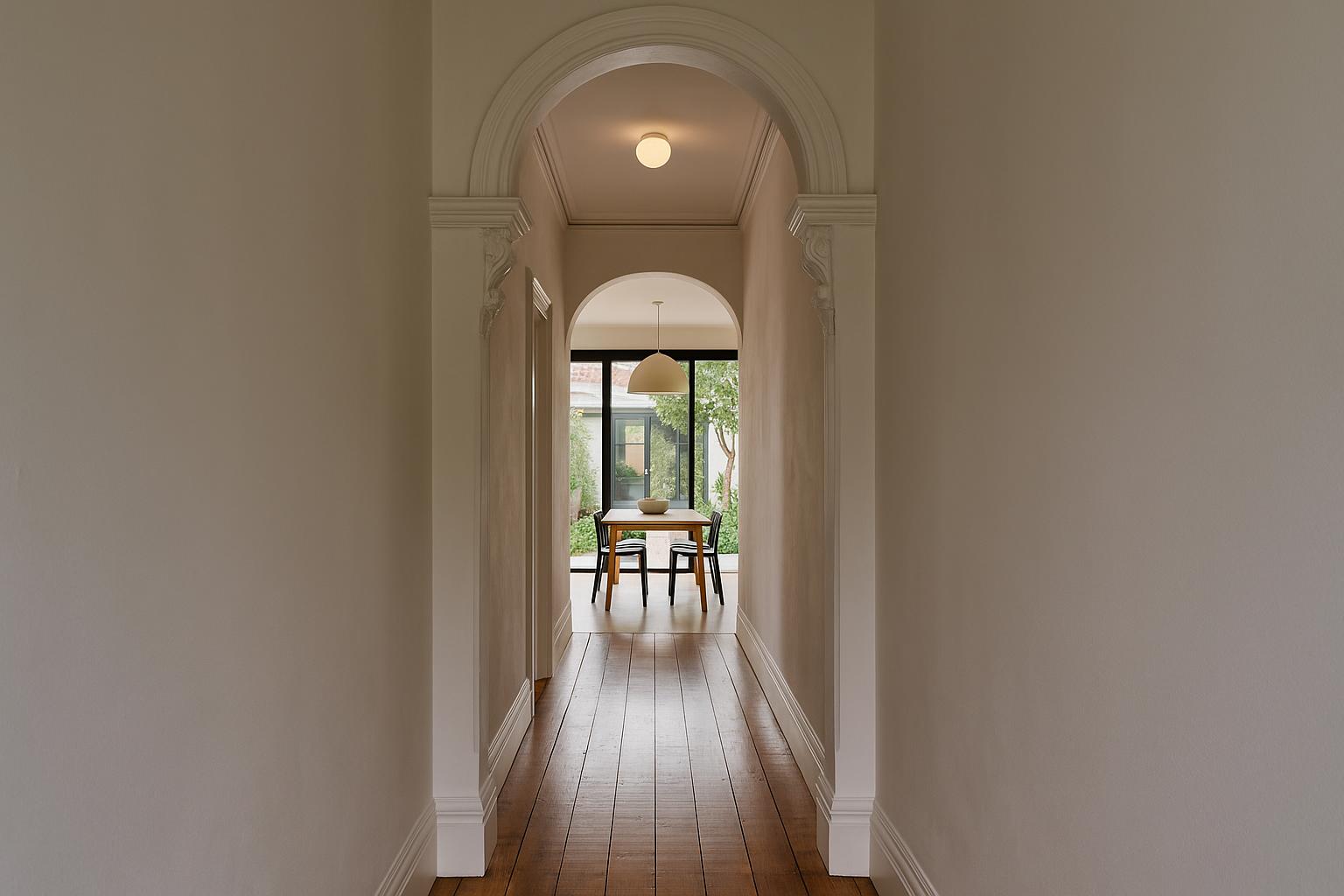
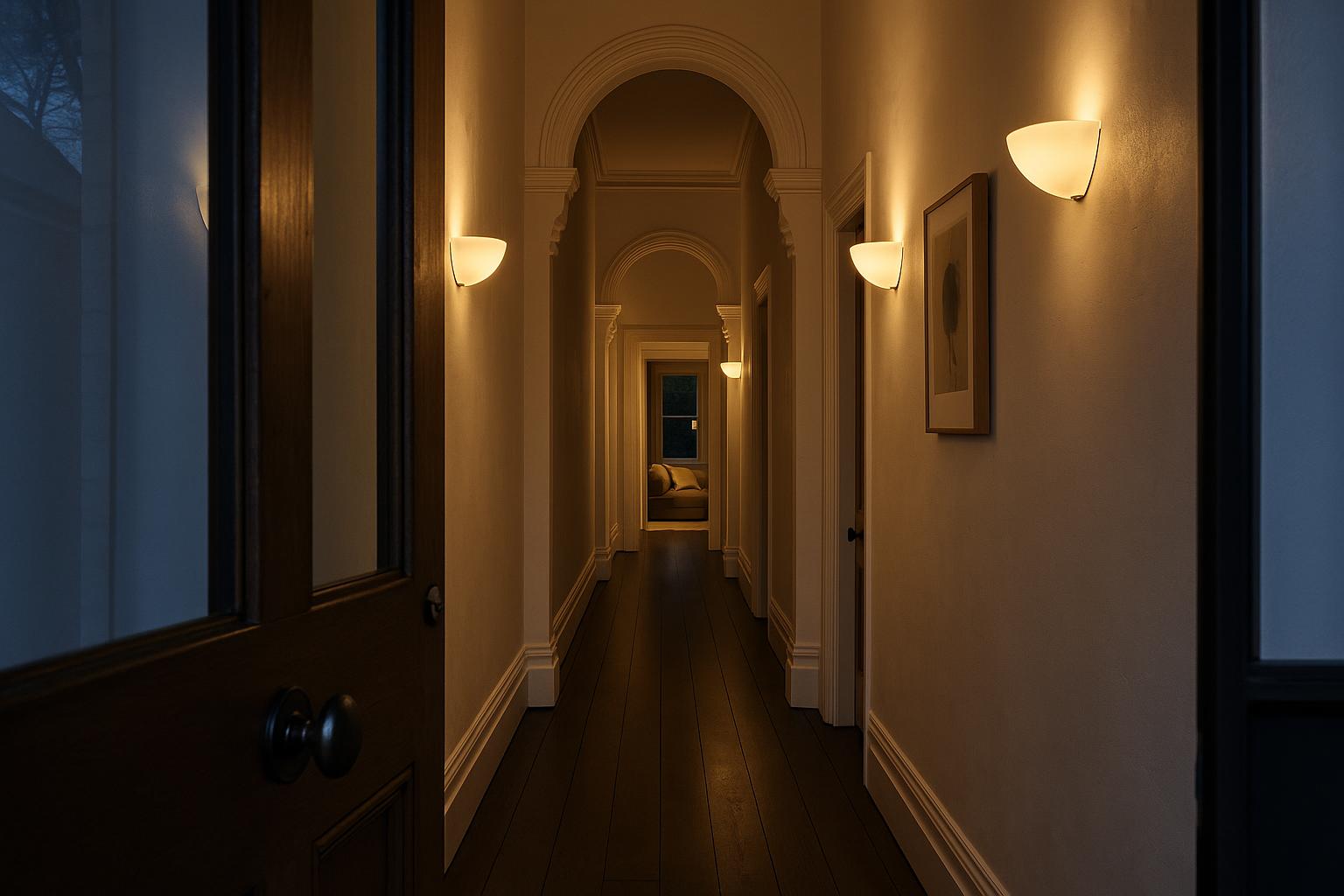
A front sitting room can accommodate a pendant with a generous outline, particularly when furniture provides a visual anchor below it. In a narrow terrace hallway, shallow ceiling fittings generally preserve headroom and keep the passage calm. Wall lights should project only as far as the available width comfortably allows.
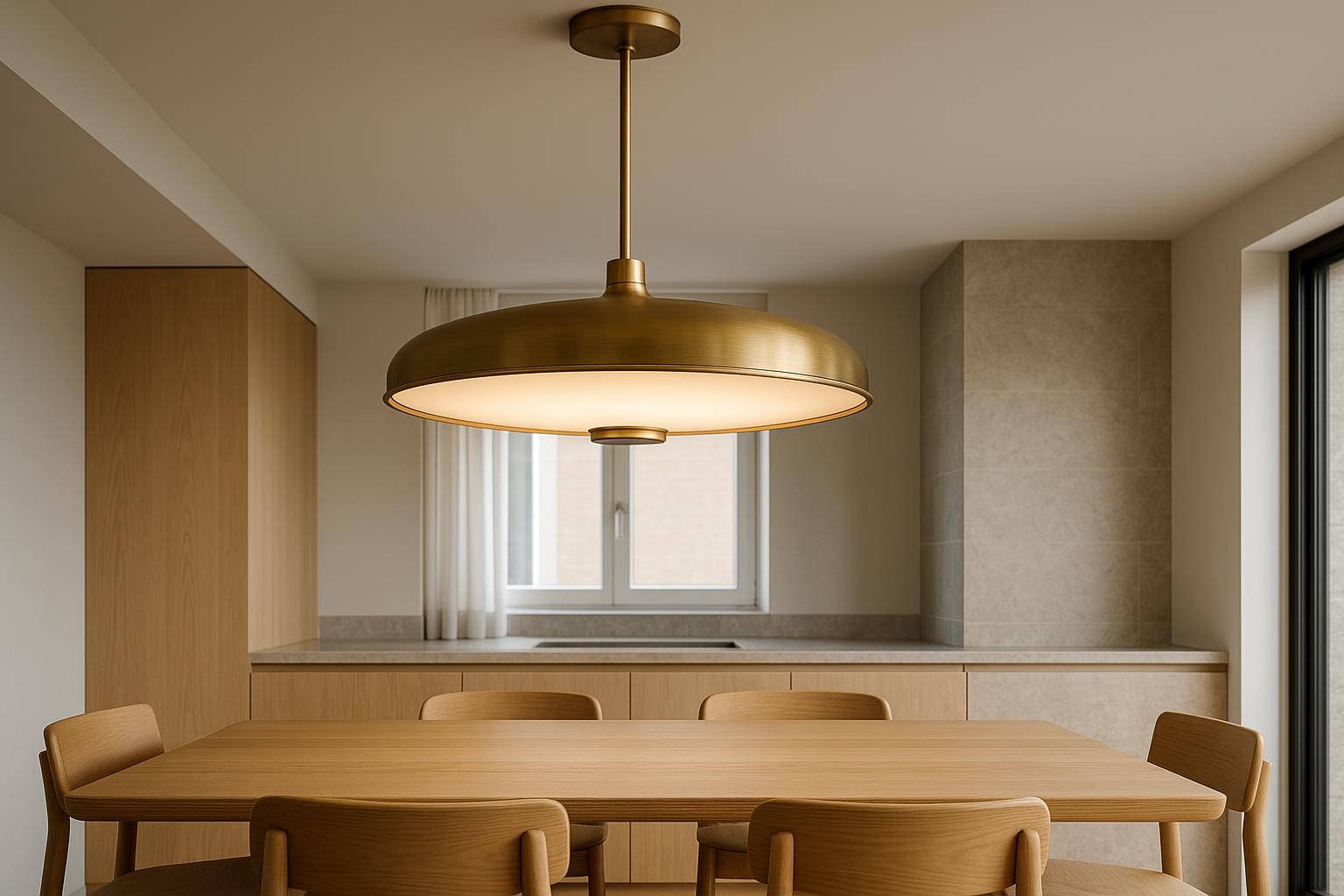
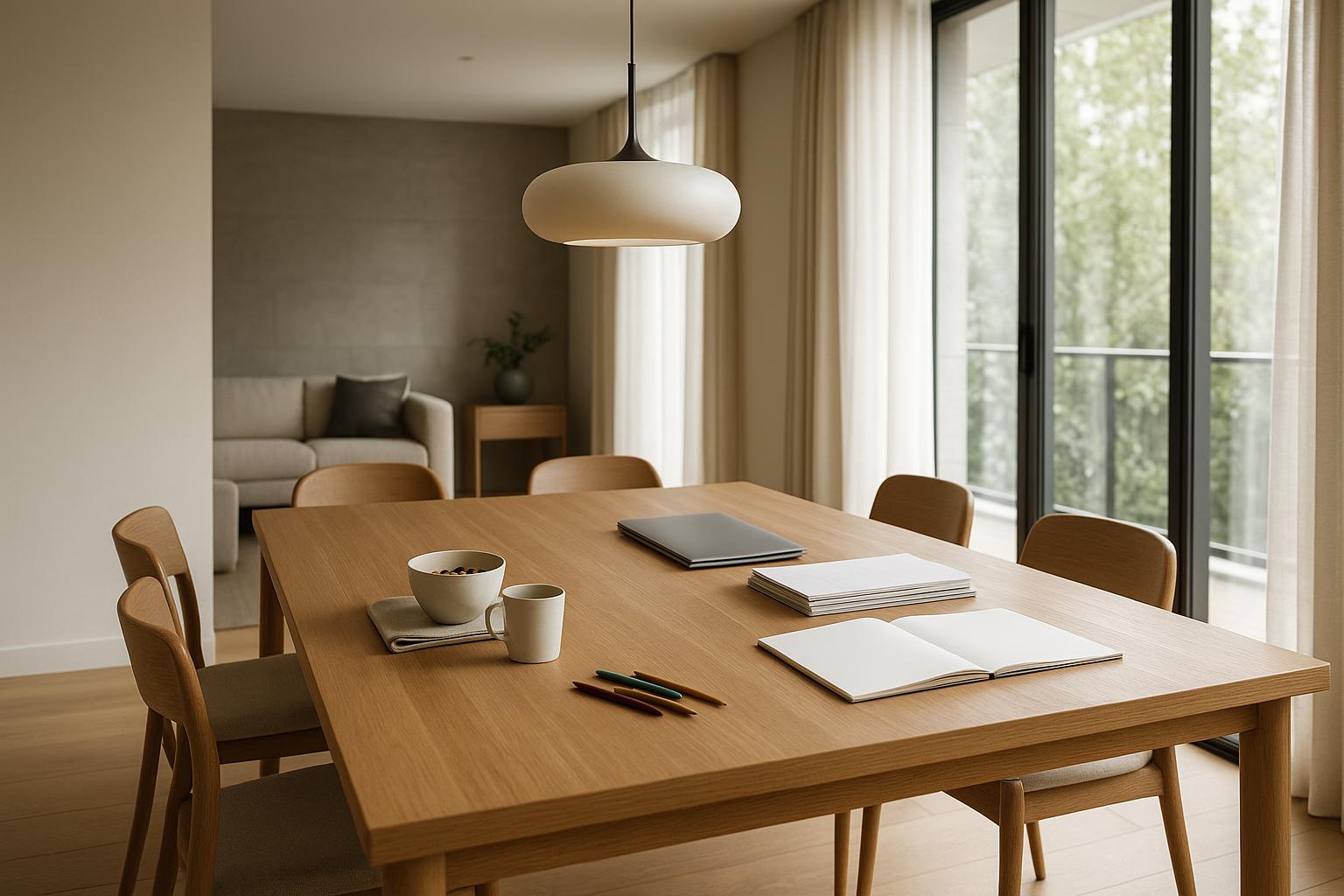
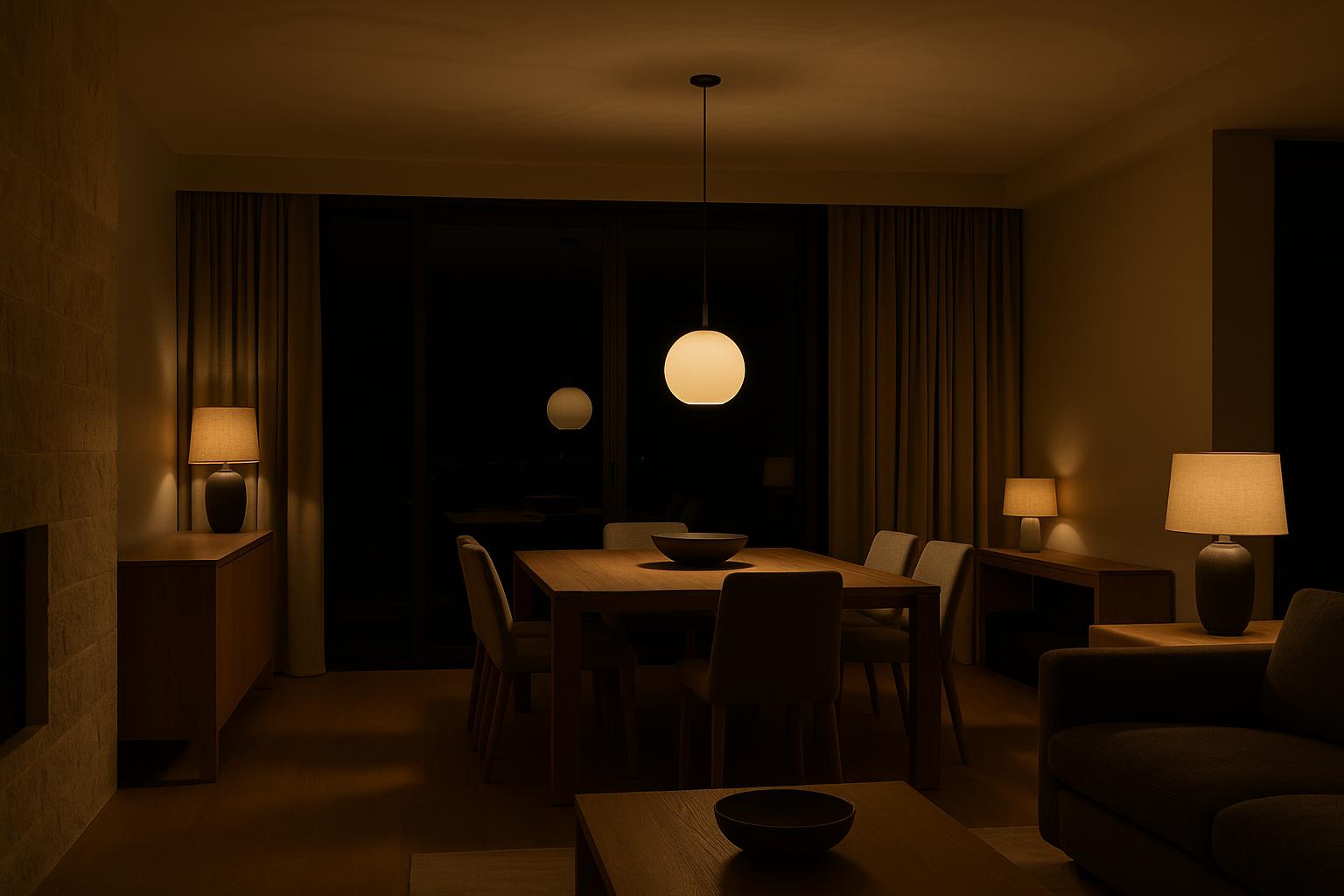
Bedrooms usually need less overhead drama than dining rooms. A flush or semi-flush fitting can leave room for bedside lamps to provide softer, localised light. In a kitchen, pendants should have a defined purpose over an island or table rather than being added simply because the ceiling is empty.
This variation does not make the house feel disconnected. Cohesion can come from a recurring curve, glass treatment or restrained finish rather than an identical product family in every room.
Control long views through the house
Many terraces and villas have a direct view from the entry towards a rear extension. Several feature lights may be visible at once: one in the hall, another above an island and a third over the dining table. If each is a designer statement, the view can become crowded before any individual room is entered.
In the same direction, What Good Lighting Does After Sunset offers useful ideas for choosing home lighting more confidently.
Decide which fitting should register first and allow the others to support it. A small curved ceiling light in the original hall might lead towards a larger pendant based on similar geometry in the extension. Recessed or restrained ceiling lights can then handle general illumination without adding another dominant shape.
The connection need not be literal. The older rooms and new addition should retain their own identities. A repeated detail is enough to make the transition feel considered without disguising where the original house ends.
Judge finishes in the actual light
Metal and glass can change markedly between a product photograph and an Australian room with strong daylight. Polished brass may become a bright focal point near a west-facing window. Matt finishes tend to sit more quietly, while dark frames can appear heavier against a pale ceiling than they do against a studio background.
Consider how the fitting relates to surfaces at different times of day. Opal glass can soften the boundary between old and new materials because its shape remains clear without introducing a sharp reflection. Warm finishes may complement dark timber, but matching every handle, tap and light is unnecessary. A layered home often benefits from controlled variation.
For verandahs, covered entries and outdoor additions, appearance comes after suitability. Check the product information for the intended environment, including exposure to moisture and weather. A finish that connects beautifully with an interior is not automatically appropriate outside or in a damp location.
For more consistent lighting throughout the home, the article Make Every Dollar in Your Lighting Budget Count may also be helpful.
Respect the limits of older fabric
Some lighting ideas are elegant on paper but difficult to install without unnecessary disturbance. Solid walls, fragile plaster, uncertain ceiling cavities and previous alterations can affect where fittings can be placed. Establishing those constraints early is more useful than choosing a product and trying to force the building to accept it.
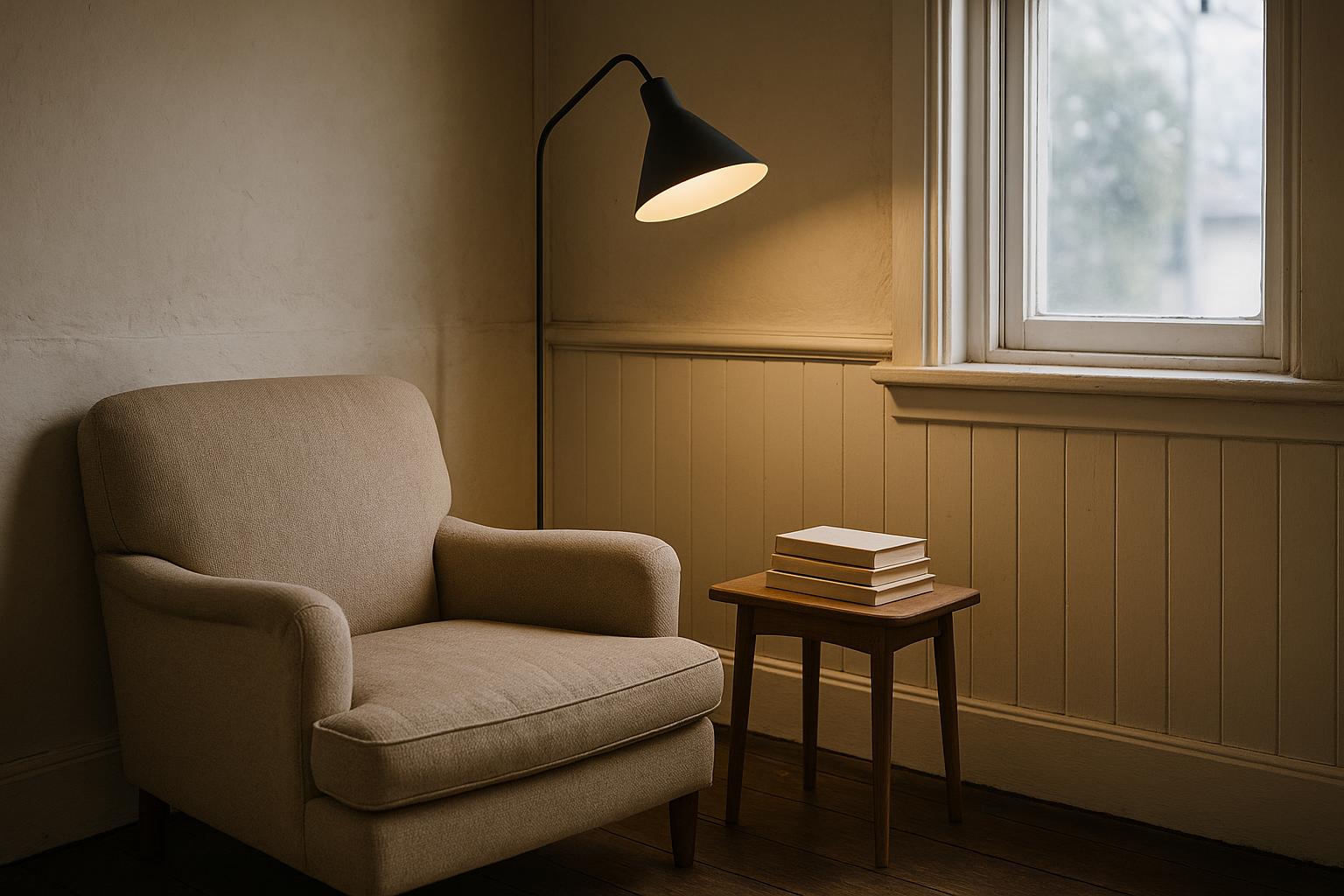
Floor and table lamps are valuable in this context. They can create a reading corner, add light beside a sofa or brighten a darker section of a room without another ceiling position. Plug-in lighting also allows a layout to be tested before more permanent work is considered.
Where electrical work is required, use an appropriately licensed electrician. Product dimensions, mounting instructions and intended application should be reviewed before purchase, especially when the installation involves old or delicate surfaces.
Make a disciplined shortlist
When comparing lights online, assess each candidate against the room rather than against other product images. A useful shortlist records the practical and visual role of every fitting.

- Architecture: note the ceiling height, decorative details and nearby materials.
- Scale: check the full width, height, projection and adjustable drop.
- Junction: review the canopy, suspension and likely relationship with the ceiling.
- Sightline: identify which other fittings will be visible from the same position.
- Purpose: decide whether the light should lead, support or provide local illumination.
For a restrained starting point, browse modern and contemporary lighting at Luxora Lighting with those room-specific requirements in hand. The aim is not to fill an old house with conspicuously new objects. It is to choose a small number of fittings that make the architecture clearer, the rooms easier to use and the passage between different periods feel intentional.